Plant Varieties in Kadiyam

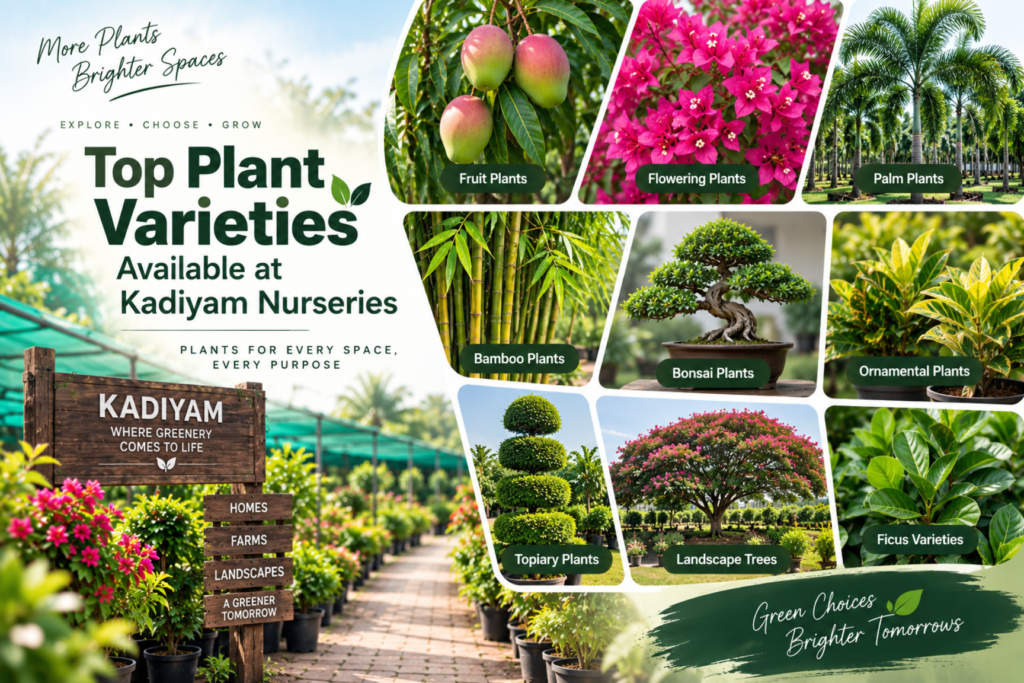
Top Plant Varieties Available at Kadiyam Nurseries

Top Plant Varieties Available at Kadiyam Nurseries If you are planning to buy plants for your home, farm, garden or landscaping project, you may have already heard about Kadiyam nurseries. Located near Rajahmundry in Andhra Pradesh, Kadiyam is known for its wide range of plants and nursery-growing activities. One of the biggest advantages of visiting a nursery in Kadiyam is the variety you can explore. From colourful flowering plants and fruit trees to elegant palms, bamboo, bonsai and ornamental trees, there are options for different gardening needs. With so many varieties available, choosing the right plants can sometimes feel confusing. This guide introduces some of the notable plant varieties available at Kadiyam nurseries and explains where they can fit into your garden or landscape. 1. Fruit Plants Fruit plants are among the most useful choices for home gardens, farms and larger properties. With proper care, they can provide both greenery and fruit over the years. Some fruit plant varieties available in Kadiyam nurseries include: Why choose fruit plants? A fruit tree can become a long-term part of your garden. It can provide shade, greenery and, when properly grown and cared for, fresh fruit. Before buying, consider the available space, sunlight, soil and water requirements. Also think about how large the tree can eventually become. 2. Palm Plants Palm plants are a popular choice for landscaping because of their distinctive shapes and tropical appearance. Kadiyam nurseries offer several palm varieties, including: Palm plants can work well around entrances, pathways, lawns, resorts and larger landscape projects. However, don’t choose a palm based only on its appearance at the nursery. Check its expected mature height and width before deciding where to plant it. 3. Bamboo Varieties Bamboo can add height, structure and a natural feel to outdoor spaces. Different varieties have different colours and growth characteristics, making them useful for decorative landscaping. Some bamboo varieties available include: Bamboo can be used for garden borders, decorative planting and screening, depending on the variety. Before planting bamboo, ask about its growth habit and space requirements. This is particularly important for smaller gardens. 4. Ornamental Ficus Plants Ficus plants are another interesting group for people looking for ornamental greenery. The varieties available at Kadiyam nurseries include: Their attractive foliage and different forms can make them useful for decorative gardens and landscaping. Some Ficus varieties can grow considerably larger over time, so always select one according to the space available. 5. Flowering Plants A garden can feel completely different once flowering plants are added. Their colours and seasonal blooms can bring life to entrances, pathways, balconies and garden beds. Some flowering plants found in the Kadiyam collection include: When choosing flowering plants, consider sunlight and maintenance requirements. A plant that receives the right growing conditions generally has a better opportunity to establish and flower well. 6. Bonsai Plants Bonsai offers a different experience for plant lovers. Instead of simply growing a plant, bonsai involves maintaining its shape and size through careful pruning and regular care. Bonsai plants can be used in: If you are new to bonsai, ask about watering, sunlight, pruning and repotting requirements before choosing a variety. 7. Topiary Plants Topiary plants can add a creative and structured appearance to a landscape. Plants can be maintained in different shapes and forms, making topiary particularly interesting for entrances, resorts, hotels, villas and decorative gardens. A well-maintained topiary can act as a focal point and complement other plants around it. When selecting topiary plants, consider the amount of maintenance required to keep the desired shape. 8. Ornamental Trees For larger gardens and landscapes, ornamental trees can provide height, structure and long-term greenery. Some notable varieties available in the Kadiyam collection include: These trees can be considered for larger properties, gardens and landscape projects depending on their growth characteristics and the available space. 9. Native and Familiar Garden Trees Some tree varieties are popular because they are familiar to Indian gardeners and can become substantial features of a landscape. Examples from the nursery collection include: Neem Neem is a familiar tree in India and can become a large, long-lived addition to a suitable outdoor space. Peepal Peepal is a large-growing tree that requires considerable space and careful placement. Tamarind Tamarind can become a large tree and is suitable only where sufficient space is available. Gulmohar Delonix regia, commonly known as Gulmohar, is valued for its attractive flowering display. Ashoka Saraca asoca is another notable tree that can be considered for suitable garden and landscape settings. The important point is to understand the mature characteristics of any tree before planting it close to buildings or other structures. 10. Decorative and Specialty Plants Kadiyam nurseries also offer several plants that can be used to create something different from a conventional garden. Examples include: These varieties can add unusual shapes, foliage and visual interest to gardens and landscape designs. How to Choose the Right Variety Having plenty of choices is useful, but the most attractive plant isn’t necessarily the right one for your garden. Before buying, consider five basic factors. 1. Available Space Check how much room you have now and how much the plant will need when mature. 2. Sunlight Understand whether the plant requires full sunlight, partial shade or another growing condition. 3. Water Requirements Choose varieties that fit the amount of water you can consistently provide. 4. Maintenance Some plants need regular pruning and shaping, while others may require less frequent attention. 5. Purpose Think about why you are buying the plant. Do you want: Your answer will help narrow down your options. Buying Plants for Different Requirements For Home Gardens Homeowners can combine flowering plants, ornamental plants, shrubs and a few carefully selected trees to create a balanced garden. For Farms Fruit plants may be more appropriate for farms and larger properties, depending on the land, soil and intended cultivation. For Landscaping Landscaping projects often need a combination of trees, palms, shrubs, flowering plants and ornamental varieties. For Small Spaces Compact plants, selected palms, bonsai and

Top Plant Varieties Available at Kadiyam Nurseries Read More »
Nursery in kadiyam

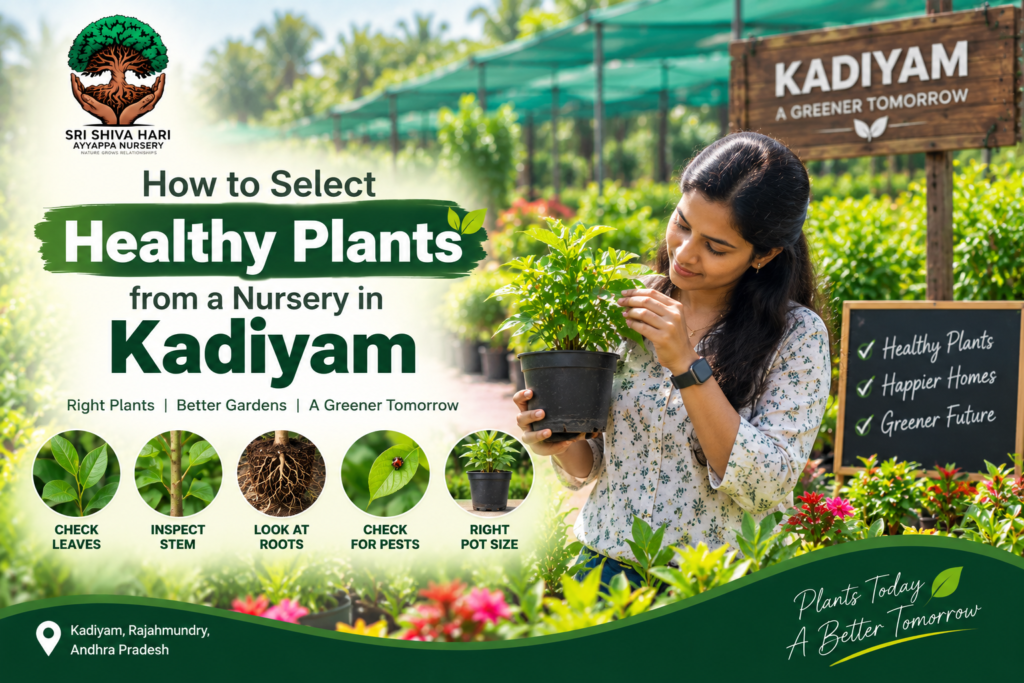
How to Select Healthy Plants from a Nursery in Kadiyam

How to Select Healthy Plants from a Nursery in Kadiyam Buying a plant is easy. Choosing a healthy plant that can adapt well to your garden and continue growing requires a little more attention. When you visit a nursery in Kadiyam, you may find hundreds of plants in different varieties, sizes and stages of growth. With so many choices around you, it can be tempting to pick a plant simply because it looks attractive. However, a healthy plant is more than just a plant with green leaves. You need to look at its foliage, stems, roots, soil, overall growth and even signs of pests or disease. Spending a few extra minutes checking a plant before buying it can help you start your garden on the right foot. Here is a practical guide to help you select healthy plants from a nursery in Kadiyam. 1. Start with Your Garden Requirements Before looking at individual plants, understand what you actually need. Think about where the plant will be placed and what you want it to do. Are you looking for: Knowing your purpose makes it easier to choose the right plant rather than buying something that may not suit your space. 2. Check the Overall Appearance Take a step back and look at the entire plant. A healthy plant should generally have a balanced appearance appropriate to its variety. Look for good foliage, reasonably strong growth and no obvious signs of severe damage. Avoid choosing a plant simply because it is larger than the others. A smaller plant with healthy, well-developed growth may establish better than a larger plant that is stressed or damaged. If you are unsure, compare several plants of the same variety before making your decision. 3. Examine the Leaves Carefully Leaves can tell you a lot about a plant’s condition. Look for foliage that appears healthy and appropriate for the plant variety. Be cautious with plants showing: Some plants naturally have unusual leaf colours or patterns, so don’t assume every colour variation indicates a problem. If something looks unusual, ask the nursery staff about it. Also remember that a few damaged leaves do not necessarily mean the entire plant is unhealthy. Look at the overall condition rather than judging it from one leaf. 4. Inspect the Stem and Branches The stem provides important support to the plant. Look for stems and branches that appear healthy and appropriate for the plant’s size. Avoid plants with obvious breaks, severe wounds or extensive physical damage. For trees and shrubs, check whether the main structure looks stable. If a plant has been shaped or pruned, ask whether that is normal for the variety or part of its regular maintenance. 5. Look for Signs of Pests Before purchasing a plant, inspect the leaves and stems for visible pests. Check both the upper and lower surfaces of leaves where possible. Also look around new growth and stems. Potential warning signs can include: If you notice something unusual, ask the nursery team before buying the plant. It is especially important to check plants carefully if you already have a large collection at home because introducing a pest-affected plant can create problems for your existing plants. 6. Check the Pot and Growing Medium The container can provide useful clues about the plant’s condition. Look at the growing medium and check whether the plant appears properly established in its pot. A plant that has been in the same container for a long time may become root-bound. In such cases, roots can become densely packed and may circle around the inside of the container. Some degree of root growth is normal, but if you are concerned, ask the nursery staff to explain the plant’s condition. Don’t pull the plant out of its container yourself unless the nursery staff allows you to inspect the roots. 7. Consider the Plant’s Size Bigger isn’t always better. A large plant may look impressive, but it may also require more care during transportation and transplantation. A smaller, healthy plant can sometimes be easier to establish in a new location. Think about where you are going to plant it and how quickly you want the garden to develop. For example, if you are planting a tree near a house, choosing a plant based only on its current size can be misleading. You need to consider how large it may eventually become. 8. Check Whether the Plant Suits Your Location A healthy plant can still struggle if it is planted in the wrong environment. Before buying, consider the conditions at home. Sunlight Does the planting area receive full sunlight, partial sunlight or shade? Water Can you provide the amount of water the plant requires? Soil Is your soil suitable, or will you need to improve it? Space Will the plant have enough room as it grows? Maintenance Can you provide regular pruning, watering and other care when required? These questions are particularly important when buying plants from a nursery in Kadiyam because the selection can be so large that it is easy to get distracted by varieties that may not suit your particular location. 9. Ask About the Plant’s Growing Requirements Don’t hesitate to ask questions. A nursery professional may be able to provide useful information about the plant’s: You don’t need to know everything before visiting a nursery. Asking the right questions can help you make a more informed purchase. 10. Be Careful When Buying Fruit Plants Fruit plants deserve additional attention because you are usually buying them with a long-term goal in mind. Before purchasing a fruit plant, ask about: Depending on availability, nurseries in Kadiyam may offer fruit plants such as mango, guava, lemon, sapota, avocado, jackfruit, pomegranate, amla and other varieties. Choose based on your growing conditions rather than simply selecting the fruit you like. 11. Choose Flowering Plants According to Sunlight Flowering plants can make a garden colourful, but they need suitable growing conditions to perform well. Before buying a flowering plant, find out whether it prefers full sun

How to Select Healthy Plants from a Nursery in Kadiyam Read More »

Nursery in kadiyam

Nursery in Kadiyam: A Complete Guide for Plant Buyers

Nursery in Kadiyam: A Complete Guide for Plant Buyers Buying plants can be exciting, especially when you are planning a new garden or adding more greenery to your property. However, with so many varieties available, choosing the right plants is not always easy. For plant buyers in Andhra Pradesh, Kadiyam is a well-known destination for exploring different types of plants. Located near Rajahmundry, Kadiyam is known for its nursery-growing activities and wide selection of plants suitable for homes, farms, gardens and landscaping projects. If you are planning a visit to a nursery in Kadiyam, this guide will help you understand what to look for, which plant categories you can explore and how to make better buying decisions. Why Is Kadiyam Popular Among Plant Buyers? Kadiyam has become closely associated with nurseries and plant cultivation. People visit the area not only to buy plants but also to explore different varieties and get ideas for their gardens. One of the main advantages is the variety available. Depending on the nursery and current stock, buyers can find: This makes Kadiyam useful for different types of customers, from someone buying a few plants for a home garden to professionals sourcing plants for larger landscaping projects. What Types of Plants Can You Buy in Kadiyam? Before visiting a nursery, it helps to understand the major plant categories available. 1. Fruit Plants Fruit plants are a popular choice for home gardens, farms and larger properties. Depending on availability, you may find varieties such as: When buying fruit plants, don’t focus only on the variety. Consider your soil, sunlight, available space, water supply and the expected mature size of the plant. 2. Flowering Plants Flowering plants can instantly bring colour and character to an outdoor space. Depending on the nursery, options may include varieties such as Ixora, Lantana, Portulaca, Allamanda, Calliandra, Eranthemum and Bougainvillea. Before buying, check how much sunlight the plant needs. A flowering plant that requires full sunlight may not perform well in a shaded location. 3. Palm Plants Palm plants are commonly used in gardens and landscaping because of their distinctive appearance. Some varieties you may come across include: Palm plants can be used around entrances, lawns, pathways and larger landscape areas. However, remember that many palms grow considerably larger than their nursery size. Always consider the long-term space requirement before planting. 4. Bamboo Plants Bamboo can be used to add height and structure to a garden. Depending on the variety, it can also be useful for decorative planting, borders and screening. Kadiyam nurseries may offer varieties such as Golden Bamboo, Black Bamboo, White Bamboo and different Bambusa varieties. Ask about the growth pattern of the particular variety before purchasing, especially if you have limited space. 5. Bonsai Plants Bonsai is a popular choice for people who enjoy detailed and hands-on gardening. Bonsai plants can be used in homes, offices, balconies and personal collections. They require regular attention, including appropriate watering, pruning and positioning. If you are new to bonsai, ask the nursery team about the specific plant’s care requirements before making your choice. 6. Ornamental Plants Ornamental plants are selected primarily for their appearance. They can provide attractive foliage, interesting shapes and different textures. They can be used around entrances, pathways, patios, lawns and commercial landscapes. Combining ornamental plants with flowering plants, shrubs and trees can create a more balanced garden design. 7. Shrubs and Topiary Plants Shrubs can help fill empty spaces and create natural boundaries within a garden. Flowering shrubs can also add colour, while foliage varieties can provide consistent greenery. Topiary plants, on the other hand, can be used as decorative focal points, particularly around entrances, resorts, hotels and landscaped properties. How to Choose Healthy Plants Finding the right variety is only half the job. You also need to select a healthy plant. Before buying, look closely at the plant. Check the Leaves Look for healthy foliage and avoid plants with extensive yellowing, wilting or visible damage. Examine the Stem The stem should generally look strong and appropriate for the size of the plant. Look at the Root and Pot If possible, check the condition of the pot and growing medium. Avoid plants that appear severely root-bound or poorly established. Look for Signs of Pests Check both sides of leaves and the stems for obvious signs of pests or disease. If you are unsure about a plant’s condition, ask the nursery staff before purchasing. Choose Plants According to Your Space One of the most common mistakes plant buyers make is choosing plants based only on how they look when they are small. A nursery plant may fit comfortably in a small corner today, but it could become a large tree or shrub in a few years. Before buying, think about: Thinking about these questions can help you avoid problems later. Consider the Purpose of Your Garden Your purpose should influence your plant selection. If you want a fruit garden, focus on suitable fruit varieties. If your goal is a colourful garden, flowering plants may be more appropriate. For a landscaping project, you may need a combination of trees, palms, shrubs and ornamental plants. If you want a low-maintenance garden, select plants that fit the amount of time you can realistically spend caring for them. There is no single plant that is perfect for every garden. Ask Questions Before You Buy Don’t hesitate to ask questions at the nursery. Useful questions include: The more you understand about a plant before buying it, the easier it will be to care for it later. Buying Plants for Landscaping Projects If you are purchasing plants for a larger project, make a list before visiting the nursery. For example, a landscaping project may require: Trees → Palms → Shrubs → Flowering plants → Ornamental plants → Ground-level greenery Planning the quantities and sizes in advance can make the buying process much more organized. It is also helpful to discuss your landscape design with the nursery team so you can select plants that match the

Nursery in Kadiyam: A Complete Guide for Plant Buyers Read More »

Best Plants to Buy in Kadiyam

Best Plants to Buy from a Nursery in Kadiyam

Best Plants to Buy from a Nursery in Kadiyam Choosing the right plants is one of the most important steps when creating a beautiful and healthy garden. Whether you are planning a small home garden, a farmhouse landscape, a fruit garden, or a large commercial project, the plants you select will determine how your space looks and grows over time. For plant lovers in Andhra Pradesh, Kadiyam is a popular destination for exploring a wide variety of plants. Located near Rajahmundry, the area is well known for its nurseries and diverse collection of fruit plants, flowering plants, palms, bamboo, bonsai, shrubs, ornamental plants and trees. But with so many choices available, what should you actually buy? In this guide, we explore some of the best types of plants to consider when visiting a nursery in Kadiyam. 1. Fruit Plants for Home Gardens and Farms Fruit plants are among the most useful additions to a garden. With proper care, a small plant can eventually provide fresh fruit for years. When visiting a nursery in Kadiyam, you may find several fruit plant varieties, depending on the nursery and current availability. Popular choices include: Fruit plants can be suitable for both home gardens and larger properties. However, always consider the mature size of the plant and the amount of sunlight and space available. Why choose fruit plants? Apart from producing fruit, many fruit trees can add greenery and shade to your property. They can also become a long-term part of a family garden. If you are buying fruit plants for farming, it is particularly important to understand the variety, growing conditions and maintenance requirements before planting. 2. Flowering Plants for Colourful Gardens If your main goal is to add colour and life to your garden, flowering plants are an excellent choice. Flowering plants can brighten entrances, pathways, balconies, patios and garden beds. They can also be combined with foliage plants and shrubs to create a more attractive landscape. Depending on availability, you may find flowering varieties such as: When choosing flowering plants, think about the amount of sunlight your garden receives. Some varieties perform best in bright sunlight, while others may prefer partial shade. 3. Palm Plants for Landscaping Palm plants are a popular choice for people who want to give their property a tropical and elegant appearance. They can be used around entrances, lawns, pathways, resorts, gardens and larger landscape projects. Some palm varieties available through nurseries in Kadiyam include: The right palm depends on the space available and the look you want to create. Before buying, ask about the expected mature height and width of the palm. A plant that looks small at the nursery can eventually require considerably more space. 4. Bamboo Plants for Decorative Landscaping Bamboo can bring a strong vertical and natural element to a garden. It can be used for decorative planting, borders, screens and other landscaping applications. Different varieties offer different colours, shapes and growth patterns. Some bamboo varieties you may find include: Bamboo can be especially useful when you want greenery with a distinctive appearance. However, don’t choose bamboo based only on how it looks. Ask about its growth behaviour and space requirements before planting it. 5. Bonsai Plants for Plant Enthusiasts Bonsai plants are perfect for people who enjoy gardening as a hobby. Unlike ordinary garden plants, bonsai requires regular attention and care. Pruning, watering, positioning and repotting all play a role in maintaining the plant’s shape and health. A bonsai can be placed in: If you are buying bonsai for the first time, choose a variety that matches your experience level and ask the nursery for basic care instructions. 6. Ornamental Plants for a Stylish Garden Ornamental plants are mainly selected for their appearance. They can add interesting foliage, shapes, colours and textures to a landscape. They work particularly well when you want to create a visually appealing garden without relying only on flowering plants. Ornamental plants can be placed around: Combining plants with different heights and leaf shapes can give your garden a more layered and natural appearance. 7. Shrubs for Garden Borders Shrubs are often overlooked when planning a garden, but they can play an important role in landscape design. They can be used to create borders, separate different sections of a garden and fill empty spaces. Flowering shrubs can also add seasonal colour, while foliage shrubs can provide greenery throughout the landscape. When selecting shrubs, consider how wide they are likely to become. Proper spacing is important because overcrowding can affect plant growth and make maintenance more difficult. 8. Topiary Plants for Creative Landscaping If you want something more decorative, topiary plants can be an interesting choice. Topiary involves shaping plants into attractive forms. These plants can create strong visual points around entrances, pathways and landscaped gardens. They can work particularly well in: A well-maintained topiary can give a landscape a neat and carefully designed appearance. 9. Shade and Landscape Trees For larger properties, trees can provide structure, shade and long-term greenery. Depending on space and requirements, options may include varieties such as Neem, Peepal, Tabebuia, Cassia, Jacaranda, Gulmohar, Rain Tree, Ashoka and other landscape trees. Trees should always be selected carefully because they can eventually become much larger than their nursery size. Before planting, consider: A little planning at the beginning can prevent problems later. 10. Ficus Plants for Decorative Spaces Ficus varieties are popular among gardeners and landscapers because of their attractive foliage and versatility. Depending on the variety, they can be used as individual ornamental plants, shaped plants, garden features or landscape greenery. Nurseries in Kadiyam offer several Ficus varieties, including options such as Ficus Panda, Ficus microcarpa, Ficus Triangular and other ornamental forms. Their appearance can make them suitable for both residential and commercial landscapes. How to Choose the Best Plants from a Nursery in Kadiyam With so many options available, it is easy to buy plants simply because they look attractive. Instead, start with your garden requirements. Consider Your Space Measure the area where

Best Plants to Buy from a Nursery in Kadiyam Read More »

Plants in Kadiyam

What Makes Kadiyam a Popular Destination for Plants?

What Makes Kadiyam a Popular Destination for Plants? If you love plants, you have probably heard the name Kadiyam. Located near Rajahmundry in Andhra Pradesh, Kadiyam is widely known for its nurseries and the incredible variety of plants available in the region. For many plant lovers, visiting Kadiyam is more than just a shopping trip. It is an opportunity to walk through rows of greenery, discover new plant varieties, speak with nursery professionals and find plants that can transform a home, garden, farm or commercial property. But what makes Kadiyam such a popular destination for plants? Let’s explore the reasons behind its popularity and why it continues to attract gardeners, farmers, landscapers and plant enthusiasts. 1. Kadiyam Offers a Wide Variety of Plants One of the biggest attractions of Kadiyam is the wide variety of plants available through its nurseries. Instead of searching for different types of plants at multiple locations, visitors can explore several categories in one place. Depending on the nursery and seasonal availability, you can find: This variety makes Kadiyam appealing to different types of buyers. For example, a homeowner may be looking for a few decorative plants, while a farmer may be searching for fruit plants. At the same time, a landscaper may need trees, palms and shrubs for a larger project. 2. It Is a Great Place for Garden Inspiration Sometimes, you don’t know exactly what you want until you see it. That is one of the enjoyable parts of visiting a nursery in Kadiyam. Walking through a nursery filled with different plants can give you ideas for your own garden. You may notice a flowering plant that would look perfect near your entrance. A particular palm might inspire you to create a tropical corner. Or perhaps you may discover an ornamental tree that would become the focal point of your landscape. Seeing plants in person makes it easier to understand their size, shape, foliage and overall appearance. As a result, a nursery visit can become part of the garden-planning process itself. 3. Fruit Plants Are a Major Attraction Growing fruit at home or on a farm can be incredibly rewarding. However, the success of a fruit garden starts with choosing suitable and healthy plants. Kadiyam is a popular destination for people searching for different fruit plant varieties. Depending on availability, buyers may find plants such as: The right choice depends on factors such as available space, sunlight, soil conditions, water and the purpose of planting. For a small home garden, a few carefully selected fruit plants may be enough. On the other hand, larger properties and farms may require a completely different selection. 4. Kadiyam Is Useful for Landscaping Projects A successful landscape needs the right combination of plants. Trees can provide structure and shade. Palms can add height and a tropical feel. Shrubs can create borders, while flowering plants can bring colour to outdoor spaces. Because Kadiyam offers many different types of plants, it can be a useful destination for people working on landscaping projects. Plants can be selected for: Instead of choosing plants only from photographs, landscapers and property owners can visit nurseries and evaluate different options themselves. 5. Ornamental Plants Add Beauty to Gardens Not every plant needs to produce fruit or provide shade. Sometimes, its main purpose is simply to make a space more attractive. Ornamental plants can add colour, texture, shape and character to a garden. They can be placed around entrances, pathways, lawns, patios and other outdoor areas. Combining plants with different heights and foliage can also create a more natural and visually appealing landscape. For people who enjoy creative gardening, exploring ornamental plants in Kadiyam can be particularly interesting. 6. Palm Plants Create a Distinctive Look Palm plants are popular in homes, resorts, gardens and commercial landscapes because of their striking appearance. Different varieties offer different shapes, heights and textures. Depending on availability, Kadiyam nurseries may have options such as Foxtail Palm, Royal Palm, Areca Palm, Washingtonia, Bismarckia and other ornamental palms. A palm can make an entrance look more impressive or give a garden a relaxed tropical atmosphere. However, choosing the right palm is important. Before purchasing one, consider its expected mature size, sunlight requirements and the space available for its roots and canopy. 7. Bamboo Offers Both Beauty and Function Bamboo is another plant category that makes nursery shopping in Kadiyam interesting. Bamboo can be used in garden design, decorative planting, borders and screening, depending on the variety. Different varieties can have very different appearances. Golden Bamboo, Black Bamboo, White Bamboo and Bambusa varieties, for example, can add a distinctive vertical element to a landscape. However, buyers should understand how their chosen bamboo grows before planting it. Some varieties can spread or become large, so selecting a suitable location is important. 8. Bonsai Attracts Plant Enthusiasts Bonsai is more than just a decorative plant. For many people, caring for bonsai becomes a long-term hobby. The miniature form, carefully developed shape and detailed maintenance make bonsai especially appealing to plant enthusiasts. Kadiyam also offers opportunities to explore bonsai plants and different styles. Beginners can start with a suitable variety and gradually learn about pruning, watering, sunlight, repotting and shaping. If you are purchasing bonsai for the first time, asking the nursery about its specific care requirements can help you get started with confidence. 9. There Are Plants for Different Spaces Every garden is different. A plant that looks perfect in a large farmhouse may not be suitable for a small urban garden. Similarly, a plant that works well in full sunlight may not be appropriate for a shaded corner. This is why having a wide range of plants to choose from is useful. When visiting a nursery in Kadiyam, you can think about your available: Once these factors are clear, it becomes easier to narrow down the choices. 10. Kadiyam Is Convenient for Different Types of Plant Buyers The popularity of Kadiyam isn’t limited to one group of customers. Homeowners, gardeners, farmers, landscapers, property developers

What Makes Kadiyam a Popular Destination for Plants? Read More »

Plants in Kadiyam

What Makes Kadiyam a Popular Destination for Plants?

What Makes Kadiyam a Popular Destination for Plants? When people in Andhra Pradesh think about buying plants, Kadiyam is one of the first places that often comes to mind. Located near Rajahmundry, Kadiyam is widely known for its nursery industry and the impressive variety of plants grown and sold in the region. Whether you are a home gardener looking for a few flowering plants, a farmer searching for fruit plants, or a landscaper planning a large project, Kadiyam offers plenty of options to explore. But what exactly makes Kadiyam such a popular destination for plants? Let’s take a closer look. 1. A Strong Nursery-Growing Tradition One of the main reasons Kadiyam is associated with plants is its long-standing nursery-growing activity. Over the years, nurseries in and around Kadiyam have developed into an important source of plants for different types of customers. This has helped the area become well known among plant lovers, farmers, gardeners and landscaping professionals. As a result, people often visit Kadiyam specifically to explore nurseries and find plants for their homes, gardens, farms and commercial properties. 2. A Wide Variety of Plants Perhaps the biggest attraction is the variety of plants available in Kadiyam. Instead of finding only a few common varieties, visitors can explore different categories based on their requirements. These may include: This variety makes Kadiyam useful for both beginners and experienced gardeners. For someone designing a new garden, being able to compare different plants in one area can make the selection process much easier. 3. Fruit Plants for Gardens and Farms Fruit plants are another important reason people visit Kadiyam. Home gardeners may want to grow a few fruit trees in their backyard, while farmers and landowners may need larger quantities for farms or plantations. Depending on nursery availability, visitors can find varieties such as mango, guava, lemon, sapota, avocado, jackfruit, pomegranate, amla and dragon fruit. Choosing the right fruit plant, however, requires more than simply picking the variety you like. Space, sunlight, soil, water availability and the expected size of the mature plant should all be considered. A good nursery can help buyers understand these requirements before they make their choice. 4. Popular Among Landscaping Professionals Kadiyam is also an interesting destination for people involved in landscaping. A landscape design usually requires more than one type of plant. Trees may provide shade and structure, palms can add height, shrubs can define spaces, while flowering and ornamental plants can bring colour and visual appeal. Because Kadiyam offers different plant categories, landscapers can explore options for: Having access to different plant varieties makes it easier to plan a landscape according to the property’s size and design. 5. Ornamental Plants for Beautiful Outdoor Spaces Not every plant is chosen for fruit, shade or utility. Sometimes, the main goal is simply to make a space look beautiful. This is where ornamental plants become important. Ornamental plants can add texture, shape, colour and character to gardens. They can be used around entrances, pathways, lawns, patios and other outdoor areas. Kadiyam’s nursery ecosystem gives visitors the opportunity to explore different ornamental varieties and think creatively about how they can be used in their own spaces. 6. Palm Plants Are Widely Used in Landscaping Palm plants have a distinctive appearance and are often used to create an attractive tropical or resort-like atmosphere. Different palm varieties can be used depending on the available space and landscaping requirements. For example, Foxtail Palm, Royal Palm, Areca Palm, Washingtonia and Bismarck Palm can offer very different appearances and growth habits. Rather than choosing a palm simply because it looks attractive at the nursery, it is better to consider its mature size, sunlight requirements and planting location. 7. Bamboo Adds a Different Look to Gardens Bamboo is another category that attracts gardeners and landscapers. Different bamboo varieties can be used for decorative planting, garden borders, screens and landscape designs. Kadiyam nurseries may offer varieties such as Golden Bamboo, Black Bamboo, White Bamboo and different Bambusa varieties, depending on availability. Bamboo can create a strong vertical element in a garden. However, because different varieties have different growth characteristics, buyers should understand the plant before deciding where to place it. 8. Bonsai Brings a Unique Gardening Experience For plant enthusiasts, bonsai offers something different from conventional gardening. Bonsai plants combine nature with careful shaping and maintenance. They can be attractive additions to homes, offices, balconies and personal plant collections. Kadiyam is also a place where visitors can explore bonsai varieties and choose plants based on their preferences and experience level. If you are buying your first bonsai, it is worth asking about watering, sunlight, pruning and potting requirements. Proper care is an important part of keeping bonsai healthy. 9. Plants for Different Budgets and Garden Sizes Another advantage of visiting a plant-growing destination like Kadiyam is that you can look for plants suitable for different spaces and budgets. Someone with a small home garden may need only a handful of plants, while a landscaping project may require dozens or even hundreds of plants. Similarly, a buyer may prefer young plants that can grow over time, while another customer may want larger plants that create an immediate visual impact. Exploring different nurseries and plant sizes allows buyers to compare their options before making a decision. 10. A Place to Get Garden Inspiration Sometimes, the biggest benefit of visiting a nursery is not buying a plant immediately. It is getting ideas. Walking through rows of greenery can help you imagine how different plants could look around your home or property. You may discover a flowering plant you had never considered, find an interesting palm for your entrance, or get an idea for combining shrubs and ornamental plants. For people who are planning a new garden, this kind of visual inspiration can be extremely useful. How to Choose the Right Plants in Kadiyam With so many choices available, it is easy to get carried away when visiting a nursery. Before purchasing, think about a few basic questions: How much

What Makes Kadiyam a Popular Destination for Plants? Read More »

Nursery in Kadiyam

10 Reasons to Choose a Nursery in Kadiyam for Your Garden

10 Reasons to Choose a Nursery in Kadiyam for Your Garden A beautiful garden starts with the right plants. Whether you are creating a small home garden, adding greenery to a commercial property, planning a landscape, or growing fruit plants, where you buy your plants can make a big difference. For plant lovers in Andhra Pradesh, Kadiyam is well known for its nurseries and wide range of plants. Located near Rajahmundry, Kadiyam has become a popular destination for people looking for ornamental plants, fruit plants, flowering varieties, palms, bamboo, bonsai and many other types of greenery. If you are wondering whether visiting a nursery in Kadiyam is worth the trip, here are ten good reasons to consider it. 1. A Wide Variety of Plants in One Place One of the biggest advantages of visiting a nursery in Kadiyam is the variety available. Instead of visiting different shops for different types of plants, you can explore several categories in one location. Depending on your gardening needs, you can find options such as: Having plenty of choices makes it easier to compare plants and select varieties that suit your garden. 2. Plenty of Choices for Home Gardens You don’t need a huge property to enjoy a garden. Even a small balcony, terrace, entrance area or backyard can be transformed with the right plants. A good nursery can help you select plants according to the available space. Compact ornamental plants can work well in smaller gardens, while palms, flowering plants and trees can be considered for larger outdoor spaces. For homeowners in and around Rajahmundry, visiting Kadiyam gives them an opportunity to see plants in person before making a purchase. 3. Fruit Plants for Home and Farm Gardens Growing your own fruit can be a rewarding experience. Freshly planted fruit trees can eventually become a long-term part of your garden or farm. Kadiyam nurseries offer access to a range of fruit plant varieties. Depending on availability, gardeners may find plants such as mango, guava, lemon, sapota, avocado, jackfruit, pomegranate, amla, dragon fruit and other fruit varieties. When choosing a fruit plant, consider your available space, sunlight, soil conditions and the type of maintenance you are comfortable with. Buying a healthy plant is also important because it gives your garden a stronger start. 4. Beautiful Plants for Landscaping Landscaping is not only about planting trees randomly. The right combination of trees, palms, shrubs and flowering plants can completely change the appearance of a property. A nursery in Kadiyam can be a useful place to explore plants for different landscaping requirements. For example, palms can add height and a tropical appearance, flowering plants can bring colour, shrubs can help define garden areas, while ornamental trees can create attractive focal points. These plants can be used for: Seeing mature-looking plants at a nursery can also help you understand how different varieties may look in a landscape. 5. Ornamental Plants Add Character to Your Garden A garden doesn’t have to be purely functional. Ornamental plants can add personality and visual interest to outdoor spaces. From attractive foliage plants to shaped topiaries and decorative trees, ornamental varieties can be used to create a particular garden style. You can choose plants based on leaf shape, colour, growth habit, size and overall appearance. Combining different textures and heights can make even a simple garden look more interesting. For people who enjoy designing their own outdoor spaces, visiting a nursery and exploring the available varieties can provide plenty of inspiration. 6. Palm Plants for a Tropical Look Palm plants are popular for landscaping because they can create a distinctive tropical and elegant appearance. Depending on the space and design, gardeners may consider varieties such as Foxtail Palm, Royal Palm, Areca Palm, Washingtonia, Bismarck Palm and other ornamental palms. Large palms can work well in spacious gardens and landscapes, while smaller varieties may be suitable for more compact spaces. Before buying a palm, consider its eventual size, sunlight requirements and the amount of space available around it. 7. Bamboo Can Be Used in Creative Ways Bamboo is another interesting option for gardens and landscapes. Different varieties can be used for decorative purposes, borders, screens and other landscape applications. Kadiyam nurseries may offer several bamboo varieties, including Golden Bamboo, Black Bamboo, White Bamboo and different Bambusa varieties. Bamboo can bring a strong vertical element to a garden and, depending on the variety, can also provide a natural screen. However, it is important to understand the growth characteristics of the particular bamboo variety before planting it, especially when space is limited. 8. Bonsai Plants for Plant Lovers Bonsai brings a completely different style of gardening. These miniature trees require patience, care and regular attention, making them particularly appealing to people who enjoy hands-on gardening. A nursery in Kadiyam can be a great place to explore bonsai plants and learn about different shapes and styles. If you are new to bonsai, don’t focus only on appearance. Ask about watering, sunlight, pruning, potting and general maintenance before choosing a plant. The right guidance can make it much easier for beginners to enjoy bonsai without feeling overwhelmed. 9. You Can Choose Plants Based on Your Specific Needs Every garden is different. A plant that works beautifully in one location may not be the right choice for another. Factors such as sunlight, available space, soil, watering routine and the purpose of the garden all matter. For example, someone designing a low-maintenance garden may want different plants from someone creating a colourful flowering garden. Similarly, a farmer looking for fruit plants will have different requirements from a homeowner decorating an entrance. Visiting a nursery allows you to discuss your requirements and compare different options before deciding what to buy. 10. A Better Way to Start Your Garden Starting a garden is exciting, but choosing plants without understanding their requirements can sometimes lead to disappointment. A visit to a nursery gives you the opportunity to see different plants, compare sizes and varieties, ask questions and select greenery that fits

10 Reasons to Choose a Nursery in Kadiyam for Your Garden Read More »

Best Garden Plants for Landscaping

Best Landscaping Plants Available in Rajahmundry Nurseries

Best Landscaping Plants Available in Rajahmundry Nurseries A beautiful landscape can make an ordinary property feel completely different. A few well-placed trees can provide shade, colourful flowering plants can brighten a garden, and ornamental shrubs can give pathways and boundaries a neat, finished appearance. But creating a good landscape is not simply about buying attractive plants. The plants need to suit the available space, sunlight, soil, water supply, and overall design of the property. For homeowners, landscapers, builders, farmhouse owners, and commercial property developers in Rajahmundry, local nurseries offer a convenient way to explore different plant varieties. The Kadiyam region, in particular, is well known for its extensive nursery activity and offers many categories of plants suitable for landscaping. If you are planning a new garden or redesigning an existing outdoor space, here are some of the best landscaping plants available in Rajahmundry nurseries. Why Plant Selection Matters in Landscaping Every plant has its own growth habit and requirements. Some plants need full sunlight, while others prefer partial shade. Some remain compact, whereas others can eventually grow into large trees. Choosing plants without considering these factors can result in: A good landscaping plan combines plants of different heights, colours, textures, and growth patterns. This creates a garden that looks attractive while remaining practical to maintain. 1. Flowering Plants for a Colourful Landscape Flowering plants are one of the easiest ways to bring life and colour to an outdoor space. Popular choices for landscaping include: These plants can be used around entrances, pathways, lawns, compound walls, and garden borders. For a more natural appearance, avoid planting every flowering variety randomly. Instead, group plants with similar colours or repeat the same varieties at different points in the garden. This creates visual consistency and makes the landscape look more professionally planned. 2. Ornamental Shrubs for Garden Borders Shrubs are extremely useful in landscape design because they can fill spaces without taking over the entire garden. Ornamental shrubs can be planted: Crotons, Duranta, Ixora, Acalypha, and other ornamental varieties can add colour and texture through their leaves and growth patterns. Shrubs can also be regularly pruned to maintain a particular shape, making them suitable for both traditional gardens and modern landscapes. 3. Palm Plants for a Tropical Look If you want your property to have a tropical or resort-style appearance, palms can be an excellent choice. Common landscaping options include: Palms are often used around driveways, entrances, lawns, resorts, farmhouses, and commercial properties. Rajahmundry-area nurseries list palms among the plant categories commonly supplied for landscaping. Before purchasing palms, however, consider their eventual height and spread. A palm that looks small in a nursery may need considerably more space after several years of growth. 4. Avenue and Shade Trees Large landscapes need structure, and trees can provide that structure. Avenue and shade trees can be used along driveways, property boundaries, roads, parks, large gardens, and institutional spaces. Depending on the project, varieties such as Neem, Ashoka, Rain Tree, Gulmohar, and other suitable avenue trees may be considered. These trees can eventually provide shade and become major visual features of the landscape. However, large trees should be planted with sufficient distance from buildings, walls, electrical lines, underground utilities, and other structures. 5. Fruit Trees for Functional Landscaping Landscaping doesn’t have to be purely decorative. Fruit trees can add greenery while also producing useful crops. For larger gardens, farmhouses, and agricultural properties, you can consider plants such as: Kadiyam nurseries commonly offer fruit plants alongside ornamental and landscaping varieties, making the region useful for customers who want both decorative and productive plants. When choosing fruit trees, consider the mature size of the plant and whether your property receives enough sunlight. 6. Foliage Plants for Texture and Contrast A landscape doesn’t need to depend entirely on flowers. Foliage plants can provide colour and visual interest even when there are no flowers in bloom. Different leaf shapes, textures, and shades can create attractive combinations. Crotons, Dracaena, Cordyline, and similar ornamental foliage plants can be used around: Foliage plants are particularly useful for filling spaces between flowering plants and larger trees. 7. Ground Cover Plants Large patches of exposed soil can make a garden look unfinished. Ground cover plants can help create a smoother transition between lawns, pathways, trees, and flower beds. They are useful around: Some ground covers can also reduce the amount of exposed soil and help create a more cohesive landscape design. 8. Topiary and Decorative Plants For homeowners and commercial property owners who want something more distinctive, topiary plants can become attractive focal points. Topiary involves training and pruning plants into decorative shapes. They can be used near entrances, pathways, office buildings, resorts, hotels, and large gardens. Instead of filling every area with different plants, consider using one or two carefully selected decorative plants as focal points. This can make a landscape look elegant without making it feel overcrowded. 9. Bamboo and Tall Screening Plants Privacy is another important part of landscaping. If your property is close to a road, neighbouring buildings, or other homes, suitable screening plants can create a natural visual barrier. Bamboo and other tall-growing plants can be considered where appropriate, particularly for larger properties. However, always check the growth characteristics of a variety before planting it near walls or structures. Some plants can spread aggressively if they are not properly managed. 10. Indoor-Outdoor Transition Plants Modern homes often have balconies, patios, verandas, courtyards, and semi-open spaces that connect indoor and outdoor areas. Plants with attractive foliage can help soften these transitions. Large decorative pots containing palms, foliage plants, or flowering varieties can be positioned near: This approach can make the boundary between the house and garden feel more natural. How to Choose the Right Landscaping Plants Having a large selection is useful, but it can also make choosing plants confusing. Before purchasing, ask yourself a few basic questions. How Much Sunlight Does the Area Receive? Observe the area throughout the day. If it receives strong sunlight for most of the day,

Best Landscaping Plants Available in Rajahmundry Nurseries Read More »

Top Nursery in Rajahmundry

Top Nursery in Rajahmundry for Landscape Design Projects

Top Nursery in Rajahmundry for Landscape Design Projects A well-designed landscape can completely change the appearance of a property. Whether it is a residential garden, villa, farmhouse, resort, office, or commercial space, the right combination of plants can create a beautiful and welcoming environment. However, successful landscaping does not begin with planting. It begins with choosing the right plants from a reliable nursery. If you are planning a landscape design project in Rajahmundry, finding a nursery with healthy plants, good variety, and suitable options for different spaces can make the entire process easier. Rajahmundry and the nearby Kadiyam region are well known for their nursery culture, making the area a popular destination for homeowners, gardeners, landscapers, and commercial buyers. Among the options available, Sri Shiva Hari Ayyappa Nursery is a reliable destination for people looking for plants for landscaping and garden development. Why the Right Nursery Matters for Landscape Design A landscape designer may have a great plan, but the final result depends heavily on the quality and suitability of the plants. Plants need to be selected according to factors such as: For example, a plant that looks attractive in a nursery may not be suitable for a small garden if it eventually grows into a large tree. A good nursery can help you understand these differences and choose plants that fit your project rather than simply choosing varieties based on appearance. Why Rajahmundry Is a Good Place to Source Landscaping Plants Rajahmundry has a strong connection with Kadiyam, a region widely known for its nursery and horticulture activity. The area offers access to a broad selection of plants used for gardens, farms, avenues, commercial landscapes, and residential projects. This makes it convenient for people who need different types of plants for a single project. Instead of purchasing flowering plants, shrubs, palms, trees, and ornamental varieties from different locations, landscape buyers can explore multiple options in the Kadiyam nursery region. What Plants Are Useful for Landscape Design Projects? A good landscape rarely depends on just one type of plant. Different categories work together to create depth, colour, shade, and structure. 1. Flowering Plants for Colour Flowering plants can instantly make a landscape more attractive. Varieties such as hibiscus, bougainvillea, jasmine, ixora, plumeria, and roses can be used around entrances, pathways, lawns, garden borders, and seating areas. When selecting flowering plants, consider their mature size and flowering season. Combining varieties with different flowering periods can help maintain colour across different seasons. 2. Ornamental Shrubs Shrubs are one of the most useful landscaping plants because they can fill spaces without dominating the entire garden. They can be used to: Ornamental shrubs can also be trimmed into neat shapes, making them suitable for both traditional and modern landscape designs. 3. Palms for a Tropical Appearance Palms are often used when designers want to introduce height and a tropical feel. Depending on the size and style of the project, varieties such as Areca palms, foxtail palms, bottle palms, and other ornamental palms can be considered. They can look particularly attractive along: Always consider the mature height and spread of a palm before planting it close to buildings. 4. Shade Trees for Larger Landscapes Large properties can benefit from shade trees. Trees provide more than visual appeal. As they grow, they can create shaded areas and become important long-term elements of the landscape. For farmhouses, parks, large gardens, and open commercial properties, suitable shade and avenue trees can form the structural foundation of the landscape. However, large trees require careful planning. Their location should take into account buildings, walls, electrical lines, underground utilities, pathways, and future root growth. 5. Fruit Plants for Functional Landscaping Landscaping does not always have to be purely decorative. Fruit trees and plants can add greenery while also producing fresh fruits. Mango, guava, lemon, pomegranate, sapota, and other suitable varieties can be considered depending on the property and growing conditions. Fruit plants are particularly useful for: They can make the landscape both attractive and productive. 6. Foliage Plants for Texture A garden can look beautiful even when plants are not flowering. Foliage plants add colour and texture through different leaf shapes and shades. They can be used to create contrast between flowering plants, lawns, pathways, and larger trees. Crotons and other ornamental foliage varieties can be useful for creating colourful garden borders and focal areas. Landscaping Plants for Different Types of Projects Not every landscape project has the same requirements. The plant selection should change according to the property’s purpose. Residential Landscaping For homes and villas, the goal is usually to create a pleasant garden without making maintenance difficult. A combination of flowering plants, shrubs, palms, foliage plants, and selected small trees can work well. For smaller properties, container plants and compact varieties can also help maximise the available space. Farmhouse Landscaping Farmhouses usually provide more space, allowing designers to experiment with larger trees, palms, fruit plants, lawns, and flowering gardens. You can create separate zones for fruit trees, relaxation areas, decorative gardens, and shade. Resort and Hotel Landscaping Hotels and resorts need landscapes that look attractive throughout the year because the garden is part of the guest experience. Palms, flowering plants, ornamental shrubs, foliage plants, lawns, and decorative trees can be combined to create a visually appealing environment. Plant selection should also consider maintenance requirements because commercial landscapes generally need to remain presentable on a regular basis. Office and Commercial Landscaping For offices and commercial buildings, a clean and organised landscape can create a positive first impression. Plants can be positioned around entrances, parking areas, walkways, reception spaces, and building boundaries. Low-maintenance shrubs, palms, flowering plants, and neatly maintained greenery can create a professional appearance. What to Look for in a Nursery for a Landscaping Project If you are buying plants for a large landscape project, don’t choose a nursery based only on price. Look for these qualities: Healthy Plants Check the foliage, stems, roots, and overall condition of the plants. Healthy plants generally have better chances of establishing

Top Nursery in Rajahmundry for Landscape Design Projects Read More »

Best Garden Plants for Landscaping

Best Garden Plants for Landscaping in Rajahmundry

Best Garden Plants for Landscaping in Rajahmundry A beautiful garden can completely change the look and feel of a home. Whether you have a spacious backyard, a small front garden, a farmhouse, or a commercial property, the right plants can make the space feel greener, fresher, and more inviting. In Rajahmundry, landscaping is especially rewarding because the local climate supports a wide variety of flowering plants, ornamental shrubs, palms, trees, and other garden plants. However, choosing the right plants is important if you want a landscape that looks attractive without becoming difficult to maintain. If you are planning a garden makeover, this guide will help you understand some of the best garden plants for landscaping in Rajahmundry and how to choose plants that suit your space. Why Choose the Right Plants for Landscaping? Landscaping is more than simply planting different varieties wherever there is empty space. A well-designed garden needs a combination of plants that complement one another in terms of height, colour, texture, and growth. The right plants can help you: Moreover, selecting plants that suit Rajahmundry’s growing conditions can make garden maintenance easier in the long run. Best Garden Plants for Landscaping in Rajahmundry Different areas of a landscape need different types of plants. Instead of choosing plants based only on appearance, consider where you want to grow them and how much care you can provide. 1. Flowering Plants Flowering plants are among the easiest ways to add colour and life to a garden. They work particularly well around entrances, pathways, balconies, lawns, and garden borders. Popular choices can include: These plants can create a lively appearance while also attracting butterflies and other beneficial garden visitors. For a more organised landscape, you can combine plants with different flowering periods so that your garden continues to have colour throughout different parts of the year. 2. Ornamental Shrubs Shrubs are excellent for filling garden spaces without allowing the landscape to look overcrowded. They can also be used to create borders and separate different sections of a garden. Ixora, Duranta, Croton, Acalypha, and other ornamental shrubs can add interesting foliage and colour. You can plant shrubs along walkways, around lawns, near compound walls, or beside larger trees. With regular pruning, many shrubs can also be maintained in neat shapes. 3. Palm Plants Palm plants can give a landscape a stylish and tropical appearance. They are particularly useful when you want to create height without making the garden look too dense. Depending on the available space, options may include: Palms can work well around entrances, driveways, lawns, resorts, farmhouses, and larger properties. Before planting, however, consider the mature size of the palm. A plant that looks small at the nursery can eventually require considerable space. 4. Shade Trees If you have a large garden, farmhouse, or open property, adding shade trees can make the landscape more comfortable while creating a natural focal point. Trees such as Neem, Rain Tree, Gulmohar, and other suitable shade trees can provide greenery and shade as they mature. However, trees should be planted thoughtfully. Keep enough distance from buildings, underground utilities, compound walls, and other structures to accommodate future growth. 5. Fruit Plants and Trees Why limit your landscape to ornamental plants when you can also grow fruit? Fruit plants can make residential gardens and farmhouses both attractive and useful. Depending on the available space and local growing conditions, you can consider varieties such as: Fruit trees can become an important part of the garden as they mature. They also bring seasonal interest and, with proper care, can provide fresh fruits for your family. 6. Foliage Plants Not every garden needs to depend on flowers for colour. Foliage plants can create visual interest through different shades of green, red, yellow, and variegated leaves. Crotons, Dracaena, Cordyline, and similar ornamental foliage plants can be used to brighten areas where you want attractive greenery. They are especially useful for creating borders, highlighting pathways, and filling spaces between larger landscape plants. 7. Ground Cover Plants Ground cover plants are useful when you want to cover bare patches of soil or create a softer transition between different sections of your landscape. They can be planted around trees, along pathways, between larger shrubs, or around decorative garden features. Ground covers can also help reduce the amount of exposed soil, giving the garden a more finished appearance. 8. Decorative and Topiary Plants If you prefer a more polished garden design, decorative plants and topiary varieties can add a distinctive look. Topiary plants can be shaped into different forms with regular pruning. They are often used near entrances, pathways, offices, resorts, and commercial properties. They can also serve as focal points in an otherwise simple garden. How to Choose Garden Plants for Your Rajahmundry Home Before visiting a nursery, take a few minutes to understand your garden. Consider the Available Sunlight Observe how much sunlight different parts of your garden receive. Some plants prefer full sunlight, while others perform better in partial shade. Placing a shade-loving plant in harsh afternoon sunlight can cause unnecessary stress. Check the Available Space Always think about the mature size of a plant rather than its current nursery size. For a small garden, compact shrubs, flowering plants, palms, and selected ornamental varieties may be more practical than large-growing trees. Think About Maintenance If you have limited time for gardening, choose plants that don’t require constant pruning, watering, or special care. A combination of low-maintenance shrubs, hardy flowering plants, palms, and suitable trees can create an attractive landscape without making gardening feel like a daily chore. Consider Your Soil and Watering Conditions Different plants have different water requirements. Before purchasing large quantities, understand your soil condition and the amount of water available for regular irrigation. A nursery professional can also help you choose varieties that are more appropriate for your garden conditions. Create Layers for a More Beautiful Landscape One simple landscaping technique is to arrange plants according to height. For example: Back layer:Tall trees and palms Middle layer:Flowering

Best Garden Plants for Landscaping in Rajahmundry Read More »