
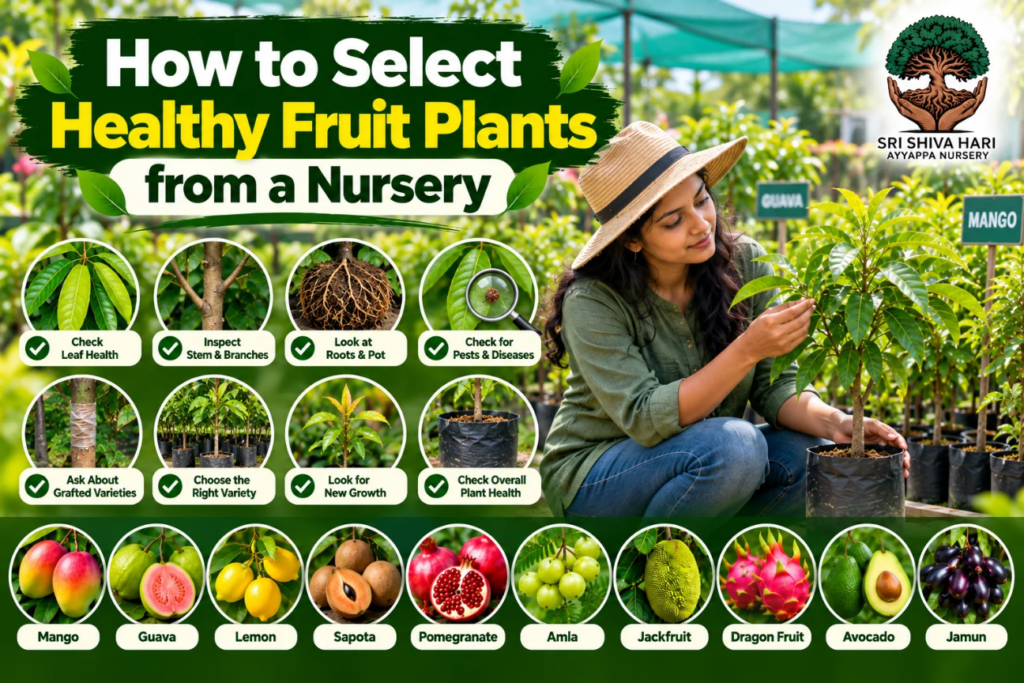
How to Select Healthy Fruit Plants from a Nursery
Starting a fruit garden is exciting. Whether you dream of growing mangoes in your backyard, picking fresh lemons for your kitchen or enjoying homegrown guavas with your family, choosing the right plants is the first step.
However, buying fruit plants is not just about selecting a variety you like. The health of the plant at the time of purchase can make a significant difference to how well it establishes and grows in your garden.
A plant may look attractive from a distance, but a closer inspection can reveal problems such as damaged roots, pests, weak stems or unhealthy leaves.
If you are planning to buy fruit plants from a nursery in Kadiyam or around Rajahmundry, this guide will help you understand what to check before making your purchase.
1. Check the Overall Appearance of the Plant
Start by looking at the plant as a whole.
A healthy fruit plant generally has a balanced structure, suitable foliage and growth that is appropriate for its age and variety.
Look for:
- Strong and reasonably upright growth.
- Healthy-looking leaves.
- A firm stem.
- New growth where appropriate.
- No obvious signs of severe damage.
Avoid choosing a plant simply because it is taller or bigger than the others. A smaller, well-established plant may be a better choice than a larger plant with weak growth.
2. Inspect the Leaves Carefully
Leaves can provide useful clues about a plant’s condition.
Before buying, examine the upper and lower surfaces of the leaves.
Look for:
- Unusual yellowing.
- Brown or black spots.
- Holes caused by insects.
- Curled or distorted leaves.
- Excessive wilting.
- Sticky residue or visible pests.
Healthy foliage varies depending on the fruit species and its natural characteristics. Some plants naturally have lighter-coloured or differently shaped leaves.
If you notice unusual symptoms, ask the nursery staff about them before purchasing.
3. Examine the Stem and Branches
The stem supports the plant and helps transport water and nutrients.
Check whether the main stem appears firm and whether the branches are reasonably healthy.
Avoid plants with:
- Broken main stems.
- Severe cracks.
- Soft or rotting sections.
- Significant physical damage.
- Unusual blackened areas.
For grafted fruit plants, also inspect the graft union. It should appear properly joined and reasonably healed, without obvious separation or severe damage.
4. Check the Roots and Pot Condition
Roots are one of the most important parts of a fruit plant, even though they are not always visible.
A healthy root system helps the plant establish itself after planting.
When inspecting a nursery plant, check whether:
- The plant appears stable in its container.
- The growing medium is not excessively dry or waterlogged.
- Roots are not visibly damaged.
- There are no obvious signs of root rot.
- The container is in reasonable condition.
If the roots are not visible, ask the nursery staff about the plant’s root condition.
Avoid pulling a plant out of its container yourself, as this can damage the roots.
5. Look for Signs of Pests and Diseases
Pests and diseases can affect plant growth and may spread to other plants in your garden.
Take time to inspect the leaves, stems and branches.
Watch for:
- Small insects on leaves.
- Webbing around branches.
- Sticky substances on foliage.
- Unusual leaf spots.
- Powdery or mould-like growth.
- Damaged or discoloured stems.
Not every mark indicates a serious disease, but unusual symptoms should be checked before purchase.
If you are buying several fruit plants, inspect each one instead of assuming that all plants in the same batch are equally healthy.
6. Ask Whether the Plant Is Grafted or Seed-Grown
This is an important question when buying fruit plants.
Different propagation methods can influence the characteristics and fruiting behaviour of a plant.
Grafted plants: Grafting combines selected plant material with a rootstock. For many fruit varieties, this can help maintain desirable characteristics of the selected variety.
Seed-grown plants: These are grown from seeds. Their characteristics may differ from those of the parent plant, and their time to fruiting can vary.
Before buying, ask:
- Is the plant grafted or seed-grown?
- What is the exact variety?
- Is the graft union healthy?
- What fruit characteristics can I expect?
- How long might it take to produce fruit under suitable conditions?
Understanding the propagation method helps you make a more informed decision.
7. Choose the Right Fruit Variety
A healthy plant may still struggle if its variety is unsuitable for your garden.
Before visiting a nursery, think about the fruit plants you want to grow.
Some popular options include:
Mango
Mango is a popular choice for larger gardens and properties. Consider its mature size and the space needed for the canopy.
Guava
Guava is suitable for many home garden settings and can be managed with appropriate pruning.
Lemon
Lemon plants are useful for household purposes. Some varieties may also be suitable for growing in large containers.
Sapota
Sapota, also known as chikoo, is worth considering if you have enough space for a fruit tree.
Pomegranate
Pomegranate can be grown as a shrub or small tree, depending on the variety and growing conditions.
Jackfruit
Jackfruit is generally better suited to larger properties because the tree can become substantial.
Amla
Amla is a traditional Indian fruit plant that can be a useful addition to a suitable home garden.
Ask the nursery about the variety’s suitability for your location before making a decision.
8. Check the Age and Size of the Plant
A common mistake is assuming that a bigger plant will always grow better.
The plant’s age, root development, health and growing conditions are more important than size alone.
When comparing plants, ask:
- How old is the plant?
- Is it established in its container?
- Has it been recently transplanted?
- Is the root system developed?
- Is the plant ready for planting in the ground?
Choose a plant with a healthy structure and an established root system rather than focusing only on height.
9. Understand the Plant’s Sunlight Requirements
Different fruit plants need different amounts of sunlight.
Many fruit trees perform well in sunny locations, but their exact requirements vary by species and variety.
Before purchasing, observe the area where you plan to plant the tree.
Ask the nursery:
- Does this variety need full sunlight?
- Can it tolerate partial shade?
- Is it suitable for a backyard?
- Can it be grown in a container?
Matching the plant to your garden’s sunlight conditions can make a big difference to its establishment and growth.
10. Ask About Watering and Soil Requirements
Watering requirements vary from one fruit plant to another.
Some plants prefer consistently moist growing conditions, while others need the growing medium to dry somewhat between watering.
Also, many fruit plants benefit from well-drained soil.
Before purchasing, understand:
- How frequently should the plant be watered?
- What type of soil is suitable?
- Does it need additional drainage?
- What growing medium is recommended?
- Does it need any special care during hot weather?
Avoid following the same watering schedule for every plant in your garden.
11. Check Whether the Plant Is Suitable for Your Garden Space
Always consider how large the plant will become.
A young mango or jackfruit plant may look small at the nursery, but it can eventually develop into a large tree.
Before buying, think about:
- Available planting space.
- Distance from buildings.
- Distance from compound walls.
- Root development.
- Canopy spread.
- Future maintenance requirements.
If you have a small garden, ask about compact varieties that may be more suitable.
12. Compare Multiple Plants Before Buying
If the nursery has several plants of the same variety, take time to compare them.
Look at:
- Leaf condition.
- Stem strength.
- Overall structure.
- Root establishment.
- Signs of pests.
- Growing-medium condition.
Sometimes the first plant you notice may not be the healthiest option.
Comparing a few plants can help you make a better selection.
13. Ask About Transportation and Planting
Buying a healthy plant is only the beginning. You also need to transport it carefully and plant it correctly.
During transportation:
- Keep the plant stable.
- Avoid breaking branches.
- Protect the foliage from excessive wind.
- Avoid placing heavy objects on the plant.
- Prevent the growing medium from spilling.
After bringing it home, follow the nursery’s planting guidance. Water appropriately and avoid exposing a newly purchased plant to sudden changes in growing conditions.
Common Mistakes to Avoid When Buying Fruit Plants
Even experienced gardeners can make mistakes when selecting plants.
Here are a few things to avoid:
Choosing only by appearance: Attractive foliage does not always mean the plant is healthy.
Ignoring the roots: Root condition is important for successful establishment.
Not checking the variety: Different varieties can have different growth and fruiting characteristics.
Buying oversized plants without inspection: Larger plants are not automatically healthier.
Ignoring pest symptoms: Inspect every plant before bringing it home.
Expecting immediate fruit: Fruit production depends on the plant’s age, variety, propagation method and growing conditions.
Buying without asking questions: Understand the plant’s care requirements before purchasing.
Where to Find Fruit Plants in Kadiyam
If you are searching for healthy fruit plants in Andhra Pradesh, Kadiyam, near Rajahmundry, is a nursery-growing region worth exploring.
Visiting a nursery allows you to compare different fruit varieties, inspect plants in person and ask about their growing requirements.
Depending on availability, you may find mango, guava, lemon, sapota, pomegranate, amla, jackfruit and other fruit plants.
One nursery you can contact is Sri Shiva Hari Ayyappa Nursery, located in Kadiyam, near Rajahmundry.
Contact details:
- Website: https://srishivahariayyappanursery.com/
- Phone: +91 8555090132
- Email: Srishivahariayyappanursery@gmail.com
- Location: Kadiyam, Rajahmundry, Andhra Pradesh
Contact the nursery before visiting to confirm current stock, plant sizes and prices. If you are looking for a particular variety or buying in bulk, it is helpful to enquire in advance.
Fruit Plant Buying Checklist
Use this simple checklist when visiting a nursery.
- Leaves look healthy and show no obvious severe damage.
- Stem is firm and reasonably strong.
- No obvious signs of pests or disease.
- Plant appears properly established in its container.
- Roots are not visibly damaged, where inspection is possible.
- Variety and propagation method are confirmed.
- Plant size suits the available garden space.
- Sunlight and watering requirements are understood.
- Transportation arrangements are planned.
Final Thoughts
Selecting healthy fruit plants from a nursery requires a little attention, but it can make your gardening experience much easier.
Take time to inspect the leaves, stems, roots and overall condition. Ask about the variety, propagation method, sunlight, watering and expected mature size before purchasing.
Whether you are planning to grow mango, guava, lemon, sapota, pomegranate or other fruit plants, choose varieties that suit your garden and local growing conditions.
If you are looking for fruit plants in Kadiyam or around Rajahmundry, visit a nursery, compare the available plants and ask questions before making your decision.
A healthy garden begins with a healthy plant. Choose carefully, plant properly and provide consistent care to help your fruit plants grow well.
Frequently Asked Questions
How can I identify a healthy fruit plant at a nursery?
Look for healthy foliage, firm stems, appropriate growth and a reasonably established root system. Also check for visible pests, unusual leaf spots and severe damage.
Should I buy grafted or seed-grown fruit plants?
The right choice depends on the fruit species and your requirements. Grafted plants can offer more predictable variety characteristics for many fruit crops. Ask the nursery about the propagation method and expected fruiting behaviour.
What should I check before buying a mango plant?
Check the leaves, stem, root condition, variety and graft union if applicable. Also consider the mature size of the tree and the space available in your garden.
Is a bigger fruit plant always better?
No. A healthy, well-established plant is often a better choice than a larger plant with weak growth or damaged roots.
How do I know whether a fruit plant has pests?
Inspect the upper and lower leaf surfaces, stems and branches for insects, webbing, sticky residue, unusual spots and damage.
Where can I buy healthy fruit plants near Rajahmundry?
You can explore plant nurseries in Kadiyam and the surrounding Rajahmundry region. Contact the nursery beforehand to confirm the availability and condition of the varieties you need.