
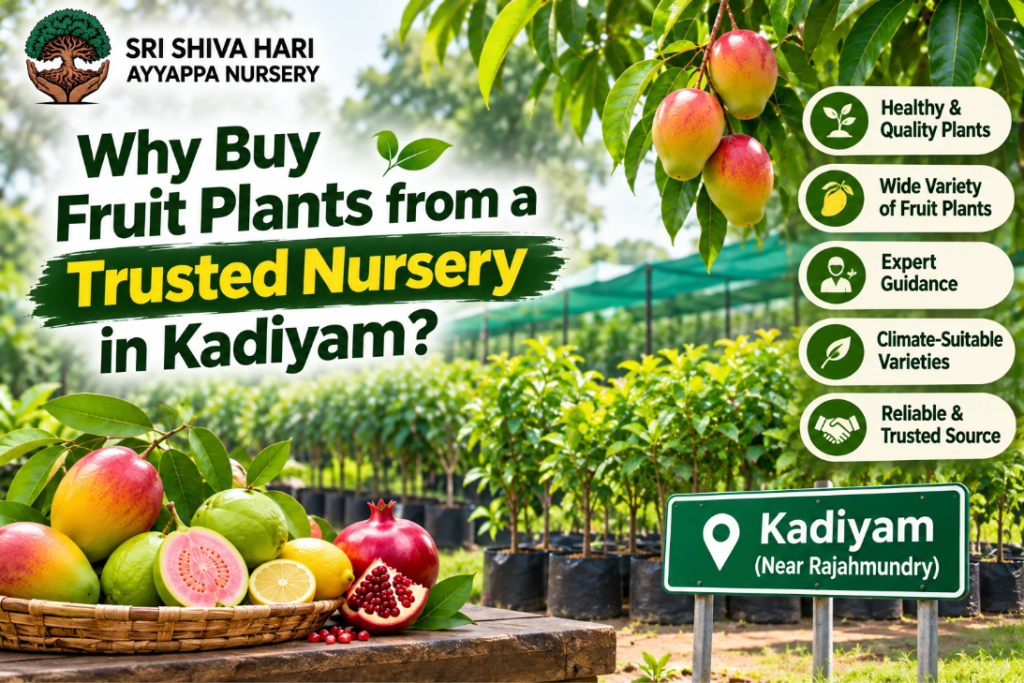
Why Buy Fruit Plants from a Trusted Nursery in Kadiyam?
Have you ever bought a beautiful fruit plant, brought it home with excitement, and watched it struggle to grow a few weeks later? It can be disappointing, especially when you have already spent time preparing the soil, watering the plant, and imagining the fruits it might produce.
Sometimes, the problem is not how you care for the plant. It may begin with the quality of the planting material, the variety you selected, or whether the plant was suitable for your local growing conditions.
That is why choosing the right nursery matters.
If you are planning to grow mango, guava, lemon, sapota, pomegranate, or other fruit plants, buying from a trusted nursery can help you make a more informed decision.
Kadiyam, located near Rajahmundry in Andhra Pradesh, is widely known for its plant nurseries and horticultural activities. The region attracts home gardeners, farmers, landscapers, and plant buyers looking for different varieties of greenery.
But what makes buying fruit plants from a reliable nursery in Kadiyam a sensible choice?
Let’s explore the benefits and understand what you should look for before purchasing.
1. Better Chances of Getting Healthy Fruit Plants
The first thing most people notice when visiting a nursery is how green and attractive the plants look. However, healthy plants are not always identified by their appearance alone.
A reliable nursery should be able to help you examine the overall condition of a plant before purchasing it.
When selecting fruit plants, look for:
- Healthy green leaves appropriate for the variety.
- Strong stems and branches.
- Well-established root systems.
- No obvious signs of serious pest damage.
- Suitable growing medium and container conditions.
- Healthy new growth where expected.
For example, if you are buying a mango plant, do not choose it simply because it is taller than the others. A smaller plant with healthy roots and balanced growth may establish more successfully.
Buying healthy planting material gives your garden a better starting point, although proper care after planting is still essential.
2. Access to Different Fruit Plant Varieties
One of the advantages of exploring nurseries in Kadiyam is the opportunity to compare different types of fruit plants.
Depending on the nursery and current availability, you may find varieties such as:
Mango Plants
Mango is a popular choice for spacious home gardens, farmhouses, and agricultural properties. Different varieties may have different fruit characteristics, growth habits, and cultivation requirements.
Guava Plants
Guava plants are popular among home gardeners because they produce familiar, edible fruit and can be managed through appropriate pruning.
Lemon Plants
Lemon plants are practical for household gardens. Selected varieties may also be suitable for growing in large containers.
Sapota Plants
Sapota, commonly called chikoo, is known for its sweet fruit and can be considered for gardens with sufficient planting space.
Pomegranate Plants
Pomegranate can be an attractive addition to a fruit garden. Its growth habit and care requirements depend on the selected variety.
Jackfruit Plants
Jackfruit trees are generally better suited to larger gardens and farms because they can grow into substantial trees.
Amla Plants
Amla, or Indian gooseberry, is a traditional fruit plant used in various Indian food preparations.
Dragon Fruit Plants
Dragon fruit is an interesting option for people interested in specialty fruit cultivation. Unlike conventional fruit trees, it grows on a climbing cactus and requires support.
Other varieties, such as jamun, avocado, star fruit, and water apple, may also be available at selected nurseries.
Having different options allows you to choose fruit plants based on your garden size, personal preferences, and local growing conditions.
3. Guidance on Choosing the Right Fruit Plants
Imagine visiting a nursery and asking for a mango plant. The nursery staff may ask you a simple question: “Are you planting it in a small backyard or on a large farm?”
That question matters because the same fruit category can include varieties with different growth characteristics.
A knowledgeable nursery can help you consider:
- Available planting space.
- Sunlight exposure.
- Soil conditions.
- Water availability.
- Local climate.
- Planting purpose.
- Maintenance requirements.
For example, someone with a small garden may benefit from exploring suitable compact fruit varieties, while a farmer planning an orchard needs to consider spacing, irrigation, and long-term cultivation requirements.
The right guidance can help you avoid purchasing a plant that does not suit your property.
4. Opportunity to Inspect Plants Before Buying
Buying fruit plants is different from buying ordinary household products.
A plant is a living organism, and its condition can change depending on how it has been grown, handled, and maintained.
Visiting a nursery allows you to inspect the plant in person.
You can check its leaves, stems, pot condition, and overall structure. You can also compare several plants of the same variety before choosing one.
For grafted fruit plants, ask about the graft union and whether the plant has been properly established.
If you notice unusual leaf spots, damaged branches, or visible insects, you can ask questions before purchasing.
This hands-on experience is particularly useful for beginners who are still learning how to identify healthy fruit plants.
5. Understanding Grafted and Seed-Grown Fruit Plants
When buying fruit plants, one important detail is often overlooked: how the plant was propagated.
Some fruit plants are grown from seeds, while others are propagated through grafting, budding, or other horticultural methods.
The propagation method can influence the plant’s characteristics and fruiting behaviour.
For many fruit crops, grafting is used to reproduce desirable characteristics of a selected variety.
However, not every grafted plant will automatically grow faster or produce better fruit. Results depend on the species, variety, rootstock, growing conditions, and care.
Before purchasing, ask:
- Is this plant grafted or seed-grown?
- What is the exact variety?
- What fruit characteristics can I expect?
- How large will the tree become?
- Does it require another variety for pollination?
- What is the expected time to fruiting under suitable conditions?
A nursery that can explain these details helps you understand what you are buying.
6. Choosing Plants Suitable for Andhra Pradesh’s Climate
Andhra Pradesh experiences different growing conditions across its coastal, inland, and elevated regions.
A fruit plant that grows well in one location may need additional care or may not be suitable for another.
Many tropical fruit plants, including mango, guava, sapota, and jackfruit, can grow in suitable parts of Andhra Pradesh.
However, their performance depends on the variety, soil, rainfall, irrigation, and local temperatures.
When buying fruit plants in Kadiyam, explain where you intend to grow them.
For example, if you are purchasing plants for a farm in another district, tell the nursery about the location and available water supply.
For unfamiliar or commercially important varieties, it is also sensible to consult a local horticulture expert before making a large investment.
7. Helpful Planting and Maintenance Advice
Bringing a fruit plant home is only the beginning.
The next step is helping it establish itself in its new environment.
A knowledgeable nursery can explain the general care requirements of the plants you purchase.
Important topics include:
Watering: Newly planted fruit trees need appropriate moisture, but excessive watering can cause root problems.
Sunlight: Many fruit plants need sunny locations, although their exact requirements vary.
Soil: Suitable soil preparation and drainage support healthy root development.
Fertilizer: Nutrient requirements depend on the plant, soil conditions, and stage of growth.
Pruning: Some fruit plants benefit from regular pruning to maintain their shape and growth.
Pest monitoring: Regular observation can help you identify problems before they become severe.
Getting this information before planting can make the first few weeks of plant care easier.
8. A Practical Option for Home Gardeners and Farmers
Not everyone visits a nursery for the same reason.
A homeowner may want two guava plants and one lemon plant. A farmhouse owner may need several fruit trees, while a farmer may be planning a larger plantation.
Kadiyam nurseries can be worth exploring for these different requirements.
For home gardeners, the priority may be finding healthy plants that fit a limited space.
For farmers, important considerations include:
- Variety identification.
- Planting material quality.
- Availability of required quantities.
- Recommended spacing.
- Irrigation needs.
- Transportation arrangements.
- Suitability for the intended growing area.
If you are purchasing plants in bulk, contact the nursery in advance and discuss the exact varieties, sizes, and quantities required.
9. Easier Comparison of Plant Sizes and Prices
Fruit plants are often available in different sizes, depending on the nursery’s stock.
A small sapling may cost less than a larger, more established plant, but price alone should not determine your choice.
When comparing plants, consider:
- Variety.
- Plant age, if known.
- Overall health.
- Root establishment.
- Propagation method.
- Container size.
- Transportation requirements.
A larger plant is not necessarily the best choice.
In some cases, a smaller, healthy plant may be easier to transport and establish.
Ask the nursery about the available options and choose according to your requirements and budget.
10. Support for Long-Term Garden Planning
Fruit trees are long-term additions to a garden.
A mango or jackfruit tree may remain on your property for many years, so selecting its planting location carefully is important.
A knowledgeable nursery can help you understand the mature size and general growth habits of different fruit plants.
Before planting, consider:
- Distance from your house.
- Space between trees.
- Root development.
- Canopy spread.
- Irrigation access.
- Future pruning and harvesting.
Planning these details before planting can help you avoid overcrowding and unnecessary maintenance problems.
For large farms, a professional planting layout and soil assessment are advisable.
11. Better Understanding of Seasonal Plant Care
Fruit plants may require different care depending on the season.
In Andhra Pradesh, hot summer conditions, monsoon rainfall, and seasonal changes can affect soil moisture and plant growth.
For example, newly planted fruit trees may require more frequent moisture checks during hot weather.
During periods of heavy rainfall, proper drainage becomes especially important.
A nursery familiar with local growing conditions may be able to explain seasonal precautions for the varieties it sells.
However, remember that the best care routine depends on your specific location, soil, and plant variety.
12. Building Confidence as a Beginner
Starting your first fruit garden can feel confusing.
You may have questions such as:
“How often should I water my mango plant?”
“Can I grow lemon in a pot?”
“How much sunlight does guava need?”
“When will my fruit tree start producing fruit?”
These are normal questions for anyone beginning their gardening journey.
A helpful nursery can make the process less overwhelming by explaining the basics and helping you understand the requirements of the plants you choose.
You do not need to become a gardening expert before buying your first fruit plant. You simply need to ask the right questions and be willing to learn.
Why Is Kadiyam Popular for Plant Nurseries?
Kadiyam, located near Rajahmundry in Andhra Pradesh, has a long association with nursery cultivation and ornamental plant production.
The region is known for growing different categories of plants, including fruit trees, palms, flowering plants, shrubs, and ornamental varieties.
For plant buyers, visiting Kadiyam offers the opportunity to explore nursery collections and compare different plants.
However, not every nursery carries the same varieties or provides the same services.
Before visiting, contact the nursery to confirm its current stock, operating hours, prices, and other requirements.
Where to Buy Fruit Plants in Kadiyam?
If you are looking for fruit plants in Kadiyam or around Rajahmundry, you can enquire with Sri Shiva Hari Ayyappa Nursery.
Located in Kadiyam, the nursery offers a collection of plant varieties for people interested in gardening and landscaping.
Depending on current availability, you can enquire about mango, guava, lemon, sapota, pomegranate, jackfruit, amla, and other fruit plants.
Sri Shiva Hari Ayyappa Nursery – Contact Details
- Website: https://srishivahariayyappanursery.com/
- Phone: +91 8555090132
- Email: Srishivahariayyappanursery@gmail.com
- Location: Kadiyam, Rajahmundry, Andhra Pradesh
Before visiting, contact the nursery to confirm the availability of your preferred fruit varieties, plant sizes, and prices.
If you are planning to purchase plants for a farm or large garden, discuss your requirements in advance.
How to Identify a Trusted Fruit Plant Nursery
Choosing a nursery should involve more than comparing prices.
Here are some practical things to check before purchasing.
Check the Condition of the Plants
Look for healthy foliage, strong stems, and reasonably established plants.
Ask About the Exact Variety
Make sure you understand which variety you are buying, especially for mango, guava, and other fruit plants with multiple cultivars.
Ask About Propagation
Find out whether the plant is grafted, seed-grown, or propagated using another method.
Understand Growing Requirements
Ask about sunlight, soil, watering, mature size, and maintenance.
Compare Available Plants
If several plants of the same variety are available, compare their overall condition before selecting one.
Confirm Prices and Availability
Contact the nursery in advance, particularly if you need a specific variety or large quantity.
Discuss Transportation
Make sure the plants can be transported safely without damaging their roots, stems, or branches.
These simple checks can help you make a more informed purchase.
Common Mistakes to Avoid When Buying Fruit Plants
Even experienced gardeners can make mistakes when purchasing new plants.
Some common mistakes include:
- Choosing only by appearance: A large or attractive plant may still have root problems.
- Ignoring mature size: A small sapling may eventually become a large tree.
- Not checking the variety: Different varieties have different characteristics and requirements.
- Buying without inspecting plant health: Always look for visible signs of pests or serious damage.
- Ignoring local climate: Choose plants suited to your growing conditions.
- Expecting immediate fruit: Fruit production depends on plant age, variety, propagation method, and care.
- Overlooking transportation: Poor handling can damage plants before they reach your garden.
Taking a little extra time before buying can help prevent problems later.
Final Thoughts
Buying fruit plants is an exciting first step toward creating a beautiful and productive garden.
Whether you are planning to grow mango, guava, lemon, sapota, pomegranate, jackfruit, or another fruit variety, choosing a reliable nursery can help you make better decisions.
Kadiyam is a useful destination for exploring fruit plants in Andhra Pradesh. The opportunity to compare varieties, inspect plants, and ask questions can be especially valuable for first-time buyers.
If you are searching for fruit plants in Kadiyam, consider contacting Sri Shiva Hari Ayyappa Nursery to enquire about available varieties and sizes.
Remember, a successful fruit garden begins long before the first fruit appears. It starts with choosing suitable, healthy plants and giving them the care they need to grow.
Frequently Asked Questions
Why should I buy fruit plants from a trusted nursery?
A trusted nursery can help you select healthy planting material, understand different varieties, and learn about the growing requirements of the plants you purchase.
What fruit plants can I find in Kadiyam?
Depending on nursery availability, you may find mango, guava, lemon, sapota, pomegranate, jackfruit, amla, dragon fruit, and other fruit varieties.
Are grafted fruit plants better than seed-grown plants?
Grafted plants can provide more predictable variety characteristics for many fruit crops. However, the best propagation method depends on the species, variety, and intended purpose.
Can I buy fruit plants in bulk from Kadiyam nurseries?
Some nurseries may offer plants in larger quantities. Contact the nursery directly to confirm available stock, pricing, and transportation arrangements.
How do I identify healthy fruit plants?
Look for healthy foliage, strong stems, established roots, and no obvious signs of severe pest or disease damage. Ask about the plant’s variety and growing requirements before purchasing.
Which fruit plants are suitable for home gardens in Andhra Pradesh?
Mango, guava, lemon, sapota, pomegranate, and other fruit plants may be suitable depending on your garden’s space, soil, sunlight, and local growing conditions.
Where can I enquire about fruit plants near Rajahmundry?
You can contact Sri Shiva Hari Ayyappa Nursery in Kadiyam, near Rajahmundry, at +91 8555090132 to enquire about available fruit plants.
What should I ask before purchasing a fruit plant?
Ask about the variety, propagation method, mature size, sunlight requirements, watering needs, expected fruiting characteristics, and suitability for your location.