thewebsitemakers

Plants in Rajahmundry

How Nurseries Help You Choose the Right Plants

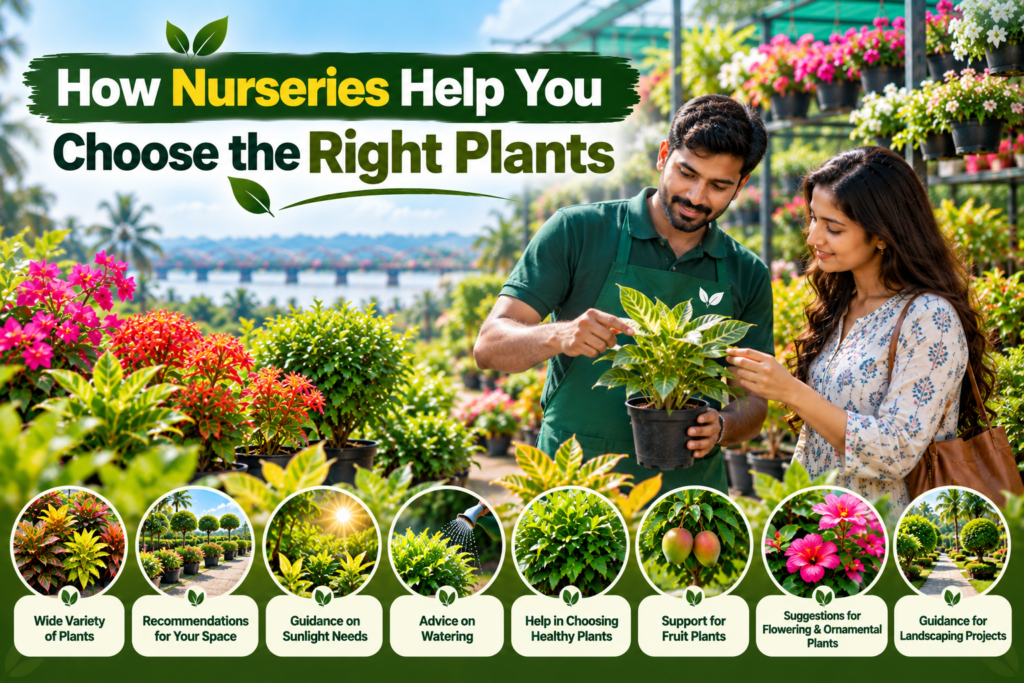
How Nurseries Help You Choose the Right Plants Choosing plants for your home or garden sounds simple until you start exploring the options. You might visit a nursery looking for a few flowering plants and end up discovering fruit trees, ornamental shrubs, palms, bamboo, bonsai and dozens of other varieties. With so many choices available, how do you know which plants will actually grow well in your space? This is where a good plant nursery can make a difference. A nursery is not just a place to purchase plants. It can also be a helpful place to compare varieties, understand plant requirements and get guidance before making a decision. For people looking for plants in Rajahmundry and nearby areas, including Kadiyam, visiting a nursery can make the plant-buying process easier and more practical. Let’s explore how nurseries help you choose the right plants for your needs. 1. Helping You Understand Different Plant Varieties One of the first advantages of visiting a nursery is the opportunity to explore different plant varieties in person. You may already know that you want a garden, but you might not know which plants would suit it best. Depending on availability, a nursery may offer: Seeing these categories together helps you compare their appearance, size and growth habits. For example, a homeowner who wants a colourful entrance might prefer flowering plants, while someone planning a large garden may be interested in palms, ornamental trees and shrubs. 2. Recommending Plants According to Your Space Every garden is different. A plant that works well in a large farmhouse may not be suitable for a small balcony. Nursery staff can help you explore options according to the space you have available. Before visiting, think about where you want to place your plants: For balconies: Consider suitable container plants, compact ornamentals and flowering varieties. For home entrances: Flowering shrubs, decorative foliage plants and suitable palms can create an attractive appearance. For backyards: You may have room for a combination of fruit plants, shrubs and ornamental trees. For large properties: Trees, palms, bamboo and other landscape plants may be worth exploring. Always consider the plant’s mature size, not just how small it looks in its nursery pot. 3. Explaining Sunlight Requirements Sunlight plays an important role in plant growth. Some plants need several hours of direct sunlight, while others grow better with partial shade or filtered light. A nursery can help you understand the general light requirements of different varieties. Before asking for recommendations, observe your garden and note whether it receives full sunlight, morning sunlight or mostly shade. This information makes it easier to narrow down your options. Remember that a plant may struggle if it is placed in conditions that do not suit its needs, even if it looked healthy when you purchased it. 4. Helping You Understand Watering Needs Not all plants need the same amount of water. Some varieties prefer consistently moist growing conditions, while others need the growing medium to dry somewhat between watering. A nursery can explain the general watering needs of the plants you are considering. This is particularly useful if you are new to gardening or have limited time for maintenance. Before buying, ask: The answers can help you choose plants that fit your watering routine. 5. Helping You Choose Healthy Plants Another important benefit of visiting a nursery is being able to inspect plants before purchasing them. Photographs may show the variety, but seeing a plant in person allows you to examine its actual condition. Look for: If you notice yellowing leaves, unusual spots or damaged stems, ask the nursery staff about the cause. A few imperfect leaves do not necessarily mean the plant is unhealthy. Consider its overall condition before deciding. 6. Guiding You When Choosing Fruit Plants Fruit plants can be a rewarding addition to a home garden, but choosing the right variety requires some thought. Depending on availability, nurseries may offer mango, guava, lemon, sapota, avocado, jackfruit, pomegranate, amla and other fruit plants. Nursery staff can help you understand the general growing requirements of different varieties. Before purchasing, consider: If you are planning a fruit garden or farm, ask about the particular variety rather than choosing a plant based only on its name or appearance. 7. Helping You Select Flowering and Ornamental Plants Flowering and ornamental plants can transform the appearance of a garden. However, the right choice depends on the design you want and the conditions available. For example, you might combine flowering plants with foliage plants to create contrast. Alternatively, you could use shrubs and suitable palms to add height and structure. A nursery visit allows you to compare colours, foliage, shapes and plant sizes before deciding. You can also ask about pruning, flowering seasons and the maintenance required to keep the plants looking attractive. 8. Suggesting Plants for Landscaping Projects Landscaping often requires more than one type of plant. A well-planned landscape may combine large trees, palms, shrubs, flowering plants and ground-level greenery. Nurseries can help you explore the available varieties for different parts of a property. For example: The final selection should depend on the project’s design, soil, sunlight, available space and maintenance requirements. For large projects, prepare a planting plan before purchasing plants in bulk. 9. Helping You Choose Plants Within Your Budget A garden does not need to be expensive to look attractive. The overall cost depends on the varieties you choose, their sizes and the number of plants required. A nursery can help you compare available sizes and options so you can make decisions according to your budget. Remember to account for more than the purchase price. You may also need pots, growing medium, fertilizer, transportation and ongoing maintenance. If you are buying multiple plants, ask about available sizes and whether the nursery can meet your quantity requirements. 10. Explaining Plant Maintenance Some plants need regular pruning, shaping or additional care. Others may be easier to maintain once they are established. Understanding these differences before buying can help you avoid unnecessary

How Nurseries Help You Choose the Right Plants Read More »
Ornamental Plants in Rajahmundry

Best Ornamental Plants for Homes in Rajahmundry

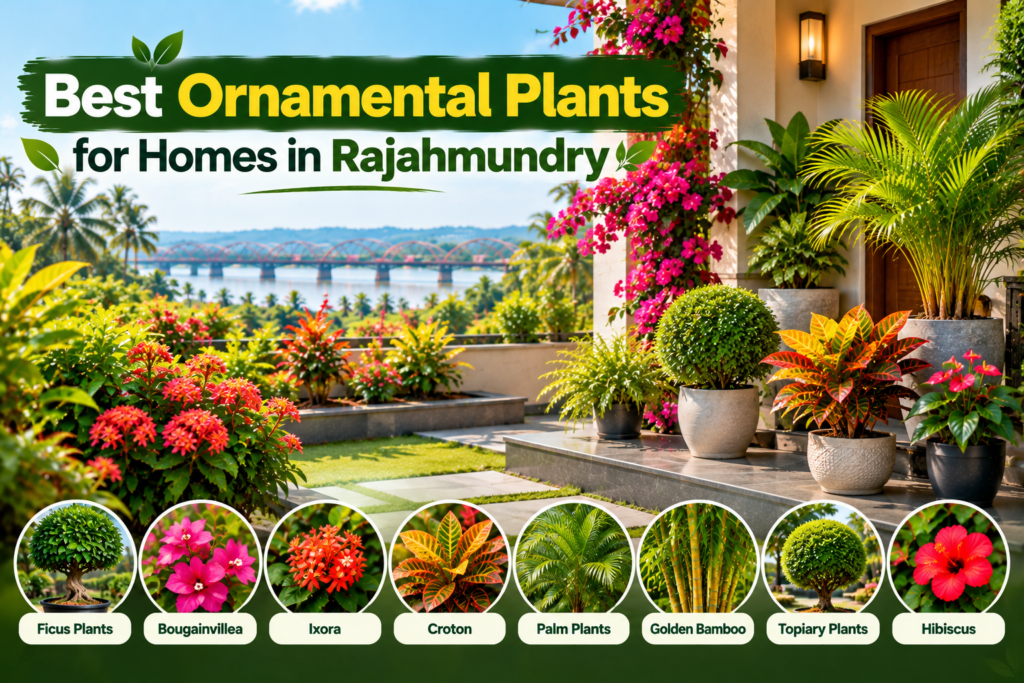
Best Ornamental Plants for Homes in Rajahmundry A home feels more welcoming when it has a touch of greenery. A few well-chosen plants can brighten an entrance, make a balcony more inviting, add character to a living space and turn an ordinary backyard into a relaxing garden. For homeowners in Rajahmundry, ornamental plants are a wonderful way to bring nature closer to everyday life. Whether you have a spacious garden, a small courtyard, a terrace or just a few pots near your entrance, there are many varieties to consider. The key is to choose plants that suit your available space, sunlight and maintenance routine. In this guide, we explore some of the best ornamental plants for homes in Rajahmundry and share practical tips for selecting and caring for them. 1. Ficus Plants Ficus plants are popular for their attractive foliage and decorative shapes. Depending on the variety, they can be used as potted plants, garden features or part of a larger landscape. Some varieties to explore include: Ficus plants can add a neat, structured appearance to entrances, patios and outdoor gardens. Some varieties can grow quite large, so check their mature size before planting them near buildings. Best suited for: Garden entrances, patios, decorative pots and landscaping. 2. Bougainvillea Bougainvillea is loved for its colourful display and ability to create a lively outdoor setting. It can be grown along suitable fences, over supports or in containers, depending on the variety. Its colourful bracts can make entrances, compound walls and garden corners more attractive. Bougainvillea generally prefers plenty of sunlight. Choose a location where it has enough room to grow and can receive the light it needs. Best suited for: Sunny balconies, garden borders, entrances and compound walls. 3. Ixora Ixora is a flowering shrub known for its clusters of small, colourful flowers. Depending on the variety, the flowers may appear in shades such as red, orange, pink or yellow. It can add colour to garden beds and pathways and may also be grown in suitable containers. Regular attention to watering, sunlight and general plant health can help maintain attractive growth. Best suited for: Front gardens, flowering borders and outdoor pots. 4. Croton Croton is appreciated for its colourful foliage. Its leaves can feature combinations of green, yellow, red and orange, making it an interesting choice for decorative planting. A few croton plants can add contrast to an otherwise green garden. Crotons generally prefer bright conditions, although their ideal exposure depends on the variety and how they have been grown. Introduce plants gradually when changing their light conditions. Best suited for: Decorative pots, garden corners and colourful foliage displays. 5. Areca Palm Areca Palm is a popular choice for adding a tropical feel to a home garden. Its graceful, feathery foliage can soften the appearance of patios, entrances and outdoor seating areas. It can also work in large containers where conditions are suitable. Before choosing an Areca Palm, consider the space available and whether the location provides suitable light and moisture conditions. Best suited for: Patios, larger balconies, garden corners and tropical-style landscapes. 6. Foxtail Palm Foxtail Palm is known for its distinctive, bushy fronds. It can create a striking focal point in a larger garden. For homes with enough outdoor space, a Foxtail Palm can work well near an entrance, along a driveway or as part of a planned landscape. Because it grows into a substantial palm, it is important to plan its position carefully. Best suited for: Spacious gardens, villas, driveways and larger landscapes. 7. Golden Bamboo Golden Bamboo can bring a vertical, natural element to an outdoor space. Its distinctive stems can complement other ornamental plants and create an attractive green backdrop. Depending on the variety, bamboo can also be used for screening or borders. Before planting bamboo, ask about its growth habit and space requirements. Some types can spread or grow vigorously, so the right variety and planting location matter. Best suited for: Larger gardens, suitable borders and decorative outdoor areas. 8. Topiary Plants Topiary plants are ideal for homeowners who prefer a neat and structured garden appearance. They are maintained in decorative shapes and can be used to create focal points near entrances, pathways and outdoor seating areas. Topiary can make a garden look organised, but it requires regular trimming to maintain its shape. Best suited for: Main entrances, formal gardens, pathways and landscaped courtyards. 9. Hibiscus Hibiscus is a popular flowering plant that can add colour to a home garden. Depending on the variety, its large, attractive flowers may appear in different colours. Hibiscus can be grown in the ground or in suitable containers. Choose a location with appropriate sunlight and enough room for the plant to develop. Regular watering and care can support healthy growth and flowering. Best suited for: Home gardens, sunny patios and flowering plant collections. 10. Allamanda Allamanda is a flowering ornamental plant known for its bright, trumpet-shaped flowers, often yellow depending on the variety. It can be used in suitable outdoor garden settings, including near supports or along planned planting areas. Give it enough space and check whether the variety has a climbing or spreading growth habit before choosing a location. Best suited for: Garden borders, outdoor supports and sunny planting areas. 11. Portulaca Portulaca is a useful option for adding colourful flowers to sunny areas. It is often grown in containers, garden edges and suitable low-growing planting spaces. Its compact growth can make it appealing for homeowners who want colour without using large plants. Portulaca generally prefers sunny conditions and well-drained growing medium. Best suited for: Small garden beds, sunny pots, pathways and low borders. 12. Bonsai Plants Bonsai plants are a good choice for people who enjoy caring for plants as a hobby. Their carefully maintained shapes make them interesting decorative features for suitable outdoor areas, terraces and patios. Some varieties may be kept indoors for limited periods or in bright indoor environments, but requirements depend on the species. Bonsai requires specific care, including suitable light, watering,

Best Ornamental Plants for Homes in Rajahmundry Read More »

Healthy Plants in Rajahmundry

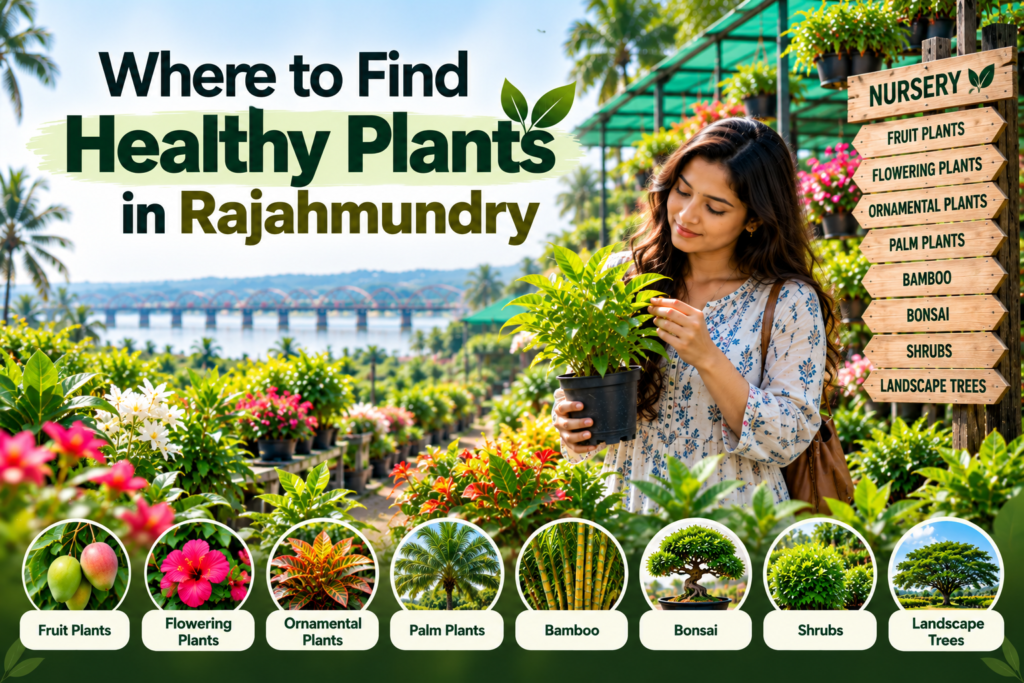
Where to Find Healthy Plants in Rajahmundry

Where to Find Healthy Plants in Rajahmundry A beautiful garden begins with healthy plants. Whether you want to grow fruit trees in your backyard, add colourful flowers to your entrance, decorate your balcony with ornamental plants, or develop a large landscape, choosing the right plants makes a big difference. If you are wondering where to find healthy plants in Rajahmundry, there are several options to explore. The nearby Kadiyam region is particularly well known for its nursery-growing activities and variety of plants, making it a popular destination for plant buyers in Andhra Pradesh. However, finding healthy plants involves more than visiting a nursery with a large collection. You also need to check plant quality, understand growing requirements and choose varieties that suit your garden. In this guide, we will explore where to look for healthy plants in Rajahmundry, what types of plants you can find and how to make the right buying decision. 1. Explore Plant Nurseries in Rajahmundry A local plant nursery is a good starting point if you want to buy plants for your home, garden or property. Visiting a nursery allows you to see the plants in person instead of relying only on photographs. You can compare different varieties, examine their leaves and stems, and ask questions about their care. Depending on availability, nurseries may offer: Before visiting, make a list of the plants you need. If you are looking for a particular variety or purchasing plants in large quantities, contact the nursery to check availability. 2. Visit Kadiyam for a Wider Choice of Plants When discussing places to find plants near Rajahmundry, Kadiyam deserves special attention. Kadiyam is widely associated with nursery cultivation and offers plant buyers an opportunity to explore a variety of plants through its nurseries. It can be useful for homeowners looking for a few garden plants, farmers searching for fruit plants and landscapers planning larger projects. Depending on current availability, you may find fruit-bearing trees, flowering plants, ornamental varieties, palms, bamboo, shrubs and landscape trees. One advantage of visiting nurseries in person is that you can compare plants before making a decision. You can also discuss your requirements with nursery staff and ask about suitable growing conditions. 3. Look for Nurseries with Healthy Plant Collections A large plant collection is useful, but plant health should always be a priority. When visiting a nursery, take a few minutes to inspect the plants before buying them. Check the Leaves Look for healthy-looking foliage. Be cautious if you notice extensive yellowing, unusual spots, severe wilting or obvious pest damage. Examine the Stems The stems should generally look strong and appropriate for the plant’s size. Avoid plants with severe physical damage. Inspect the Pot Check whether the plant appears properly established in its container. If you have concerns about the roots, ask the nursery staff for guidance. Look for Pests Inspect the leaves and stems for visible insects, webbing, sticky residue or other unusual signs. A few damaged leaves do not automatically mean a plant is unhealthy, so consider its overall condition rather than judging it by a single leaf. 4. Choose Fruit Plants for Your Garden Fruit plants are a popular choice among homeowners and farmers. With proper care and suitable growing conditions, many fruit trees can become long-term additions to a property and eventually produce fruit. Depending on availability, you may find varieties such as: Before buying, consider the available space, sunlight, soil, water supply and expected mature size. If you are planning a fruit garden or farm, ask about the specific variety and its growing requirements before purchasing. 5. Find Flowering Plants for Colourful Spaces If your goal is to create a colourful garden, flowering plants are worth exploring. They can brighten entrances, pathways, balconies, patios and garden beds. Depending on nursery availability, options may include Ixora, Lantana, Portulaca, Allamanda, Calliandra, Eranthemum and Bougainvillea. Choose flowering plants according to the amount of sunlight available in your garden. Some varieties perform best in full sunlight, while others may prefer partial shade. Combining plants with different heights and colours can help create a more attractive outdoor space. 6. Explore Ornamental Plants and Palms Ornamental plants can add interesting foliage, shapes and textures to a garden. Palm plants, meanwhile, are often chosen for their distinctive appearance and tropical feel. Depending on availability, you may find ornamental Ficus varieties, Foxtail Palm, Royal Palm, Areca Palm, Washingtonia, Bismarckia and other decorative plants. These plants can be useful for home gardens, farmhouses, office entrances and landscaping projects. Before buying large palms or ornamental trees, ask about their mature height and spread. A plant that looks small at the nursery may eventually need much more room. 7. Ask About Plant Care Before Purchasing Healthy plants need appropriate care after you bring them home. A nursery visit is a good opportunity to understand what each plant requires. Ask questions such as: The answers can help you decide whether the plant is suitable for your garden and your maintenance routine. 8. Choose Plants According to Your Space The healthiest plant may still struggle if it is placed in an unsuitable location. Before buying, consider the conditions at your property. For a small garden: Choose suitable compact ornamentals, flowering plants and manageable shrubs. For a backyard: Consider a combination of flowering plants, ornamental varieties and selected fruit plants. For a farmhouse: Depending on the available space, you may consider fruit trees, palms and landscape plants. For a landscaping project: A combination of trees, shrubs, palms and flowering plants may help create a balanced design. Always think about the plant’s mature size rather than selecting it only by how it looks today. 9. Compare Prices and Plant Sizes Plant prices can vary according to the variety, size, container and other factors. Instead of choosing only the cheapest option, compare the overall condition and suitability of the plants. If you are buying several plants, ask about the available sizes and whether the nursery can meet your quantity requirements. For larger purchases, plan transportation before

Where to Find Healthy Plants in Rajahmundry Read More »

Plant Categories in Rajahmundry

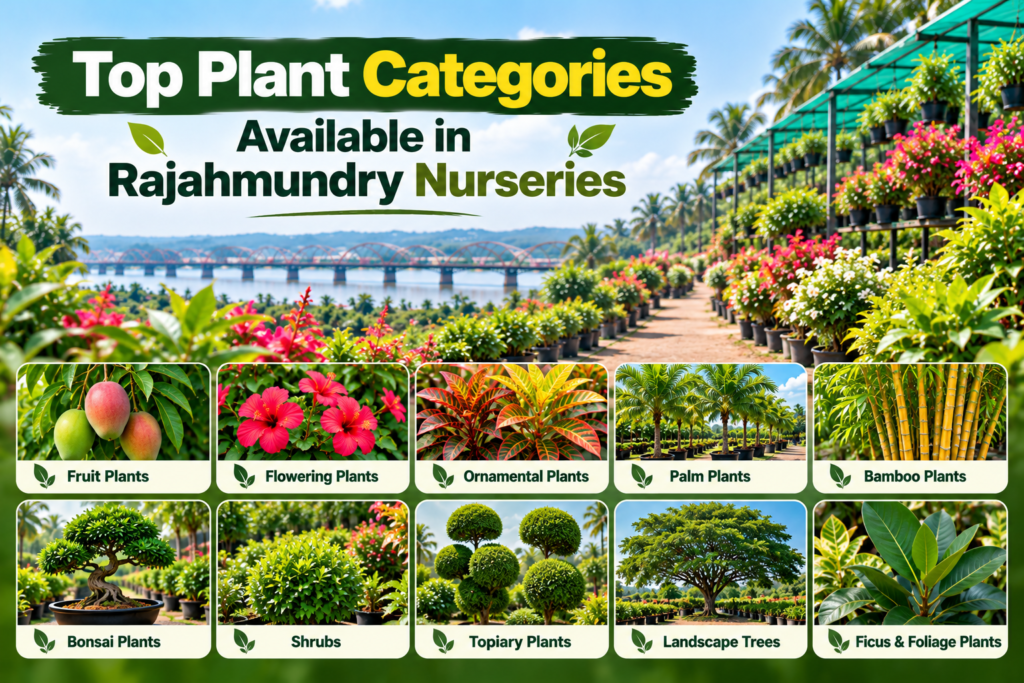
Top Plant Categories Available in Rajahmundry Nurseries

Top Plant Categories Available in Rajahmundry Nurseries Planning a garden can be exciting, but choosing the right plants is not always easy. Walk into a nursery and you may find fruit trees, flowering plants, palms, bamboo, ornamental varieties, bonsai and many other options. Without a clear idea of what you need, it is easy to buy plants that may not suit your space. For people looking for plants in and around Rajahmundry, local nurseries offer a wide range of choices. The nearby Kadiyam nursery region is also well known for its variety of plants, making it a useful destination for homeowners, farmers, landscapers and plant enthusiasts. In this guide, let’s look at the major plant categories you can explore at Rajahmundry nurseries and how to choose the right ones for your garden. 1. Fruit Plants Fruit plants are one of the most popular choices for home gardens, farms and larger properties. A healthy fruit plant can become a long-term addition to your garden, providing greenery and, with suitable growing conditions and care, fresh fruit. Depending on nursery availability, you may find varieties such as: Before buying a fruit plant, consider the space it will need when fully grown. A small plant at the nursery can eventually develop into a large tree. Also ask about sunlight, watering, soil and general maintenance requirements. 2. Flowering Plants Flowering plants are ideal when your main goal is to add colour and vibrancy to your garden. They can be used around entrances, pathways, balconies, patios, lawns and garden beds. Depending on availability, you may find: Different flowering plants have different sunlight and watering requirements. Before buying, check whether the plant will suit the location where you plan to grow it. You can also combine flowering plants with ornamental shrubs and foliage plants to create a more balanced garden. 3. Ornamental Plants Ornamental plants are mainly selected for their appearance. Their foliage, shape, colour and structure can add character to an outdoor space. They can be used in: Ficus varieties are also commonly used for ornamental purposes. Depending on availability, options may include Ficus microcarpa, Ficus Panda, Ficus Triangular, Ficus Nuda and other decorative forms. When selecting ornamental plants, think about how their appearance will complement the other plants in your garden. 4. Palm Plants Palm plants are popular for landscaping because of their distinctive appearance and tropical feel. Depending on availability, Rajahmundry-area nurseries may offer varieties such as: Palms can be used around entrances, pathways, lawns, farmhouses, resorts and larger landscapes. However, don’t select a palm only by looking at its current size. Ask about its mature height and spread before deciding where it should be planted. 5. Bamboo Plants Bamboo can add height and a natural appearance to a garden. Depending on the variety, it can be used for decorative planting, borders and screening. Some varieties you may come across include: Bamboo varieties can have different growth habits, so it is important to understand the characteristics of the particular variety before planting it. For smaller gardens, pay special attention to available space and expected growth. 6. Bonsai Plants Bonsai is a popular choice for people who enjoy gardening as a hobby. Unlike many regular garden plants, bonsai requires ongoing attention. Watering, pruning, positioning and repotting can all be part of maintaining a healthy bonsai. They can be suitable for: If you are buying bonsai for the first time, ask the nursery about its specific care requirements before taking it home. 7. Shrubs Shrubs are useful for filling empty spaces and adding structure to a garden. They can be used as: Flowering shrubs can provide additional colour, while foliage shrubs can add greenery and structure. When planting shrubs, leave enough room between individual plants. They can become considerably wider as they mature. 8. Topiary Plants Topiary plants can give a garden a neat, structured and decorative appearance. They can be shaped and maintained into different forms and are particularly useful around: Topiary plants generally need regular trimming and shaping, so consider the maintenance involved before choosing them. 9. Landscape Trees For larger properties, landscape trees can provide height, shade and structure. Depending on availability, nursery collections may include varieties such as: Large trees need careful planning. Before planting one, consider its mature height, canopy spread and root development. It is also important to maintain an appropriate distance from buildings, walls, roads and overhead utilities. 10. Decorative Foliage and Ficus Plants If you want greenery without depending entirely on flowers, decorative foliage plants can be a good option. Ficus varieties can provide attractive shapes and foliage and can be used in different types of garden designs. Some varieties found in nursery collections include: Always check the growth characteristics of the particular variety before selecting its planting location. How to Choose the Right Plant Category With so many categories available, it helps to decide what you want your garden to achieve. If You Want Fresh Fruit Focus on fruit plants that suit your space and growing conditions. If You Want More Colour Choose flowering plants and combine them with suitable ornamental shrubs. If You Want a Landscape Garden Consider a combination of trees, palms, shrubs, flowering plants and ornamental varieties. If You Have Limited Space Look for suitable compact plants, flowering varieties, ornamental plants or bonsai. If You Want a Decorative Entrance Palms, topiary and ornamental plants can create a strong visual impact. Check Plant Health Before Buying Regardless of the category, plant health should always be one of your first priorities. Before buying, check: If you notice anything unusual, ask the nursery staff before making a purchase. If several plants of the same variety are available, compare them instead of automatically choosing the first one you see. Think About the Plant’s Mature Size One of the most common gardening mistakes is planning only according to the plant’s current size. Before buying, ask: How large will this plant become? This is particularly important for: A little planning at the nursery can prevent overcrowding and maintenance problems

Top Plant Categories Available in Rajahmundry Nurseries Read More »

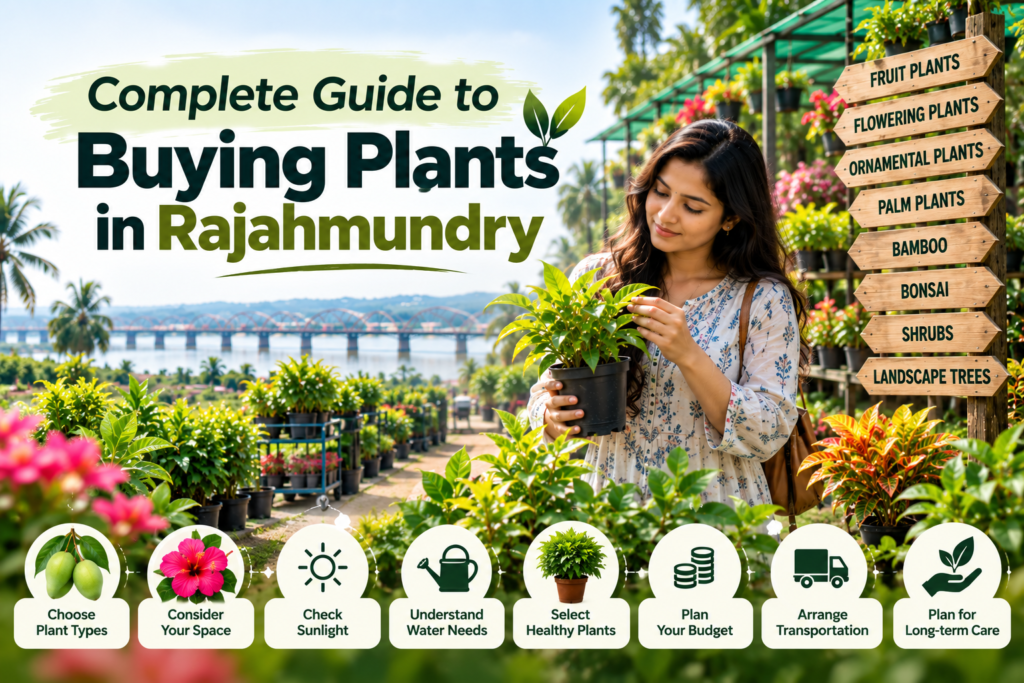
Complete Guide to Buying Plants in Rajahmundry

Complete Guide to Buying Plants in Rajahmundry Buying plants can be an exciting experience. Whether you are creating your first home garden, adding greenery to an existing property, planting fruit trees on a farm, or working on a landscaping project, the right plants can completely change an outdoor space. For people looking to buy plants in Rajahmundry, there are plenty of options to explore. The nearby Kadiyam region is also well known for its nursery-growing activities and variety of plants. But with so many choices available, how do you know what to buy? This complete guide will help you understand what to consider before purchasing plants, how to choose healthy varieties and how to select plants that will actually suit your space. Why Buy Plants in Rajahmundry? Rajahmundry and the surrounding areas offer plant buyers access to a variety of nurseries and plant options. Depending on the nursery and current availability, you can explore: This variety means that you don’t have to choose plants based only on what happens to be available at a small local shop. Visiting a nursery allows you to compare different varieties and choose according to your garden’s requirements. 1. Decide What Type of Garden You Want Before visiting a nursery, think about what you want your garden to look like. Are you planning a: Home Garden You may want a combination of flowering plants, ornamental plants, shrubs and a few fruit plants. Fruit Garden Fruit trees such as mango, guava, lemon, sapota and other suitable varieties can be considered depending on your space and growing conditions. Landscaping Project A landscape may require a combination of trees, palms, shrubs, flowering plants and ornamental varieties. Decorative Garden Bonsai, topiary, ornamental foliage plants and flowering varieties can help create a more decorative appearance. Having a clear idea before shopping can prevent unnecessary purchases. 2. Choose Plants According to Your Available Space One of the biggest mistakes people make when buying plants is thinking only about their current size. A small plant can become a large tree or shrub over time. Before buying, consider: This is especially important for large trees and palms. A plant that fits perfectly in a corner today may become difficult to manage after several years if it doesn’t have enough space. 3. Consider the Amount of Sunlight Sunlight is one of the most important factors in plant growth. Before buying a plant, observe the location where you plan to grow it. Does it receive: Choose plants according to their light requirements. If you are unsure, ask the nursery team whether the variety is suitable for your particular location. 4. Understand Watering Requirements Different plants have different watering needs. Before purchasing, think about how much time you can spend caring for your garden. If you have a regular watering routine, you can consider plants that need more frequent attention. If you have limited time, look for varieties that are better suited to a lower-maintenance routine. The goal is to choose plants that fit your lifestyle rather than creating a garden that becomes difficult to maintain. 5. Select Healthy Plants Once you find a variety you like, don’t immediately pick the first plant you see. Take a closer look. Check the Leaves Look for healthy foliage and watch for obvious signs of severe damage, unusual spots or pests. Examine the Stem The stem should appear reasonably strong and suitable for the size of the plant. Check the Pot Look at the condition of the container and growing medium. If you have concerns about the roots, ask the nursery staff rather than removing the plant yourself. Look for Pests Check the leaves and stems for visible insects, webbing, sticky residue or other unusual signs. If something looks suspicious, ask before buying. 6. Explore Fruit Plants Fruit plants are popular among homeowners and farmers because they can provide both greenery and a potential harvest over time. Depending on availability, you may find: Before choosing a fruit plant, consider the amount of space it will need as it matures. Also ask about sunlight, watering, soil and general maintenance. 7. Consider Flowering Plants If your goal is to add colour to your garden, flowering plants are an excellent option. Depending on availability, nurseries around Rajahmundry and Kadiyam may offer varieties such as: Flowering plants can be placed around entrances, pathways, lawns and garden beds. Try combining different colours and plant heights to create a more natural-looking garden. 8. Add Ornamental Plants Ornamental plants can give your garden character through interesting foliage, shapes and textures. They can be used around homes, offices, patios, pathways and commercial properties. Ficus varieties are also popular for ornamental purposes, with options such as Ficus microcarpa, Ficus Panda, Ficus Triangular and other forms depending on nursery availability. When selecting ornamental plants, think about how their colour and shape will work with the plants you already have. 9. Consider Palm Plants for Landscaping Palm plants can give an outdoor space a tropical appearance. Some varieties you may find include: Palm plants can work well around entrances, lawns, resorts, farmhouses and larger properties. Always check the expected mature size before planting a palm close to buildings or other structures. 10. Explore Bamboo Varieties Bamboo can be used for decorative landscaping, borders and screening depending on the variety. Some options may include: Because bamboo varieties can have different growth habits, ask about their characteristics before deciding where to plant them. 11. Bonsai for Plant Lovers Bonsai is a great option if you enjoy spending time caring for plants. Bonsai requires regular attention, including watering, pruning and proper positioning. They can be suitable for: If you are a beginner, ask the nursery about the specific care requirements before buying. 12. Shrubs and Topiary Plants Shrubs can help fill empty spaces and create natural borders within a garden. Topiary plants can provide a more structured and decorative appearance. They can work particularly well around: Remember that topiary plants usually require regular maintenance to retain their shape. 13. Think About Your

Complete Guide to Buying Plants in Rajahmundry Read More »

Plant Nursery in Rajahmundry

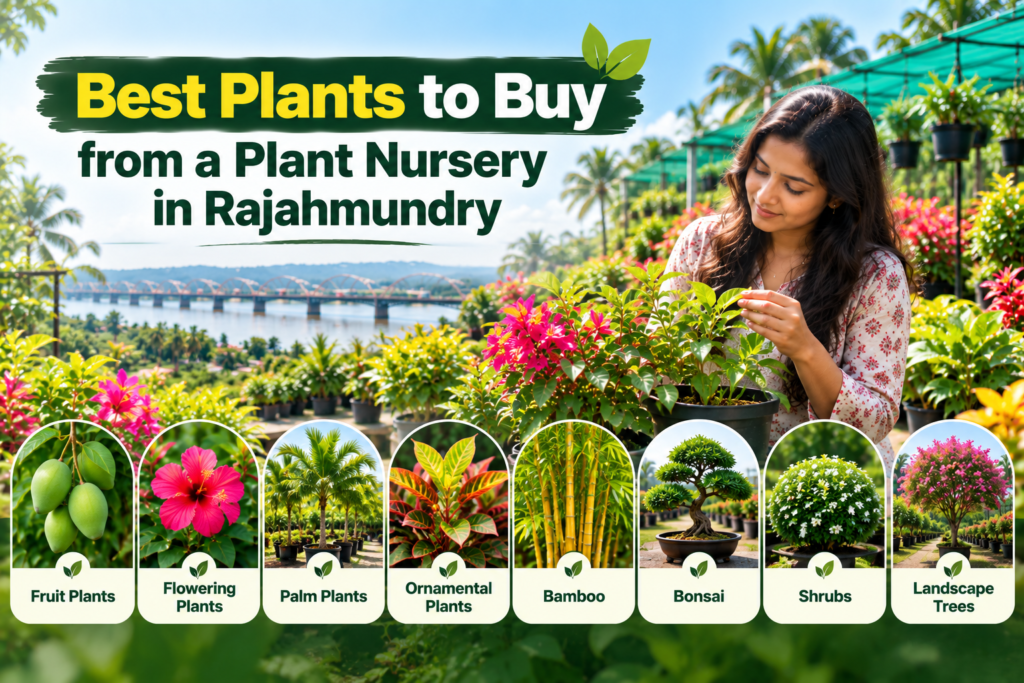
Best Plants to Buy from a Plant Nursery in Rajahmundry

Best Plants to Buy from a Plant Nursery in Rajahmundry Choosing plants for your home or property can be exciting, but it can also be a little confusing. Walk into a nursery and you may find rows of flowering plants, fruit trees, palms, ornamental varieties, shrubs and many other options. The challenge is knowing which plants are actually right for your space. For people in and around Rajahmundry, visiting a plant nursery in Rajahmundry can be a great way to explore different varieties in person. The nearby Kadiyam nursery region is also known for its wide selection of plants, making it easier for buyers to compare options before making a purchase. Whether you are creating a new garden, improving an existing landscape or simply adding a few plants to your home, here are some plant categories worth considering. 1. Fruit Plants for Home Gardens Fruit plants are a popular choice because they can add greenery while eventually providing fresh fruit. Depending on availability, nurseries around Rajahmundry and Kadiyam may offer varieties such as: Before buying a fruit plant, think about how much space you have. Some fruit trees can eventually become quite large, so planting them too close to a house or wall may create problems later. Also ask about sunlight, watering, soil and general maintenance requirements. 2. Flowering Plants for More Colour If your priority is a colourful garden, flowering plants are an obvious choice. They can brighten entrances, pathways, balconies, patios and garden beds. Some varieties you may find include: Flowering plants can also be combined with foliage plants and shrubs to create different layers in your garden. Before buying, check whether the variety prefers full sunlight or partial shade. Choosing a plant according to the available light can make its care much easier. 3. Palm Plants for Landscaping Palm plants can give a property a distinctive tropical appearance. They are often used around entrances, lawns, pathways, resorts, farmhouses and larger landscapes. Depending on current nursery availability, you may find varieties such as: When selecting a palm, don’t look only at its current size. Ask about its mature height and spread so you know whether your garden has enough room. 4. Ornamental Plants for Home Gardens Ornamental plants are chosen primarily for their appearance. They can add interesting foliage, shapes, colours and textures to an outdoor space. They can be used around: One of the easiest ways to create an attractive garden is to combine plants with different leaf shapes, heights and colours rather than using just one variety throughout the space. 5. Bamboo for Natural Greenery Bamboo can add a strong vertical element to a garden and, depending on the variety, can be used for decorative planting, screening and borders. Some varieties available through nurseries may include: Bamboo varieties can grow differently, so it is important to ask about their growth habit before planting them. If you have a small garden, make sure the variety you choose is appropriate for the available space. 6. Bonsai for Plant Enthusiasts Bonsai plants are a great option for people who enjoy gardening as a hobby. Unlike plants that are simply planted and left to grow, bonsai requires regular attention. Pruning, watering, positioning and repotting all play a role in maintaining the plant. Bonsai can be suitable for: If you are buying your first bonsai, ask about its specific care requirements before taking it home. 7. Shrubs for Garden Borders Shrubs are useful when you want to fill spaces, create boundaries or add structure to a garden. Flowering shrubs can bring colour, while foliage varieties can provide greenery throughout the year. They can be planted around lawns, pathways, property boundaries and larger landscape areas. Remember to leave enough space between shrubs. A plant that looks small in a nursery can become considerably wider as it matures. 8. Topiary Plants for Decorative Spaces Topiary plants can add a more structured and creative look to a landscape. They can be shaped and maintained in different forms, making them particularly suitable for: If you choose topiary, keep in mind that maintaining its shape requires regular attention. 9. Ficus Plants for Decorative Landscaping Ficus varieties are another option for people looking for attractive foliage and ornamental forms. Depending on availability, you may find varieties such as: Some Ficus plants can grow substantially over time, so always check the expected size and choose a planting location accordingly. 10. Ornamental and Landscape Trees If you have a larger property, trees can provide height, structure and long-term greenery. Some varieties found in nursery collections around Kadiyam include: Before purchasing a tree, think carefully about its mature size and the distance from buildings, walls, roads and overhead utilities. A little planning at the time of planting can prevent significant problems later. How to Choose the Right Plant for Your Garden The best plant isn’t necessarily the most attractive one at the nursery. It is the one that fits your space and growing conditions. Before buying, consider these factors. Available Space Measure the area where you intend to plant. Think about how much room the plant will need as it grows. Sunlight Observe how much sunlight the location receives. Choose plants according to their light requirements. Water Make sure you can provide the amount of water the plant needs, particularly during hot weather. Soil Ask about the plant’s preferred soil and drainage conditions. If necessary, prepare the soil before planting. Maintenance Some plants require regular pruning, shaping or additional care. Choose according to the amount of time you can realistically spend in your garden. Purpose Think about what you want the plant to achieve. Do you want: Once you know the purpose, narrowing down your options becomes much easier. What to Check Before Buying Before paying for a plant, take a few minutes to inspect it. Look at the: Also check for obvious signs of pests or severe damage. If several plants of the same variety are available, compare them before choosing. And don’t hesitate to ask the nursery

Best Plants to Buy from a Plant Nursery in Rajahmundry Read More »

Plant Nursery in Rajahmundry

How to Choose the Best Plant Nursery in Rajahmundry

How to Choose the Best Plant Nursery in Rajahmundry Choosing the right nursery is an important step when you are planning a garden. Whether you want a few plants for your home, fruit trees for a farm, ornamental plants for your outdoor space, or greenery for a landscaping project, the nursery you choose can make the buying process much easier. For people living in and around Rajahmundry, there are several options to explore. Kadiyam, located near Rajahmundry, is particularly well known for its nursery-growing activities and wide range of plants. But how do you choose the best plant nursery in Rajahmundry for your requirements? The answer isn’t simply about finding the nursery with the most plants. You should also consider plant health, variety, guidance, pricing, convenience and whether the nursery can meet your specific requirements. Here is a practical guide to help you make the right choice. 1. Look for a Good Variety of Plants The first thing to consider is the range of plants available. A good nursery should have options that match different gardening requirements. Depending on the nursery and current availability, you may find: Having more choices allows you to compare different varieties rather than settling for whatever happens to be available. For example, someone creating a home garden may want flowering and ornamental plants, while a farmer may be more interested in fruit plants. 2. Check the Health of the Plants A large collection doesn’t mean much if the plants aren’t healthy. Before purchasing, take a close look at the plants. Check the: Look for plants with healthy-looking foliage and good growth. Also watch for obvious signs of pests, severe damage or stress. If something looks unusual, ask the nursery staff about it before making a purchase. 3. Choose a Nursery That Understands Different Plant Requirements Every plant is different. A mango plant has different requirements from a bonsai. A palm needs different space from a flowering shrub, and bamboo can have different growth characteristics depending on the variety. A nursery that can explain basic requirements such as sunlight, watering, soil, pruning and mature size can make plant selection easier, especially if you are a beginner. Don’t hesitate to ask questions before buying. 4. Consider the Location and Accessibility Convenience matters, particularly if you are buying several plants. Think about how easy the nursery is to reach from your home or project location. If you are purchasing large trees or a substantial number of plants, transportation also becomes an important consideration. For customers in Rajahmundry and surrounding areas, exploring nurseries in Kadiyam can be practical when looking for a wider selection of plants. 5. Look at the Plant Sizes Available Nurseries may offer plants in different sizes. A smaller plant can be easier to transport and establish, while a larger plant can provide a more immediate visual impact in a landscape. Neither option is automatically better. Your choice should depend on: Always think about the plant’s future size, not just how large it is when you buy it. 6. Check Whether the Nursery Has the Plants You Actually Need Before visiting, make a list of the plants you are looking for. For example: Home garden:Flowering plants + ornamental plants + shrubs Fruit garden:Mango + guava + lemon + sapota Large landscape:Trees + palms + shrubs + flowering plants Decorative garden:Bonsai + topiary + ornamental plants Having a clear list can save time and help you compare nurseries based on your actual requirements. 7. Ask About Plant Care Buying a healthy plant is only the beginning. You also need to know how to care for it after bringing it home. Ask questions such as: The answers can help you decide whether the plant is suitable for your lifestyle and garden. 8. Consider the Nursery’s Experience Experience can be useful when you need guidance about different types of plants. A nursery that handles a broad range of plants may be able to help customers understand the differences between varieties and choose plants according to their requirements. This can be particularly helpful if you are starting your first garden or planning a larger landscaping project. However, don’t hesitate to ask specific questions. Good plant selection should be based on your property’s actual conditions rather than assumptions. 9. Compare Prices Without Making Price Your Only Factor Price is naturally part of the buying decision. However, the cheapest plant isn’t necessarily the most suitable choice, and a more expensive plant isn’t automatically better. When comparing prices, consider: If you are buying plants in bulk for landscaping or farming, ask whether the nursery offers different pricing for larger quantities. 10. Consider Transportation and Delivery Transportation becomes especially important when purchasing larger plants. Before buying, find out how the plants can be transported safely to your location. Large trees, palms and other mature plants can require more careful handling than smaller potted plants. If you are purchasing many plants, planning transportation in advance can prevent unnecessary damage. 11. Think About Your Garden’s Conditions The best nursery for one person may not necessarily have exactly what another person needs. Before choosing plants, understand your own garden first. Sunlight Does your garden receive full sunlight or partial shade? Space How much room is available now, and how much will you have when the plants mature? Soil What type of soil do you have, and does it drain well? Water How much water can you provide regularly? Maintenance How much time can you spend pruning, watering and caring for your plants? Once you understand these factors, selecting a nursery and plants becomes much easier. Why Kadiyam Is Important for Plant Buyers Near Rajahmundry When discussing a plant nursery in Rajahmundry, Kadiyam is an important area to consider because of its strong association with nursery cultivation. Plant buyers can explore different types of greenery depending on the nursery and current availability. This can include fruit plants, flowering plants, ornamental varieties, palms, bamboo, bonsai, shrubs and trees. For someone planning a garden, visiting a nursery area with

How to Choose the Best Plant Nursery in Rajahmundry Read More »

Buying Plants from a Nursery

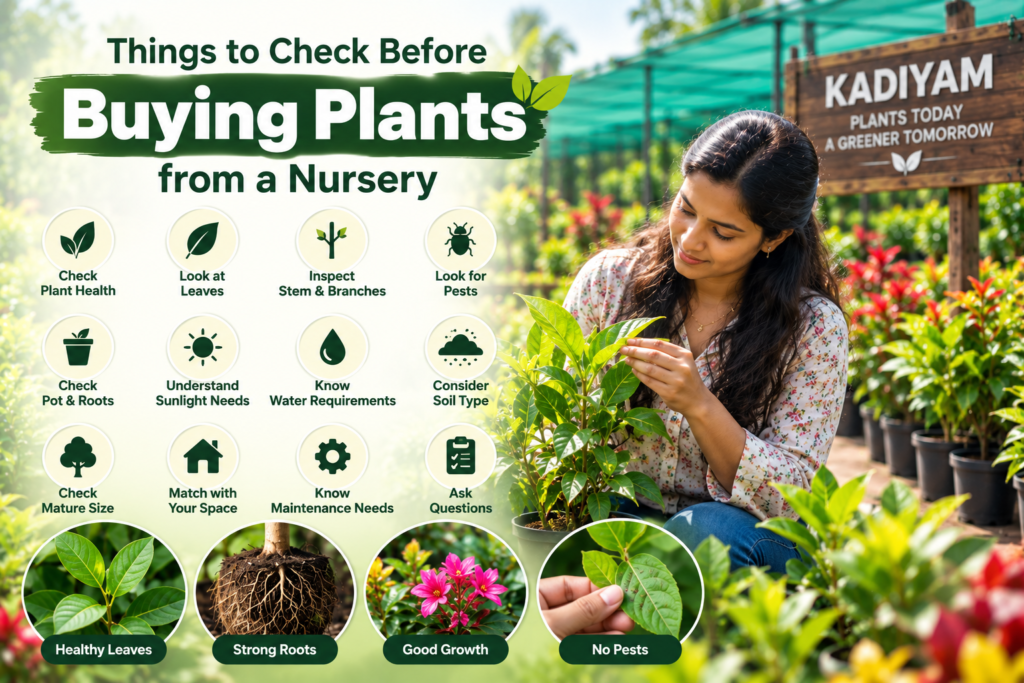
Things to Check Before Buying Plants from a Nursery

Things to check before buying plants from a nursery Buying plants is an exciting part of creating a garden. Whether you are planning a small home garden, adding greenery to your balcony, developing a farmhouse landscape or planting fruit trees on a larger property, the right plants can make a big difference. However, choosing plants should not be based only on how attractive they look at the nursery. A plant may look beautiful today but still be unsuitable for your garden. Before making a purchase, it is worth checking its health, size, growing requirements and suitability for the location where you plan to plant it. If you are visiting a nursery in Kadiyam or any local plant nursery, here are some important things to check before buying. 1. Check the Overall Health of the Plant Start by looking at the plant as a whole. A healthy plant should generally have good-looking foliage, a reasonably strong structure and active growth appropriate for its variety. Don’t choose a plant simply because it is the biggest one available. A smaller plant with healthy growth can be a better choice than a larger plant that appears stressed. If several plants of the same variety are available, compare them before deciding. 2. Examine the Leaves Carefully The leaves can give you useful clues about the plant’s condition. Look for leaves that appear healthy and appropriate for the particular plant. Be cautious if you notice extensive: A few damaged leaves do not necessarily mean that the entire plant is unhealthy. Consider the overall condition of the plant and ask the nursery staff if you notice anything unusual. 3. Inspect the Stem and Branches The stem and branches should look reasonably strong and suitable for the size of the plant. Check for obvious: For trees and shrubs, also consider the overall structure. A well-formed plant can be easier to establish and maintain after planting. 4. Look for Signs of Pests Take a few moments to inspect the leaves and stems for visible pests. Look at both sides of the leaves where possible, especially around new growth. Possible warning signs include: If you find something unusual, don’t immediately assume the plant is unusable. Ask the nursery team about it and understand what you are buying before taking it home. This is particularly important if you already have plants at home. 5. Check the Pot and Growing Medium The condition of the pot can tell you something about how the plant has been growing. Look at the growing medium and check whether the plant appears properly established. If the plant has been in the same container for a long time, its roots may become crowded. This is sometimes referred to as being root-bound. Don’t pull a plant out of its container without permission from the nursery. Instead, ask the staff to explain the root condition if you have concerns. 6. Think About the Plant’s Mature Size One of the most common mistakes is thinking only about the plant’s current size. A small nursery plant can eventually become a large tree or shrub. Before buying, find out: This is especially important when buying trees, palms and large ornamental plants. A plant that looks perfect near your house today may need much more space several years later. 7. Check the Sunlight Requirements Different plants have different light requirements. Before buying, think about where you will plant it. Does the location receive: Choose a plant that matches the conditions of your garden. If you are unsure, ask the nursery team whether the plant is suitable for your particular location. 8. Understand Watering Requirements Water availability is another important factor. Some plants need regular watering, while others may tolerate periods of lower moisture once established. Think realistically about your watering routine. If you have limited time for gardening, choosing plants with care requirements that fit your routine can make maintenance much easier. Avoid choosing a plant simply because you like its appearance without understanding how much care it requires. 9. Consider Your Soil Your garden’s soil can influence how well a plant grows. Before buying, consider whether your soil is suitable for the plant or whether it may need improvement. Ask the nursery about: Understanding these requirements before planting can help you prepare the location properly. 10. Decide What Purpose the Plant Will Serve Before buying a plant, ask yourself why you want it. Are you looking for: Your purpose should influence your choice. For example, a fruit tree may be ideal for a backyard where you want productive plants, while an ornamental shrub may be better suited to a decorative entrance. 11. Choose Fruit Plants Carefully If you are buying fruit plants, think about the long-term requirements. Depending on nursery availability, you may find fruit plants such as mango, guava, lemon, sapota, avocado, jackfruit, pomegranate, amla, dragon fruit and other varieties. Before buying, ask about: The right variety for one property may not necessarily be the right choice for another. 12. Check Flowering and Ornamental Plants Flowering and ornamental plants can make your garden more colourful, but their appearance should not be your only consideration. Check whether the plant is suitable for your location and understand its maintenance needs. Think about where it will be placed and whether its eventual size will work with the surrounding plants. Combining plants with different heights, colours and textures can create a more attractive garden. 13. Be Careful When Buying Palm and Bamboo Plants Palm and bamboo plants can be excellent additions to landscaping, but some varieties can grow significantly over time. Before purchasing, ask about their: This is especially important for smaller gardens. 14. Ask the Nursery Staff Questions You don’t have to know everything about a plant before visiting a nursery. That’s why asking questions is important. Some useful questions include: How much sunlight does this plant need? How often should I water it? How large will it become? Does it need regular pruning? What type of soil does it prefer? Is it

Things to Check Before Buying Plants from a Nursery Read More »

Why Visit Kadiyam for Fruit and Ornamental Plants?

Why Visit Kadiyam for Fruit and Ornamental Plants? If you are planning to add more greenery to your home, garden or farm, choosing the right plants is an important first step. You may find a few plants at local garden stores, but sometimes you need more variety to find something that truly suits your space. This is one reason Kadiyam has become a popular destination for plant buyers in Andhra Pradesh. Located near Rajahmundry, Kadiyam is known for its nursery-growing activities and the wide range of plants available in the area. From fruit-bearing trees to colourful flowering plants and decorative ornamental varieties, Kadiyam offers plenty to explore. But why should you visit Kadiyam specifically for fruit and ornamental plants? Let’s take a closer look. 1. A Wide Choice of Fruit Plants One of the main reasons people visit Kadiyam is the variety of fruit plants available. Depending on the nursery and current availability, you can explore varieties such as: Having different varieties to choose from makes it easier to select plants according to your garden size, growing conditions and personal preferences. For someone planning a home fruit garden, even a few carefully selected plants can eventually become an important part of the property. 2. Fruit Plants Can Become Long-Term Garden Investments Unlike seasonal plants, many fruit trees can remain in your garden for years when they receive suitable care. A young mango, guava or sapota plant may look small when you purchase it, but over time it can become a substantial part of your outdoor space. Before buying a fruit plant, however, consider its expected size, sunlight requirements, water needs and available planting space. Planning these things in advance can help you avoid overcrowding later. 3. Plenty of Ornamental Plant Options Not every plant needs to produce fruit. Sometimes, the goal is simply to make a garden more attractive. Ornamental plants can add: Kadiyam nurseries offer a variety of ornamental plants that can be used around homes, offices, gardens, entrances and landscaped properties. You can combine plants with different leaf shapes and growth patterns to create a garden that feels more natural and visually balanced. 4. Flowering Plants Bring Colour to Outdoor Spaces Flowering plants are an easy way to make an outdoor space feel more lively. Depending on availability, Kadiyam nurseries may offer flowering varieties such as: These plants can be used around pathways, entrances, lawns, balconies and garden beds. When choosing flowering plants, make sure their sunlight and watering requirements match the location where you plan to grow them. 5. Ornamental Trees Can Create a Strong Focal Point If you have a larger garden, ornamental trees can provide height and structure. Some varieties available through the Kadiyam nursery collection include Tabebuia, Jacaranda, Lagerstroemia, Cassia, Delonix and other landscape trees. A well-placed ornamental tree can become the focal point of a garden. However, always consider the mature size of the tree before planting it near buildings, walls or other structures. 6. Palm Plants Add a Tropical Feel Palm plants are another popular landscaping choice. They can create a tropical appearance around homes, resorts, farmhouses and commercial properties. Depending on availability, visitors to Kadiyam nurseries may find varieties such as: Different palms have different growth patterns, so choose one according to the available space and desired landscape design. 7. You Can Explore Plants for Different Garden Styles One of the benefits of visiting a plant-growing destination is that you can see different varieties side by side. For example, you can combine: Fruit trees + flowering plants + ornamental shrubs + palms to create a diverse home garden. For a more structured landscape, you might consider: Trees + topiary + palms + shrubs For a smaller space, you could focus on: Compact ornamentals + flowering plants + bonsai Seeing different plants together can help you decide what style works best for your property. 8. Kadiyam Is Useful for Home Gardeners You don’t need to own a large farm to benefit from visiting Kadiyam. Homeowners can find plants for: If space is limited, focus on plants that remain manageable and suit the available growing conditions. A nursery visit can also help you discover alternatives you may not have considered before. 9. A Good Destination for Landscaping Requirements Kadiyam can also be useful for people working on larger landscaping projects. A landscape usually needs several types of plants rather than a single variety. Trees may provide height, palms can add structure, shrubs can fill spaces and flowering plants can provide colour. Depending on the project, plants can be selected for: The wide selection available through Kadiyam nurseries can make it easier to plan these combinations. 10. You Can See Plants Before Buying Them One of the biggest advantages of visiting a physical nursery is being able to see the plant yourself. Photographs can give you an idea of what a plant looks like, but seeing it in person allows you to examine its: You can also compare several plants of the same variety before deciding which one suits your requirements. 11. You Can Ask About Plant Care Choosing a plant is only the beginning. You also need to know how to care for it. When visiting a nursery, ask about: This information can be especially useful for beginners. A plant may look beautiful at the nursery, but understanding its requirements beforehand helps you decide whether it is suitable for your garden. 12. You Can Choose Plants According to Your Space Every property has different conditions. A large farmhouse may have enough room for mango, jackfruit or other large trees. A small home garden may need compact ornamental plants instead. Before buying, think about: How much sunlight does the location receive? How much space is available? How much water can you provide? How much maintenance can you manage? How large can the plant eventually become? These simple questions can help you make a more practical choice. Fruit Plants vs Ornamental Plants: Which Should You Choose? There is no universal answer because the two

Why Visit Kadiyam for Fruit and Ornamental Plants? Read More »

Plant Varieties in Kadiyam

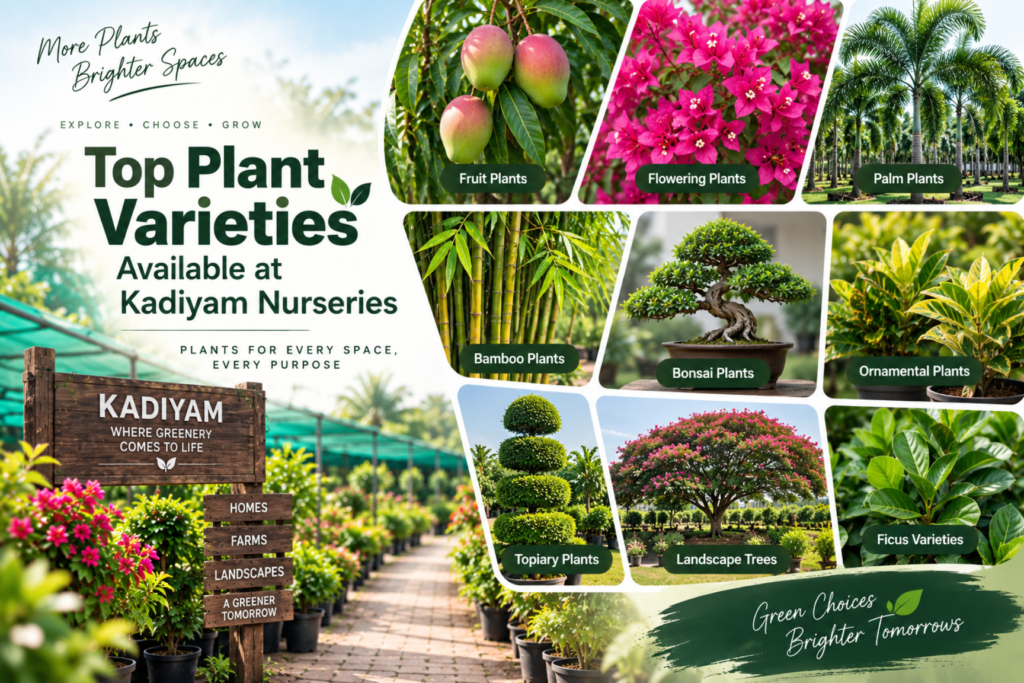
Top Plant Varieties Available at Kadiyam Nurseries

Top Plant Varieties Available at Kadiyam Nurseries If you are planning to buy plants for your home, farm, garden or landscaping project, you may have already heard about Kadiyam nurseries. Located near Rajahmundry in Andhra Pradesh, Kadiyam is known for its wide range of plants and nursery-growing activities. One of the biggest advantages of visiting a nursery in Kadiyam is the variety you can explore. From colourful flowering plants and fruit trees to elegant palms, bamboo, bonsai and ornamental trees, there are options for different gardening needs. With so many varieties available, choosing the right plants can sometimes feel confusing. This guide introduces some of the notable plant varieties available at Kadiyam nurseries and explains where they can fit into your garden or landscape. 1. Fruit Plants Fruit plants are among the most useful choices for home gardens, farms and larger properties. With proper care, they can provide both greenery and fruit over the years. Some fruit plant varieties available in Kadiyam nurseries include: Why choose fruit plants? A fruit tree can become a long-term part of your garden. It can provide shade, greenery and, when properly grown and cared for, fresh fruit. Before buying, consider the available space, sunlight, soil and water requirements. Also think about how large the tree can eventually become. 2. Palm Plants Palm plants are a popular choice for landscaping because of their distinctive shapes and tropical appearance. Kadiyam nurseries offer several palm varieties, including: Palm plants can work well around entrances, pathways, lawns, resorts and larger landscape projects. However, don’t choose a palm based only on its appearance at the nursery. Check its expected mature height and width before deciding where to plant it. 3. Bamboo Varieties Bamboo can add height, structure and a natural feel to outdoor spaces. Different varieties have different colours and growth characteristics, making them useful for decorative landscaping. Some bamboo varieties available include: Bamboo can be used for garden borders, decorative planting and screening, depending on the variety. Before planting bamboo, ask about its growth habit and space requirements. This is particularly important for smaller gardens. 4. Ornamental Ficus Plants Ficus plants are another interesting group for people looking for ornamental greenery. The varieties available at Kadiyam nurseries include: Their attractive foliage and different forms can make them useful for decorative gardens and landscaping. Some Ficus varieties can grow considerably larger over time, so always select one according to the space available. 5. Flowering Plants A garden can feel completely different once flowering plants are added. Their colours and seasonal blooms can bring life to entrances, pathways, balconies and garden beds. Some flowering plants found in the Kadiyam collection include: When choosing flowering plants, consider sunlight and maintenance requirements. A plant that receives the right growing conditions generally has a better opportunity to establish and flower well. 6. Bonsai Plants Bonsai offers a different experience for plant lovers. Instead of simply growing a plant, bonsai involves maintaining its shape and size through careful pruning and regular care. Bonsai plants can be used in: If you are new to bonsai, ask about watering, sunlight, pruning and repotting requirements before choosing a variety. 7. Topiary Plants Topiary plants can add a creative and structured appearance to a landscape. Plants can be maintained in different shapes and forms, making topiary particularly interesting for entrances, resorts, hotels, villas and decorative gardens. A well-maintained topiary can act as a focal point and complement other plants around it. When selecting topiary plants, consider the amount of maintenance required to keep the desired shape. 8. Ornamental Trees For larger gardens and landscapes, ornamental trees can provide height, structure and long-term greenery. Some notable varieties available in the Kadiyam collection include: These trees can be considered for larger properties, gardens and landscape projects depending on their growth characteristics and the available space. 9. Native and Familiar Garden Trees Some tree varieties are popular because they are familiar to Indian gardeners and can become substantial features of a landscape. Examples from the nursery collection include: Neem Neem is a familiar tree in India and can become a large, long-lived addition to a suitable outdoor space. Peepal Peepal is a large-growing tree that requires considerable space and careful placement. Tamarind Tamarind can become a large tree and is suitable only where sufficient space is available. Gulmohar Delonix regia, commonly known as Gulmohar, is valued for its attractive flowering display. Ashoka Saraca asoca is another notable tree that can be considered for suitable garden and landscape settings. The important point is to understand the mature characteristics of any tree before planting it close to buildings or other structures. 10. Decorative and Specialty Plants Kadiyam nurseries also offer several plants that can be used to create something different from a conventional garden. Examples include: These varieties can add unusual shapes, foliage and visual interest to gardens and landscape designs. How to Choose the Right Variety Having plenty of choices is useful, but the most attractive plant isn’t necessarily the right one for your garden. Before buying, consider five basic factors. 1. Available Space Check how much room you have now and how much the plant will need when mature. 2. Sunlight Understand whether the plant requires full sunlight, partial shade or another growing condition. 3. Water Requirements Choose varieties that fit the amount of water you can consistently provide. 4. Maintenance Some plants need regular pruning and shaping, while others may require less frequent attention. 5. Purpose Think about why you are buying the plant. Do you want: Your answer will help narrow down your options. Buying Plants for Different Requirements For Home Gardens Homeowners can combine flowering plants, ornamental plants, shrubs and a few carefully selected trees to create a balanced garden. For Farms Fruit plants may be more appropriate for farms and larger properties, depending on the land, soil and intended cultivation. For Landscaping Landscaping projects often need a combination of trees, palms, shrubs, flowering plants and ornamental varieties. For Small Spaces Compact plants, selected palms, bonsai and

Top Plant Varieties Available at Kadiyam Nurseries Read More »