
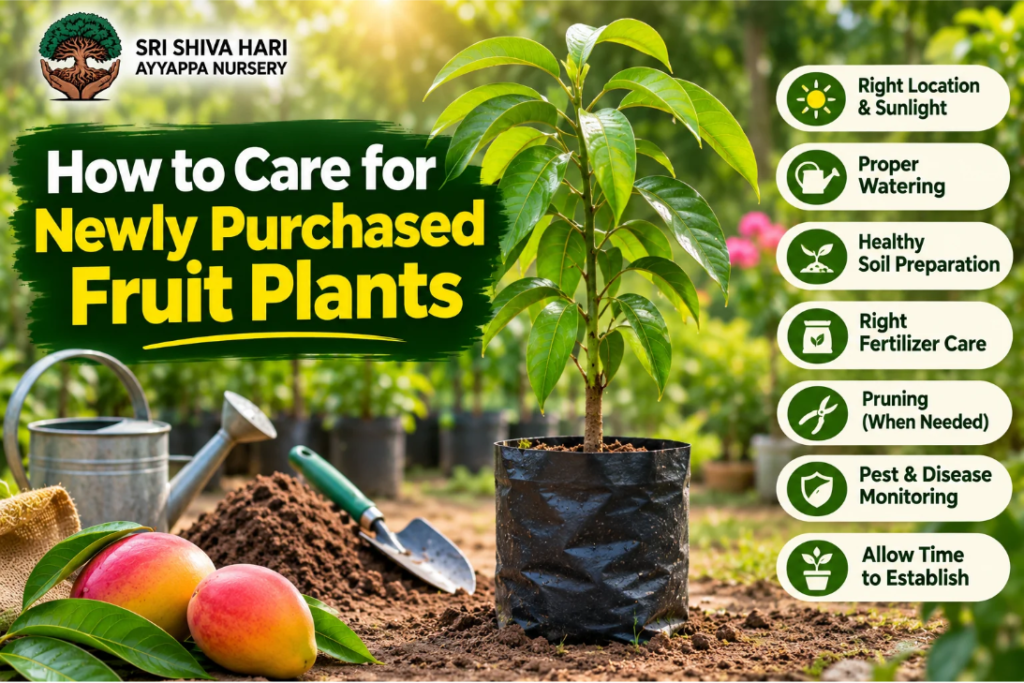
How to Care for Newly Purchased Fruit Plants
Buying new fruit plants is always exciting. Whether you have brought home a mango sapling, a guava plant, a lemon tree or a pomegranate variety, you are probably already imagining the fresh fruits your garden might produce in the future.
However, purchasing a healthy plant is only the beginning. The first few weeks after bringing it home are especially important because the plant needs time to adjust to its new surroundings.
Changes in sunlight, temperature, watering and growing conditions can cause temporary stress. With proper attention and a little patience, you can help your newly purchased fruit plants establish themselves and grow well.
If you have recently purchased fruit plants from a nursery in Kadiyam or anywhere in Andhra Pradesh, this guide will help you understand how to care for them after bringing them home.
1. Handle the Plant Carefully During Transportation
Plant care begins before you even reach home.
Newly purchased plants can get damaged during transportation if they are handled carelessly. Broken branches, damaged leaves and disturbed roots may affect their establishment.
Keep these points in mind:
- Place the plant securely during transportation.
- Avoid placing heavy objects on top of it.
- Protect leaves and branches from strong winds.
- Keep the root ball or growing medium intact.
- Avoid leaving plants inside a hot vehicle for long periods.
If you are purchasing multiple plants, arrange them carefully so that their branches and stems do not get crushed.
For larger fruit plants, ask the nursery for suitable transportation guidance.
2. Avoid Planting Immediately Without Checking the Plant
Once you bring your plants home, do not rush into planting them without checking their condition.
Take a few minutes to inspect each plant.
Look for:
- Healthy-looking leaves.
- Firm stems and branches.
- Signs of new growth.
- Visible pests or unusual spots.
- Proper moisture in the growing medium.
- Any damage caused during transportation.
If you notice broken branches or unusual symptoms, ask the nursery for advice.
Allow the plant to settle in a suitable location while you prepare its permanent planting area.
3. Choose the Right Location
Selecting the right planting location is one of the most important steps in fruit plant care.
Different fruit plants have different sunlight and space requirements. A location that works for a lemon plant may not necessarily be suitable for a large mango or jackfruit tree.
Before planting, consider:
- How much sunlight the location receives.
- Whether the area has good drainage.
- Available space for future growth.
- Distance from buildings and compound walls.
- Access to water.
- Protection from strong winds where necessary.
For example, mango and jackfruit trees need considerable room as they mature, while selected lemon and pomegranate varieties may be easier to manage in smaller spaces.
Always consider the plant’s mature size rather than its current nursery size.
4. Give the Plant Time to Adjust to Sunlight
One common mistake is moving a nursery-grown plant directly into harsh outdoor sunlight without considering its previous growing conditions.
Some plants may have been maintained under partial shade or nursery shade nets. A sudden change in exposure can cause leaf stress.
To help the plant adjust:
- Find out how much sunlight it received at the nursery.
- Follow the recommended light conditions for its variety.
- If it was grown under shade, gradually increase direct sunlight where appropriate.
- Monitor the leaves for wilting or scorching.
- Avoid unnecessary movement between different locations.
Remember that different fruit plants have different light requirements. Follow guidance specific to the variety you have purchased.
5. Water the Plant Properly
Watering is one of the most important parts of caring for newly purchased fruit plants.
However, giving more water does not always mean better growth. Too much water can cause root problems, especially when the soil does not drain properly.
After bringing the plant home:
- Check the moisture of the growing medium.
- Water when required by the plant and soil conditions.
- Make sure excess water can drain away.
- Avoid allowing the roots to remain in standing water.
- Monitor moisture more frequently during hot weather.
Container-grown plants may dry out faster than plants growing in garden soil.
Do not follow the same watering schedule for every fruit plant. Mango, lemon, guava, sapota and pomegranate can have different watering requirements depending on their age, soil and weather conditions.
6. Prepare the Soil Before Planting
Healthy soil provides the foundation for strong root development.
Before transferring your fruit plant into the ground, prepare the planting area properly.
Consider the following:
Soil condition: Check whether the soil is suitable for the particular fruit plant.
Drainage: Make sure excess water can move away from the root zone.
Organic matter: Use suitable, well-decomposed organic matter where appropriate.
Planting space: Prepare enough room for the roots to establish.
Planting depth: Keep the plant at an appropriate depth. Avoid burying the stem or root collar too deeply.
For larger fruit trees, prepare the planting pit according to the plant’s size and local soil conditions.
If you are unsure about soil preparation, ask the nursery or a local horticulture expert for recommendations.
7. Plant It Without Damaging the Roots
Transplanting requires care because newly purchased plants can experience stress when their roots are disturbed.
Follow these general steps:
- Prepare the planting hole before removing the plant from its container.
- Water the plant if the growing medium is excessively dry.
- Carefully remove the container without pulling the stem.
- Keep the root ball as intact as possible.
- Place the plant at an appropriate depth.
- Fill the surrounding space with suitable soil.
- Gently firm the soil without compacting it excessively.
- Water appropriately after planting.
If the plant is grafted, make sure the graft union remains above the soil level.
Avoid unnecessarily disturbing the roots during planting.
8. Avoid Adding Too Much Fertilizer Immediately
Many people believe that newly purchased plants need extra fertilizer to grow faster.
However, applying strong fertilizers immediately after transplanting can stress sensitive roots, particularly if the plant is already adjusting to new conditions.
Instead:
- Follow the nursery’s fertilizer recommendations.
- Avoid excessive chemical fertilizer application.
- Use suitable, well-decomposed organic matter when appropriate.
- Wait until the plant has established before adjusting its feeding routine.
- Consider soil conditions before adding nutrients.
Remember that fertilizer cannot compensate for poor drainage, insufficient sunlight or incorrect watering.
9. Watch for Pests and Diseases
Newly purchased fruit plants should be monitored regularly for signs of pests and diseases.
Sometimes symptoms become visible only after the plant reaches its new location.
Check the leaves, stems and branches for:
- Small insects.
- Webbing.
- Sticky residue.
- Unusual leaf spots.
- Curled leaves.
- Yellowing or wilting.
- Damaged shoots.
Inspect the plants regularly, especially during the first few weeks.
If you notice unusual symptoms, identify the cause before applying pesticides or other treatments. For serious problems, seek advice from a horticulture professional.
If you have other plants in your garden, keep newly purchased plants separate temporarily when practical, particularly if you suspect a pest or disease issue.
10. Provide Support to Young Fruit Plants
Some newly purchased fruit plants may have weak stems or need additional support while establishing.
Strong winds or heavy rain can cause young plants to bend.
You can use a suitable support stake where necessary.
Keep these points in mind:
- Use a sturdy stake.
- Secure the plant gently.
- Avoid tying the stem too tightly.
- Check the support regularly.
- Remove or adjust it when the plant becomes stable.
Support is especially useful for taller young plants and plants growing in exposed locations.
11. Prune Only When Necessary
Pruning helps maintain the structure of many fruit plants, but newly purchased plants do not always need immediate pruning.
Avoid removing healthy leaves and branches unnecessarily.
During the initial establishment period:
- Remove broken or severely damaged branches where appropriate.
- Avoid heavy pruning immediately after transplanting.
- Use clean pruning tools.
- Follow pruning recommendations for the particular fruit variety.
Different fruit plants require different pruning methods, so do not apply the same approach to every tree.
12. Protect Newly Planted Fruit Trees During Hot Weather
Andhra Pradesh experiences warm weather, and newly planted fruit trees may need extra attention during particularly hot periods.
Young plants can lose moisture quickly, especially when exposed to strong afternoon sunlight and dry winds.
Some useful practices include:
- Check soil moisture regularly.
- Water according to the plant’s requirements.
- Apply suitable organic mulch around the root zone.
- Keep mulch away from direct contact with the stem.
- Provide temporary protection from harsh afternoon sunlight if needed.
- Monitor leaves for signs of heat stress.
Mulching can help conserve soil moisture and reduce sudden temperature changes around the roots.
13. Maintain Proper Spacing Between Fruit Plants
If you are planting several fruit plants together, make sure they have enough room to grow.
Planting trees too close together can create problems later.
Overcrowding may lead to:
- Reduced sunlight exposure.
- Competition for water and nutrients.
- Poor air circulation.
- Difficult pruning and harvesting.
- Increased maintenance requirements.
Mango, jackfruit, jamun and sapota can become substantial trees, so plan their spacing carefully.
For a mixed fruit garden, ask about the recommended planting distance for each variety.
14. Be Patient During the Establishment Period
One of the most important things to remember is that newly purchased fruit plants need time to adjust.
You may notice some temporary changes after transplanting, such as limited growth or a small amount of leaf drop.
This does not automatically mean the plant is unhealthy.
Avoid constantly changing its location, watering schedule or fertilizer routine.
Instead:
- Monitor the plant regularly.
- Maintain suitable moisture.
- Follow its sunlight requirements.
- Watch for new growth.
- Avoid unnecessary disturbance.
With suitable conditions and consistent care, the plant can gradually establish itself.
Care Tips for Different Fruit Plants
Different fruit varieties need different attention. Here are some general points to remember.
| Fruit Plant | Important Care Considerations |
|---|---|
| Mango | Full-sun location, suitable spacing and good drainage |
| Guava | Sunlight, appropriate watering and pruning |
| Lemon | Suitable sunlight, consistent moisture and drainage |
| Sapota | Adequate space, suitable irrigation and soil conditions |
| Pomegranate | Sunlight, drainage and variety-specific watering |
| Amla | Suitable planting space and establishment care |
| Jackfruit | Adequate room, moisture and protection of young plants |
| Dragon Fruit | Strong support, well-drained growing medium and careful watering |
| Avocado | Suitable variety, drainage and careful water management |
| Jamun | Sufficient space for mature growth and establishment |
These are general guidelines. Always follow recommendations specific to the variety you have purchased.
Common Mistakes to Avoid After Buying Fruit Plants
Even with the best intentions, new gardeners sometimes make mistakes that affect plant growth.
Here are some common problems to avoid:
1. Overwatering: Too much water can damage roots, especially in poorly drained soil.
2. Sudden sunlight exposure: Plants accustomed to shade may experience stress when moved directly into intense sunlight.
3. Adding excessive fertilizer: Strong fertilizer applications can damage sensitive roots.
4. Planting too deeply: Burying the stem or root collar can create problems.
5. Ignoring drainage: Waterlogged soil can affect root health.
6. Heavy pruning: Removing too many healthy branches immediately after purchase can add stress.
7. Planting too close together: Trees need sufficient room for future growth.
8. Expecting immediate fruit: Newly purchased plants need time to establish, grow and mature before fruit production.
Where to Find Fruit Plants in Kadiyam
If you are planning to start a fruit garden, Kadiyam near Rajahmundry is a nursery-growing region worth exploring.
You can visit local nurseries to compare fruit plant varieties, inspect their condition and ask for guidance on planting and maintenance.
Depending on current availability, popular varieties may include mango, guava, lemon, sapota, pomegranate, amla, jackfruit and other fruit plants.
You can contact Sri Shiva Hari Ayyappa Nursery, located in Kadiyam, near Rajahmundry, to enquire about available fruit plants.
Contact Details:
- Website: https://srishivahariayyappanursery.com/
- Phone: +91 8555090132
- Email: Srishivahariayyappanursery@gmail.com
- Location: Kadiyam, Rajahmundry, Andhra Pradesh
Before visiting, contact the nursery to confirm current stock, plant sizes and prices. You can also discuss your garden requirements and ask about suitable varieties.
A Simple Checklist for Newly Purchased Fruit Plants
Use this checklist after bringing your plants home:
- Inspect the plant for transportation damage.
- Choose a suitable planting location.
- Check sunlight requirements.
- Prepare well-drained soil.
- Plant without disturbing the roots unnecessarily.
- Water according to the plant’s requirements.
- Avoid excessive fertilizer.
- Monitor pests and diseases.
- Provide support if required.
- Check the plant regularly for new growth.
Final Thoughts
Buying a fruit plant is the beginning of a long and rewarding gardening journey. The care you provide during the first few weeks can help the plant adjust to its new environment and establish itself.
Whether you have purchased mango, guava, lemon, sapota, pomegranate or another fruit variety, focus on the basics: suitable sunlight, proper watering, healthy soil, good drainage and regular observation.
If you are purchasing fruit plants from a nursery in Kadiyam or Rajahmundry, ask about their specific care requirements before taking them home.
Remember, healthy fruit trees are not grown overnight. Give your plants the right conditions, care for them consistently and allow nature the time it needs to do its work.
Frequently Asked Questions
How often should I water newly purchased fruit plants?
Watering frequency depends on the fruit variety, soil, weather and plant size. Check the growing medium regularly and water when required. Avoid keeping the roots waterlogged.
Should I keep newly purchased plants in shade?
It depends on the plant’s previous growing conditions and sunlight requirements. If it was grown under shade, gradual adjustment to stronger sunlight may help prevent stress.
When should I apply fertilizer after planting a fruit tree?
Avoid applying strong fertilizer immediately after transplanting. Follow variety-specific recommendations and allow the plant to establish before beginning an appropriate feeding routine.
Why are the leaves falling after transplanting?
Some leaf drop can occur due to transplant stress, changes in sunlight or watering conditions. Monitor the plant and check for pests, disease and root problems if the symptoms continue.
How long does it take for a newly purchased fruit plant to grow?
Growth depends on the species, variety, age, growing conditions and care. Some plants establish quickly, while others need more time.
Can I plant different fruit plants together?
Yes. You can grow different fruit plants in the same garden if you provide suitable spacing, sunlight, drainage and watering according to each variety’s requirements.
Where can I buy fruit plants near Rajahmundry?
You can explore nurseries in Kadiyam and the surrounding Rajahmundry region. Contact the nursery before visiting to confirm the availability of the varieties you need.