
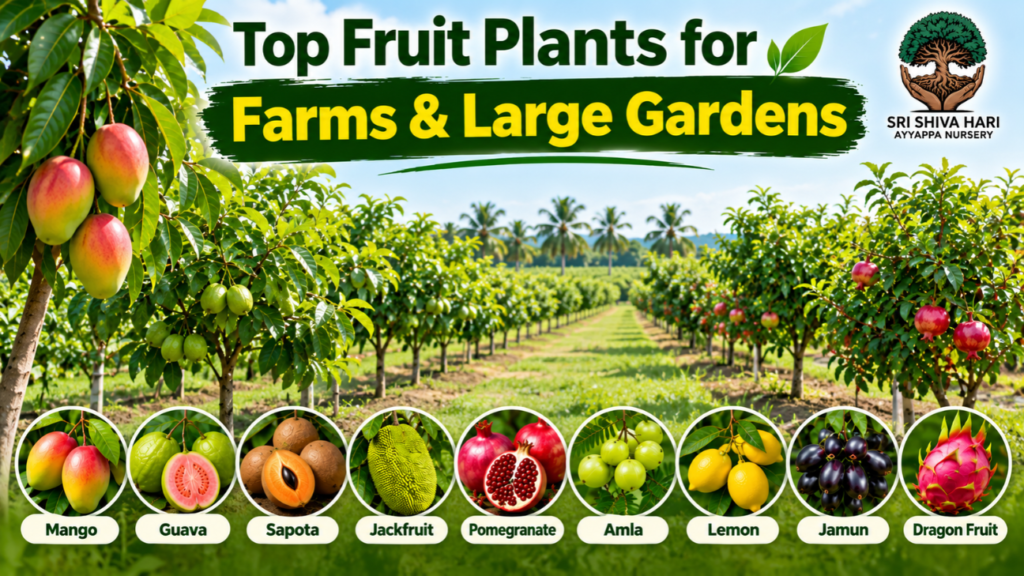
Top Fruit Plants for Farms and Large Gardens
Having a large garden or farm gives you the opportunity to grow a wide variety of fruit plants. From mango and jackfruit trees to guava, sapota and pomegranate, the right combination of fruit plants can turn an open piece of land into a beautiful and productive green space.
Fruit cultivation is also a long-term investment. Some trees begin producing fruit relatively early, while others take several years to establish and mature. Choosing suitable varieties and planning their planting locations carefully can make a significant difference to the success of your fruit garden.
For farmers and landowners in Andhra Pradesh, selecting fruit plants that suit local soil, climate and water conditions is particularly important.
If you are planning a fruit garden or farm, this guide explores some of the best fruit plants to consider, along with practical tips for choosing and maintaining them.
1. Mango Plants
Mango is one of the most popular fruit trees in Andhra Pradesh and is a natural choice for many farms and large gardens.
A mature mango tree can provide a generous canopy, attractive greenery and fruit during the appropriate season.
Why choose mango plants?
- Popular among fruit growers and home gardeners.
- Suitable for larger planting areas.
- Offers several varieties with different fruit characteristics.
- Can become a long-term addition to a farm.
Growing tips: Select varieties according to your local conditions and intended purpose. Consider tree spacing, sunlight, soil drainage and irrigation before planting. Ask about the mature canopy size and suitable planting distance.
2. Guava Plants
Guava is another excellent option for farms and large gardens. It is valued for its fruit and can be used in fresh consumption, juice preparation and other food products.
With appropriate variety selection and pruning, guava plants can be maintained at manageable sizes.
Why choose guava plants?
- Suitable for different types of fruit gardens.
- Produces fruit that can be used in several ways.
- Can be managed through regular pruning.
- Offers flexibility in garden and farm planning.
Growing tips: Choose healthy plants and provide suitable sunlight and well-drained soil. Ask about the variety, expected yield characteristics and recommended spacing before purchasing.
3. Sapota (Chikoo) Plants
Sapota, commonly known as chikoo, is a tropical fruit tree known for its sweet fruit.
It can be a rewarding choice for farmers and landowners who want to grow a combination of traditional fruit varieties.
Why choose sapota plants?
- Produces sweet, edible fruit.
- Adds greenery and structure to large gardens.
- Can be included in mixed fruit plantations.
- Offers a long-term fruit-growing option.
Growing tips: Select a suitable variety and allow sufficient space for the tree to develop. Good drainage, appropriate irrigation and regular monitoring are important during establishment.
4. Jackfruit Plants
Jackfruit is a tropical fruit tree known for its large fruit and versatility in cooking.
Both ripe and unripe jackfruit are used in different food preparations, making it an interesting addition to a diversified fruit garden.
Why choose jackfruit plants?
- Produces large, versatile fruit.
- Provides substantial greenery as the tree grows.
- Suitable for spacious gardens and farm properties.
- Adds variety to a mixed fruit plantation.
Growing tips: Jackfruit trees need sufficient room for their mature canopy. Consider the location carefully, including access for harvesting and handling the fruit.
5. Pomegranate Plants
Pomegranate is a useful fruit plant to consider when planning a farm with different fruit varieties.
Depending on the variety and cultivation method, it can be maintained as a shrub or small tree.
Why choose pomegranate plants?
- Produces attractive, edible fruit.
- Can add diversity to a fruit plantation.
- May be suitable for planned commercial or home cultivation.
- Offers flexibility in planting arrangements.
Growing tips: Choose a suitable variety and pay attention to drainage, irrigation and pruning. Pomegranate cultivation requires proper management, so understand local growing conditions before planting on a large scale.
6. Amla (Indian Gooseberry) Plants
Amla is a traditional Indian fruit valued for its use in food preparations and various processed products.
It can be considered for farms and larger gardens where there is sufficient space for trees to grow.
Why choose amla plants?
- Produces fruit used in traditional Indian preparations.
- Adds diversity to a fruit garden.
- Can be included in mixed plantations.
- Offers an option for farmers interested in traditional fruit crops.
Growing tips: Choose suitable varieties and ask about planting distance, irrigation and establishment requirements. Allow enough room for the mature tree.
7. Lemon Plants
Lemon plants are practical additions to fruit gardens because lemons are commonly used in everyday cooking, beverages and food preparation.
They can be included in larger plantations as well as home gardens.
Why choose lemon plants?
- Produces fruit with regular household uses.
- Offers an option for diversified fruit cultivation.
- Different varieties provide different fruit characteristics.
- Can be maintained with suitable pruning and care.
Growing tips: Choose varieties according to your local conditions and intended use. Provide suitable sunlight, good drainage and consistent care, especially while plants are establishing.
8. Jamun Plants
Jamun is a familiar Indian fruit tree that can be a good choice for spacious farms and large gardens.
The tree can develop into a substantial size and provide a dense canopy.
Why choose jamun plants?
- Produces fruit enjoyed fresh and in different preparations.
- Adds greenery and shade to large properties.
- Can be included in mixed fruit gardens.
- Offers a traditional fruit-growing option.
Growing tips: Plan the planting location carefully. Consider mature height, canopy spread, root development and the distance from buildings and other trees.
9. Avocado Plants
Avocado is an interesting option for farmers who want to explore specialty fruit cultivation.
However, it is important to understand that avocado varieties have specific climate, soil, drainage and water requirements. Not every variety will perform equally well in every region of Andhra Pradesh.
Why consider avocado plants?
- Adds variety to a fruit plantation.
- Offers an opportunity to explore specialty fruit cultivation.
- Can be considered for suitable locations with appropriate growing conditions.
Growing tips: Before planting on a large scale, consult a horticulture expert about suitable varieties, pollination requirements and local climate conditions. Consider a small trial planting before expanding.
10. Dragon Fruit Plants
Dragon fruit is a distinctive fruit crop that grows on a climbing cactus rather than a conventional tree.
It requires a planned cultivation setup with suitable support structures.
Why choose dragon fruit plants?
- Produces distinctive-looking fruit.
- Offers an alternative to traditional fruit trees.
- Can be grown in organised planting systems.
- Provides an option for farmers interested in specialty crops.
Growing tips: Prepare strong support structures and ensure good drainage. Avoid excessive watering and select suitable planting material for your location.
11. Water Apple Plants
Water apple is another tropical fruit plant worth considering for larger gardens and suitable farm properties.
It can add diversity to a collection of fruit trees.
Why choose water apple plants?
- Produces a distinctive tropical fruit.
- Adds variety to a mixed fruit garden.
- Can be an interesting option for home and farm planting.
Growing tips: Ask about the variety’s suitability for your location, water requirements, expected mature size and general maintenance needs before purchasing.
How to Plan a Fruit Garden on a Farm
Planting fruit trees across a large property requires more planning than simply buying different varieties.
A well-organised layout can make irrigation, maintenance, pruning and harvesting easier.
1. Divide Your Land into Sections
Instead of planting every variety randomly, divide the available land into sections.
For example:
- Mango and jackfruit section.
- Guava and sapota section.
- Lemon and pomegranate section.
- Specialty fruit section for suitable varieties.
This arrangement can make it easier to manage plants with similar requirements.
2. Plan the Spacing Between Trees
One of the most important factors in fruit cultivation is planting distance.
Different trees have different canopy sizes and growth habits. Planting them too close together can lead to overcrowding, competition for sunlight and difficult maintenance.
Ask about recommended spacing for each variety before finalising your layout.
3. Arrange a Suitable Irrigation System
Water availability plays an important role in fruit cultivation.
For larger farms, consider whether drip irrigation or another suitable irrigation method would help deliver water efficiently.
The irrigation plan should match the crops, soil conditions, local climate and water availability.
4. Understand Soil Conditions
Before planting a large number of fruit trees, understand your soil.
Consider:
- Soil texture.
- Drainage.
- Soil depth.
- pH.
- Organic matter.
- Nutrient availability.
A soil test can help identify whether any preparation or amendments are required.
5. Choose Varieties Carefully
Not every popular fruit variety is suitable for every farm.
Consider the local climate, soil, water availability, intended use and market requirements before choosing your plants.
For commercial cultivation, consult a local horticulture expert before making a large investment.
Fruit Plants for Different Farm Requirements
The best plant selection depends on the purpose of your land.
| Farm or Garden Type | Fruit Plants to Consider |
|---|---|
| Family fruit garden | Mango, guava, lemon, sapota |
| Large backyard | Mango, jackfruit, jamun, amla |
| Mixed fruit plantation | Guava, lemon, pomegranate, sapota |
| Specialty fruit garden | Avocado, dragon fruit, water apple |
| Farmhouse landscaping | Mango, sapota, jamun and suitable fruit trees |
These are general suggestions. Confirm that each variety suits your local conditions before planting.
Why Choose Healthy Plants for Large-Scale Planting?
When purchasing plants for a large garden or farm, plant quality becomes especially important.
Buying a large quantity without inspecting the plants can create unnecessary problems later.
Before purchasing, check:
- Healthy-looking leaves and new growth.
- Strong stems and branches.
- Well-established plants.
- No obvious signs of pests or severe disease.
- Suitable root and container condition.
- Correct plant variety.
- Graft union condition, where applicable.
Ask whether the plants are grafted or seed-grown and understand their expected growth and fruiting characteristics.
For bulk purchases, inspect a representative selection carefully and confirm the condition of the complete batch.
Where to Find Fruit Plants in Kadiyam
If you are searching for fruit plants for farms and large gardens in Andhra Pradesh, Kadiyam, near Rajahmundry, is a nursery-growing region worth exploring.
Visiting nurseries in person allows you to compare different varieties, check plant sizes and discuss your requirements.
Depending on availability, you may find mango, guava, lemon, sapota, pomegranate, amla, jackfruit and other fruit plants.
One nursery you can contact is Sri Shiva Hari Ayyappa Nursery, located in Kadiyam, near Rajahmundry.
Contact details:
- Website: https://srishivahariayyappanursery.com/
- Phone: +91 8555090132
- Email: Srishivahariayyappanursery@gmail.com
- Location: Kadiyam, Rajahmundry, Andhra Pradesh
If you are planning a large plantation, contact the nursery in advance to discuss:
- Available fruit varieties.
- Plant sizes and quantities.
- Current pricing.
- Bulk purchase requirements.
- Transportation arrangements.
Confirm current stock before travelling or finalising your order.
Common Mistakes to Avoid When Planting Fruit Trees on a Farm
A large plantation requires careful planning. Avoid these common mistakes:
Planting without a layout: Random planting can make irrigation and maintenance difficult.
Ignoring tree spacing: Crowded trees may compete for sunlight and growing space.
Choosing unsuitable varieties: A popular variety may not be appropriate for your local conditions.
Ignoring water availability: Make sure your irrigation plan can support the selected crops.
Buying plants without inspection: Check the quality and identity of the planting material.
Planting everything at once without planning: For unfamiliar varieties, a small trial planting may help you understand their performance before expanding.
Ignoring future maintenance: Consider pruning, harvesting, pest monitoring and transportation access from the beginning.
Final Thoughts
Growing fruit plants on a farm or large garden can be a rewarding long-term project. Mango, guava, sapota, jackfruit, pomegranate, amla, lemon and other fruit varieties offer plenty of options for creating a diverse fruit garden.
The key is to choose plants according to your land, soil, climate, water availability and long-term goals.
If you are planning to buy fruit plants in Kadiyam or around Rajahmundry, explore the available varieties, inspect plant health and ask about recommended spacing and growing requirements.
For commercial plantations, take advice from a local horticulture expert before investing in large quantities.
Plan your land carefully, select suitable fruit varieties and give your plants the attention they need. A well-planned fruit garden can become a valuable green asset for years to come.
Frequently Asked Questions
Which fruit plants are suitable for farms in Andhra Pradesh?
Mango, guava, sapota, jackfruit, pomegranate, amla and lemon may be suitable options depending on the location, variety, soil, water availability and cultivation method.
Which fruit trees are suitable for large gardens?
Mango, jackfruit, jamun and sapota can be considered for larger gardens, provided there is enough space for their mature growth.
Can I grow different fruit plants on the same farm?
Yes. A mixed fruit garden can include different species, but planting distance, sunlight, irrigation and maintenance requirements should be planned carefully.
Is dragon fruit suitable for farm cultivation?
Dragon fruit can be cultivated in suitable locations with appropriate support structures, drainage and management. Check local suitability before investing in a large plantation.
What should I check before buying fruit plants in bulk?
Check the plant variety, overall health, root condition, propagation method, quantity, size and transportation requirements.
Where can I buy fruit plants for a large garden near Rajahmundry?
You can explore nurseries in Kadiyam and the surrounding Rajahmundry region. Contact the nursery in advance to confirm bulk availability, varieties, prices and transportation arrangements.