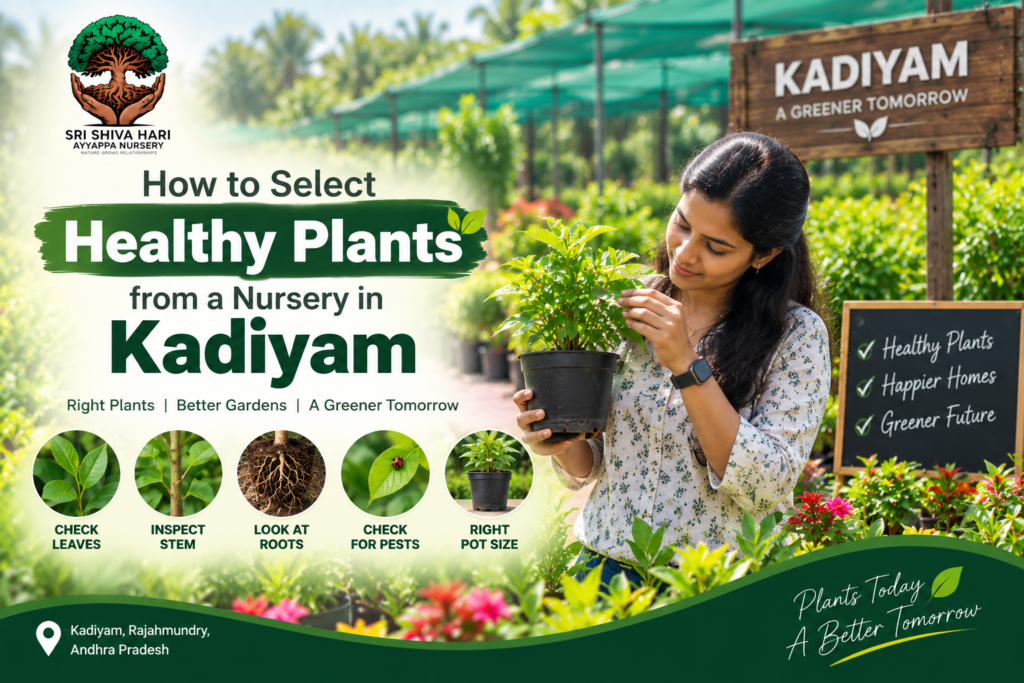
How to Select Healthy Plants from a Nursery in Kadiyam
How to Select Healthy Plants from a Nursery in Kadiyam Buying a plant is easy. Choosing a healthy plant that can adapt well to your garden and continue growing requires a little more attention. When you visit a nursery in Kadiyam, you may find hundreds of plants in different varieties, sizes and stages of growth. With so many choices around you, it can be tempting to pick a plant simply because it looks attractive. However, a healthy plant is more than just a plant with green leaves. You need to look at its foliage, stems, roots, soil, overall growth and even signs of pests or disease. Spending a few extra minutes checking a plant before buying it can help you start your garden on the right foot. Here is a practical guide to help you select healthy plants from a nursery in Kadiyam. 1. Start with Your Garden Requirements Before looking at individual plants, understand what you actually need. Think about where the plant will be placed and what you want it to do. Are you looking for: Knowing your purpose makes it easier to choose the right plant rather than buying something that may not suit your space. 2. Check the Overall Appearance Take a step back and look at the entire plant. A healthy plant should generally have a balanced appearance appropriate to its variety. Look for good foliage, reasonably strong growth and no obvious signs of severe damage. Avoid choosing a plant simply because it is larger than the others. A smaller plant with healthy, well-developed growth may establish better than a larger plant that is stressed or damaged. If you are unsure, compare several plants of the same variety before making your decision. 3. Examine the Leaves Carefully Leaves can tell you a lot about a plant’s condition. Look for foliage that appears healthy and appropriate for the plant variety. Be cautious with plants showing: Some plants naturally have unusual leaf colours or patterns, so don’t assume every colour variation indicates a problem. If something looks unusual, ask the nursery staff about it. Also remember that a few damaged leaves do not necessarily mean the entire plant is unhealthy. Look at the overall condition rather than judging it from one leaf. 4. Inspect the Stem and Branches The stem provides important support to the plant. Look for stems and branches that appear healthy and appropriate for the plant’s size. Avoid plants with obvious breaks, severe wounds or extensive physical damage. For trees and shrubs, check whether the main structure looks stable. If a plant has been shaped or pruned, ask whether that is normal for the variety or part of its regular maintenance. 5. Look for Signs of Pests Before purchasing a plant, inspect the leaves and stems for visible pests. Check both the upper and lower surfaces of leaves where possible. Also look around new growth and stems. Potential warning signs can include: If you notice something unusual, ask the nursery team before buying the plant. It is especially important to check plants carefully if you already have a large collection at home because introducing a pest-affected plant can create problems for your existing plants. 6. Check the Pot and Growing Medium The container can provide useful clues about the plant’s condition. Look at the growing medium and check whether the plant appears properly established in its pot. A plant that has been in the same container for a long time may become root-bound. In such cases, roots can become densely packed and may circle around the inside of the container. Some degree of root growth is normal, but if you are concerned, ask the nursery staff to explain the plant’s condition. Don’t pull the plant out of its container yourself unless the nursery staff allows you to inspect the roots. 7. Consider the Plant’s Size Bigger isn’t always better. A large plant may look impressive, but it may also require more care during transportation and transplantation. A smaller, healthy plant can sometimes be easier to establish in a new location. Think about where you are going to plant it and how quickly you want the garden to develop. For example, if you are planting a tree near a house, choosing a plant based only on its current size can be misleading. You need to consider how large it may eventually become. 8. Check Whether the Plant Suits Your Location A healthy plant can still struggle if it is planted in the wrong environment. Before buying, consider the conditions at home. Sunlight Does the planting area receive full sunlight, partial sunlight or shade? Water Can you provide the amount of water the plant requires? Soil Is your soil suitable, or will you need to improve it? Space Will the plant have enough room as it grows? Maintenance Can you provide regular pruning, watering and other care when required? These questions are particularly important when buying plants from a nursery in Kadiyam because the selection can be so large that it is easy to get distracted by varieties that may not suit your particular location. 9. Ask About the Plant’s Growing Requirements Don’t hesitate to ask questions. A nursery professional may be able to provide useful information about the plant’s: You don’t need to know everything before visiting a nursery. Asking the right questions can help you make a more informed purchase. 10. Be Careful When Buying Fruit Plants Fruit plants deserve additional attention because you are usually buying them with a long-term goal in mind. Before purchasing a fruit plant, ask about: Depending on availability, nurseries in Kadiyam may offer fruit plants such as mango, guava, lemon, sapota, avocado, jackfruit, pomegranate, amla and other varieties. Choose based on your growing conditions rather than simply selecting the fruit you like. 11. Choose Flowering Plants According to Sunlight Flowering plants can make a garden colourful, but they need suitable growing conditions to perform well. Before buying a flowering plant, find out whether it prefers full sun
How to Select Healthy Plants from a Nursery in Kadiyam Read More »