
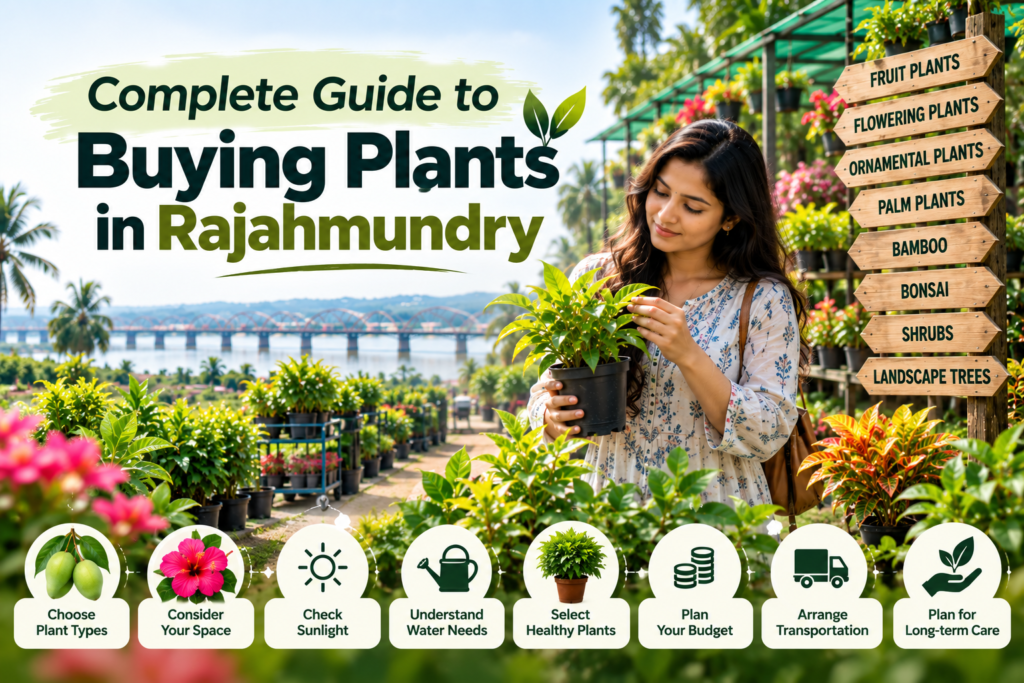
Complete Guide to Buying Plants in Rajahmundry
Buying plants can be an exciting experience. Whether you are creating your first home garden, adding greenery to an existing property, planting fruit trees on a farm, or working on a landscaping project, the right plants can completely change an outdoor space.
For people looking to buy plants in Rajahmundry, there are plenty of options to explore. The nearby Kadiyam region is also well known for its nursery-growing activities and variety of plants.
But with so many choices available, how do you know what to buy?
This complete guide will help you understand what to consider before purchasing plants, how to choose healthy varieties and how to select plants that will actually suit your space.
Why Buy Plants in Rajahmundry?
Rajahmundry and the surrounding areas offer plant buyers access to a variety of nurseries and plant options.
Depending on the nursery and current availability, you can explore:
- Fruit plants
- Flowering plants
- Ornamental plants
- Palm plants
- Bamboo
- Bonsai
- Shrubs
- Topiary plants
- Landscape trees
- Decorative plants
This variety means that you don’t have to choose plants based only on what happens to be available at a small local shop.
Visiting a nursery allows you to compare different varieties and choose according to your garden’s requirements.
1. Decide What Type of Garden You Want
Before visiting a nursery, think about what you want your garden to look like.
Are you planning a:
Home Garden
You may want a combination of flowering plants, ornamental plants, shrubs and a few fruit plants.
Fruit Garden
Fruit trees such as mango, guava, lemon, sapota and other suitable varieties can be considered depending on your space and growing conditions.
Landscaping Project
A landscape may require a combination of trees, palms, shrubs, flowering plants and ornamental varieties.
Decorative Garden
Bonsai, topiary, ornamental foliage plants and flowering varieties can help create a more decorative appearance.
Having a clear idea before shopping can prevent unnecessary purchases.
2. Choose Plants According to Your Available Space
One of the biggest mistakes people make when buying plants is thinking only about their current size.
A small plant can become a large tree or shrub over time.
Before buying, consider:
- Available planting area
- Expected mature height
- Canopy or spread
- Root space
- Distance from buildings
- Distance from walls and pathways
This is especially important for large trees and palms.
A plant that fits perfectly in a corner today may become difficult to manage after several years if it doesn’t have enough space.
3. Consider the Amount of Sunlight
Sunlight is one of the most important factors in plant growth.
Before buying a plant, observe the location where you plan to grow it.
Does it receive:
- Full sunlight?
- Morning sunlight?
- Partial shade?
- Mostly shade?
Choose plants according to their light requirements.
If you are unsure, ask the nursery team whether the variety is suitable for your particular location.
4. Understand Watering Requirements
Different plants have different watering needs.
Before purchasing, think about how much time you can spend caring for your garden.
If you have a regular watering routine, you can consider plants that need more frequent attention.
If you have limited time, look for varieties that are better suited to a lower-maintenance routine.
The goal is to choose plants that fit your lifestyle rather than creating a garden that becomes difficult to maintain.
5. Select Healthy Plants
Once you find a variety you like, don’t immediately pick the first plant you see.
Take a closer look.
Check the Leaves
Look for healthy foliage and watch for obvious signs of severe damage, unusual spots or pests.
Examine the Stem
The stem should appear reasonably strong and suitable for the size of the plant.
Check the Pot
Look at the condition of the container and growing medium. If you have concerns about the roots, ask the nursery staff rather than removing the plant yourself.
Look for Pests
Check the leaves and stems for visible insects, webbing, sticky residue or other unusual signs.
If something looks suspicious, ask before buying.
6. Explore Fruit Plants
Fruit plants are popular among homeowners and farmers because they can provide both greenery and a potential harvest over time.
Depending on availability, you may find:
- Mango
- Guava
- Lemon
- Sapota
- Avocado
- Jackfruit
- Vietnam Jackfruit
- Pomegranate
- Amla
- Dragon Fruit
- Jamun
- Star Fruit
- Water Apple
- Pomelo
Before choosing a fruit plant, consider the amount of space it will need as it matures.
Also ask about sunlight, watering, soil and general maintenance.
7. Consider Flowering Plants
If your goal is to add colour to your garden, flowering plants are an excellent option.
Depending on availability, nurseries around Rajahmundry and Kadiyam may offer varieties such as:
- Ixora
- Lantana
- Portulaca
- Allamanda
- Calliandra
- Eranthemum
- Bougainvillea
Flowering plants can be placed around entrances, pathways, lawns and garden beds.
Try combining different colours and plant heights to create a more natural-looking garden.
8. Add Ornamental Plants
Ornamental plants can give your garden character through interesting foliage, shapes and textures.
They can be used around homes, offices, patios, pathways and commercial properties.
Ficus varieties are also popular for ornamental purposes, with options such as Ficus microcarpa, Ficus Panda, Ficus Triangular and other forms depending on nursery availability.
When selecting ornamental plants, think about how their colour and shape will work with the plants you already have.
9. Consider Palm Plants for Landscaping
Palm plants can give an outdoor space a tropical appearance.
Some varieties you may find include:
- Foxtail Palm
- Royal Palm
- Areca Palm
- Washingtonia
- Bismarckia
- Livistona
- Phoenix Palm
- Rhapis Palm
- Veitchia
Palm plants can work well around entrances, lawns, resorts, farmhouses and larger properties.
Always check the expected mature size before planting a palm close to buildings or other structures.
10. Explore Bamboo Varieties
Bamboo can be used for decorative landscaping, borders and screening depending on the variety.
Some options may include:
- Golden Bamboo
- Black Bamboo
- White Bamboo
- Painting Bamboo
- Variegated Bamboo
- Bambusa varieties
Because bamboo varieties can have different growth habits, ask about their characteristics before deciding where to plant them.
11. Bonsai for Plant Lovers
Bonsai is a great option if you enjoy spending time caring for plants.
Bonsai requires regular attention, including watering, pruning and proper positioning.
They can be suitable for:
- Balconies
- Terraces
- Homes
- Offices
- Reception areas
- Personal plant collections
If you are a beginner, ask the nursery about the specific care requirements before buying.
12. Shrubs and Topiary Plants
Shrubs can help fill empty spaces and create natural borders within a garden.
Topiary plants can provide a more structured and decorative appearance.
They can work particularly well around:
- Entrances
- Hotels
- Resorts
- Villas
- Commercial properties
- Large gardens
Remember that topiary plants usually require regular maintenance to retain their shape.
13. Think About Your Soil
Before buying plants, consider the soil at your property.
Some plants prefer particular soil conditions or drainage levels.
Ask the nursery about:
- Soil requirements
- Drainage
- Potting mix
- Planting depth
- Fertilizer requirements
If necessary, prepare your planting area before bringing the plants home.
14. Ask About Plant Maintenance
A beautiful garden requires ongoing care.
Before purchasing a plant, ask:
- How often should it be watered?
- Does it require pruning?
- Does it need fertilizer?
- How quickly does it grow?
- How large will it become?
- Does it need full sunlight?
- Can it grow well in a pot?
Understanding these requirements beforehand can help you avoid choosing plants that are difficult to maintain.
15. Compare Different Plants Before Buying
If a nursery has several plants of the same variety, compare them.
Look at:
- Size
- Foliage
- Stem
- Shape
- Overall growth
- Pot condition
Don’t automatically choose the biggest plant.
A healthy plant that suits your requirements can be a better choice than a larger plant that may be stressed or difficult to transport.
16. Consider Your Budget
Set a reasonable budget before visiting the nursery.
Remember that the cost of a plant isn’t the only expense. Depending on your project, you may also need to consider:
- Pots
- Soil or growing medium
- Fertilizer
- Transport
- Planting materials
- Ongoing maintenance
If you are purchasing plants in larger quantities, ask the nursery about available sizes and bulk requirements.
17. Plan Transportation
Small plants are generally easier to transport, but larger trees and palms require more care.
Before buying large quantities, think about how you will safely move the plants to your property.
Avoid damaging leaves, stems or branches during transportation.
Once the plants arrive, follow the nursery’s instructions for planting and initial care.
18. Don’t Buy More Plants Than You Need
A nursery can be an exciting place because there are so many beautiful plants around you.
However, buying too many plants can result in overcrowding.
Instead, plan your garden first.
Give each plant enough space to grow and consider how the garden will look after several years, not just on the day you plant it.
Why Consider Kadiyam When Buying Plants Near Rajahmundry?
For people looking to buy plants in Rajahmundry, Kadiyam is an important area to explore because of its nursery-growing activities and wide selection of plants.
Depending on availability, buyers can explore fruit plants, flowering plants, palms, bamboo, bonsai, shrubs, ornamental plants and landscape trees.
Visiting nurseries in person also gives you the opportunity to compare plants, inspect their condition and ask questions before making a purchase.
Questions to Ask Before Buying
A few simple questions can help you make a better decision.
About the plant:
- What variety is this?
- How large will it become?
- Is it suitable for my location?
About care:
- How much sunlight does it need?
- How often should I water it?
- What soil does it prefer?
- Does it require pruning?
About transportation:
- How should I transport it?
- Does it need additional support?
- How soon should it be planted?
These questions can be particularly helpful if you are new to gardening.
A Simple Plant-Buying Checklist
Before leaving the nursery, make sure you have checked:
✓ Plant health
✓ Leaves and stems
✓ Signs of pests
✓ Pot and growing condition
✓ Sunlight requirements
✓ Water requirements
✓ Mature size
✓ Available space
✓ Maintenance needs
✓ Transportation
This simple checklist can make your plant-buying experience much easier.
Final Thoughts
Buying plants in Rajahmundry doesn’t have to be complicated.
The most important thing is to understand your garden before you start shopping. Know how much space you have, how much sunlight is available, how often you can water the plants and how much maintenance you are willing to provide.
Then explore the available options and choose plants that genuinely suit your requirements.
Whether you’re looking for fruit plants for your backyard, flowering plants for colour, palms for landscaping, bamboo for screening, bonsai for a hobby or ornamental plants for decoration, there are plenty of varieties to explore.
If you’re planning to buy plants in Rajahmundry, take your time, inspect the plants carefully and ask questions before making your final choice.
A healthy garden begins with healthy plants—and healthy plants begin with the right buying decision.
Frequently Asked Questions
Where can I buy plants in Rajahmundry?
You can explore plant nurseries in and around Rajahmundry. Kadiyam, located nearby, is also well known for its nursery-growing activities and variety of plants.
What types of plants can I buy?
Depending on nursery availability, you can find fruit plants, flowering plants, ornamental plants, palms, bamboo, bonsai, shrubs, topiary and landscape trees.
How do I choose a healthy plant?
Check the leaves, stems, overall growth and pot condition. Also look for visible signs of pests or severe damage.
Which plants are suitable for a home garden?
Flowering plants, ornamental plants, suitable shrubs and selected fruit plants can all be considered. The right choice depends on your available space and growing conditions.
What should I consider before buying a large tree?
Check its mature height, canopy spread, root space, sunlight requirements and distance from buildings, walls and other structures.
Is Kadiyam useful for landscaping plant requirements?
Yes. Depending on availability, Kadiyam nurseries offer various trees, palms, shrubs, flowering and ornamental plants that can be considered for landscaping projects.