
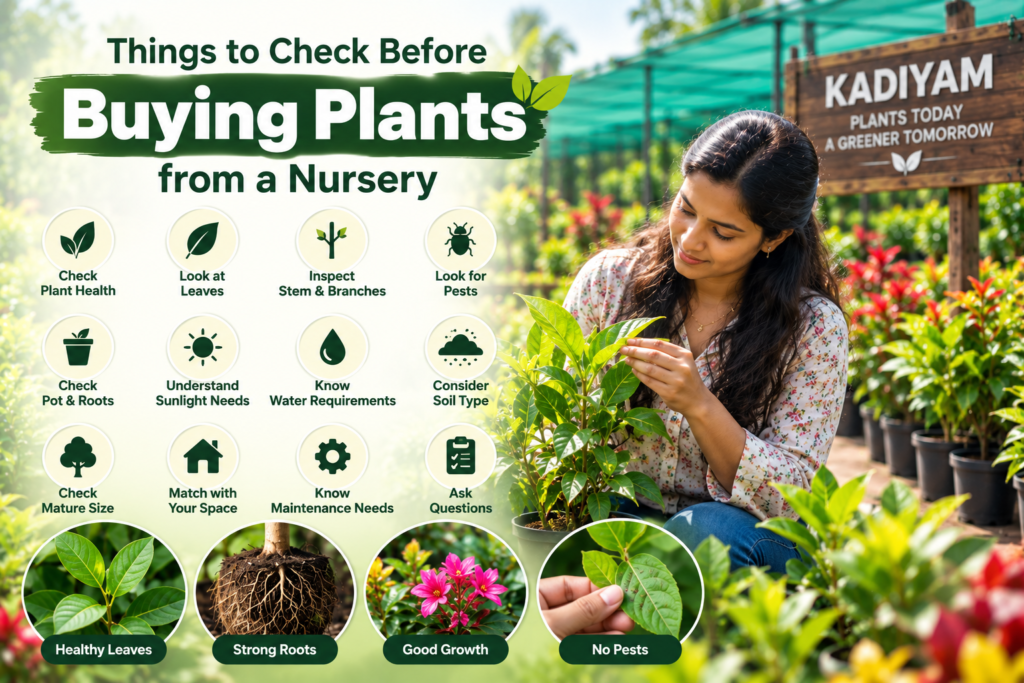
Things to check before buying plants from a nursery
Buying plants is an exciting part of creating a garden. Whether you are planning a small home garden, adding greenery to your balcony, developing a farmhouse landscape or planting fruit trees on a larger property, the right plants can make a big difference.
However, choosing plants should not be based only on how attractive they look at the nursery.
A plant may look beautiful today but still be unsuitable for your garden. Before making a purchase, it is worth checking its health, size, growing requirements and suitability for the location where you plan to plant it.
If you are visiting a nursery in Kadiyam or any local plant nursery, here are some important things to check before buying.
1. Check the Overall Health of the Plant
Start by looking at the plant as a whole.
A healthy plant should generally have good-looking foliage, a reasonably strong structure and active growth appropriate for its variety.
Don’t choose a plant simply because it is the biggest one available. A smaller plant with healthy growth can be a better choice than a larger plant that appears stressed.
If several plants of the same variety are available, compare them before deciding.
2. Examine the Leaves Carefully
The leaves can give you useful clues about the plant’s condition.
Look for leaves that appear healthy and appropriate for the particular plant. Be cautious if you notice extensive:
- Yellowing
- Wilting
- Brown or damaged areas
- Unusual spots
- Leaf drop
- Distorted new growth
A few damaged leaves do not necessarily mean that the entire plant is unhealthy. Consider the overall condition of the plant and ask the nursery staff if you notice anything unusual.
3. Inspect the Stem and Branches
The stem and branches should look reasonably strong and suitable for the size of the plant.
Check for obvious:
- Breaks
- Severe wounds
- Cracks
- Physical damage
- Weak or damaged branches
For trees and shrubs, also consider the overall structure. A well-formed plant can be easier to establish and maintain after planting.
4. Look for Signs of Pests
Take a few moments to inspect the leaves and stems for visible pests.
Look at both sides of the leaves where possible, especially around new growth.
Possible warning signs include:
- Visible insects
- Fine webbing
- Sticky residue
- Distorted leaves
- Unusual marks
- Clusters of pests
If you find something unusual, don’t immediately assume the plant is unusable. Ask the nursery team about it and understand what you are buying before taking it home.
This is particularly important if you already have plants at home.
5. Check the Pot and Growing Medium
The condition of the pot can tell you something about how the plant has been growing.
Look at the growing medium and check whether the plant appears properly established.
If the plant has been in the same container for a long time, its roots may become crowded. This is sometimes referred to as being root-bound.
Don’t pull a plant out of its container without permission from the nursery. Instead, ask the staff to explain the root condition if you have concerns.
6. Think About the Plant’s Mature Size
One of the most common mistakes is thinking only about the plant’s current size.
A small nursery plant can eventually become a large tree or shrub.
Before buying, find out:
- How tall can it grow?
- How wide can it become?
- How large can its canopy get?
- How much root space does it need?
- How far should it be planted from buildings?
This is especially important when buying trees, palms and large ornamental plants.
A plant that looks perfect near your house today may need much more space several years later.
7. Check the Sunlight Requirements
Different plants have different light requirements.
Before buying, think about where you will plant it.
Does the location receive:
- Full sunlight?
- Partial sunlight?
- Mostly shade?
Choose a plant that matches the conditions of your garden.
If you are unsure, ask the nursery team whether the plant is suitable for your particular location.
8. Understand Watering Requirements
Water availability is another important factor.
Some plants need regular watering, while others may tolerate periods of lower moisture once established.
Think realistically about your watering routine.
If you have limited time for gardening, choosing plants with care requirements that fit your routine can make maintenance much easier.
Avoid choosing a plant simply because you like its appearance without understanding how much care it requires.
9. Consider Your Soil
Your garden’s soil can influence how well a plant grows.
Before buying, consider whether your soil is suitable for the plant or whether it may need improvement.
Ask the nursery about:
- Soil preferences
- Drainage
- Planting requirements
- Potting mix
- Fertilizer requirements
Understanding these requirements before planting can help you prepare the location properly.
10. Decide What Purpose the Plant Will Serve
Before buying a plant, ask yourself why you want it.
Are you looking for:
- Fruit?
- Flowers?
- Shade?
- Privacy?
- Decorative greenery?
- Landscaping?
- A bonsai collection?
- Garden borders?
Your purpose should influence your choice.
For example, a fruit tree may be ideal for a backyard where you want productive plants, while an ornamental shrub may be better suited to a decorative entrance.
11. Choose Fruit Plants Carefully
If you are buying fruit plants, think about the long-term requirements.
Depending on nursery availability, you may find fruit plants such as mango, guava, lemon, sapota, avocado, jackfruit, pomegranate, amla, dragon fruit and other varieties.
Before buying, ask about:
- Variety
- Expected mature size
- Sunlight
- Water requirements
- Spacing
- General care
The right variety for one property may not necessarily be the right choice for another.
12. Check Flowering and Ornamental Plants
Flowering and ornamental plants can make your garden more colourful, but their appearance should not be your only consideration.
Check whether the plant is suitable for your location and understand its maintenance needs.
Think about where it will be placed and whether its eventual size will work with the surrounding plants.
Combining plants with different heights, colours and textures can create a more attractive garden.
13. Be Careful When Buying Palm and Bamboo Plants
Palm and bamboo plants can be excellent additions to landscaping, but some varieties can grow significantly over time.
Before purchasing, ask about their:
- Mature height
- Width
- Growth habit
- Sunlight requirements
- Water needs
- Space requirements
This is especially important for smaller gardens.
14. Ask the Nursery Staff Questions
You don’t have to know everything about a plant before visiting a nursery.
That’s why asking questions is important.
Some useful questions include:
How much sunlight does this plant need?
How often should I water it?
How large will it become?
Does it need regular pruning?
What type of soil does it prefer?
Is it suitable for a pot?
How should I plant it after bringing it home?
The answers can help you decide whether the plant fits your garden.
15. Compare Plants Before Making a Decision
If multiple plants of the same variety are available, take a few minutes to compare them.
Look at their:
- Foliage
- Stem
- Shape
- Growth
- Size
- Pot condition
You don’t necessarily have to choose the largest plant. Look for one that appears healthy and is appropriate for your requirements.
16. Consider Transportation
After choosing your plants, think about how you will transport them.
Leaves and branches can be damaged when plants are packed too tightly or handled roughly.
For larger plants, ask the nursery about suitable transportation arrangements and support.
Once you reach your destination, avoid leaving plants exposed unnecessarily and follow the nursery’s instructions for planting and initial care.
17. Don’t Buy More Plants Than Your Space Allows
When you visit a nursery filled with beautiful plants, it is easy to buy more than you actually need.
Before shopping, estimate the available planting space.
Remember that plants grow.
A garden that looks nicely filled today can become overcrowded later if too many plants are placed close together.
Give each plant enough room to develop according to its expected size.
A Simple Checklist Before Buying Plants
Before you purchase a plant, quickly go through this checklist:
Plant Health
- Are the leaves healthy?
- Is the stem strong?
- Is there visible pest damage?
- Does the plant show signs of severe stress?
Growing Conditions
- Is there enough sunlight?
- Can I provide the required water?
- Is my soil suitable?
- Can I provide the required maintenance?
Space
- How large will the plant become?
- Do I have enough room?
- Is it safe to plant near buildings or walls?
Purpose
- Does the plant serve the purpose I need?
- Is it suitable for my garden design?
After Purchase
- Can I transport it safely?
- Do I know how to plant and care for it?
If you can answer these questions, you are much more likely to make a suitable choice.
Why Visit a Nursery in Kadiyam?
For plant buyers in Andhra Pradesh, visiting a nursery in Kadiyam can provide an opportunity to explore a wide selection of plants in one destination.
Depending on availability, you can find fruit plants, flowering plants, ornamental plants, palms, bamboo, bonsai, shrubs, topiary plants and landscape trees.
The biggest advantage of visiting a physical nursery is that you can see the plants yourself, compare different varieties and ask questions before buying.
Instead of choosing a plant only because it looks attractive in a photograph, you can consider its actual size, condition and growing requirements.
Final Thoughts
Buying plants is an investment in your garden’s future. The right plant can grow into a beautiful and useful part of your property, while the wrong plant may struggle if its requirements don’t match your environment.
Before buying, take a few minutes to inspect the plant, understand its needs and think about how it will fit into your garden as it grows.
Whether you are shopping for fruit trees, flowering plants, palms, bamboo, bonsai or ornamental greenery, a little planning can make your nursery visit much more productive.
Choose carefully, plant thoughtfully and give your plants the care they need to grow well.
Frequently Asked Questions
What should I check before buying a plant from a nursery?
Check the leaves, stems, overall growth, pot condition and visible signs of pests or damage. Also understand the plant’s sunlight, water, soil and space requirements.
Should I always choose the biggest plant?
No. Plant health and suitability are more important than size. A smaller, healthy plant may be easier to establish and maintain.
How do I know whether a plant will suit my garden?
Consider sunlight, soil, water, available space and maintenance requirements. Ask the nursery staff about the plant’s growing conditions and mature size.
What should I check when buying a fruit tree?
Check the plant’s variety, health, mature size, sunlight requirements, water needs and recommended spacing.
Why is it useful to buy plants from a physical nursery?
A physical nursery allows you to see the plant in person, compare different plants and ask questions about their care before making a purchase.