
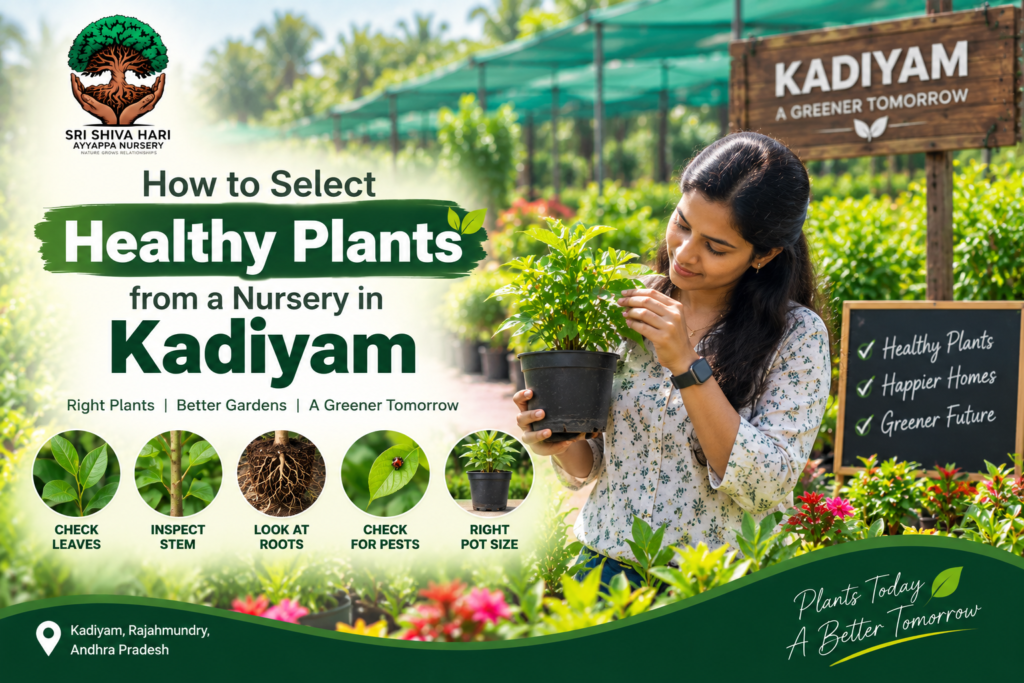
How to Select Healthy Plants from a Nursery in Kadiyam
Buying a plant is easy. Choosing a healthy plant that can adapt well to your garden and continue growing requires a little more attention.
When you visit a nursery in Kadiyam, you may find hundreds of plants in different varieties, sizes and stages of growth. With so many choices around you, it can be tempting to pick a plant simply because it looks attractive.
However, a healthy plant is more than just a plant with green leaves.
You need to look at its foliage, stems, roots, soil, overall growth and even signs of pests or disease. Spending a few extra minutes checking a plant before buying it can help you start your garden on the right foot.
Here is a practical guide to help you select healthy plants from a nursery in Kadiyam.
1. Start with Your Garden Requirements
Before looking at individual plants, understand what you actually need.
Think about where the plant will be placed and what you want it to do.
Are you looking for:
- Fruit plants for your backyard?
- Flowering plants for colour?
- Ornamental plants for decoration?
- Palm plants for landscaping?
- Bamboo for screening or garden design?
- Bonsai for your collection?
- Trees for shade?
- Shrubs for garden borders?
Knowing your purpose makes it easier to choose the right plant rather than buying something that may not suit your space.
2. Check the Overall Appearance
Take a step back and look at the entire plant.
A healthy plant should generally have a balanced appearance appropriate to its variety. Look for good foliage, reasonably strong growth and no obvious signs of severe damage.
Avoid choosing a plant simply because it is larger than the others. A smaller plant with healthy, well-developed growth may establish better than a larger plant that is stressed or damaged.
If you are unsure, compare several plants of the same variety before making your decision.
3. Examine the Leaves Carefully
Leaves can tell you a lot about a plant’s condition.
Look for foliage that appears healthy and appropriate for the plant variety.
Be cautious with plants showing:
- Extensive yellowing
- Severe wilting
- Large damaged areas
- Unusual spots
- Excessive leaf drop
- Heavy insect activity
Some plants naturally have unusual leaf colours or patterns, so don’t assume every colour variation indicates a problem. If something looks unusual, ask the nursery staff about it.
Also remember that a few damaged leaves do not necessarily mean the entire plant is unhealthy. Look at the overall condition rather than judging it from one leaf.
4. Inspect the Stem and Branches
The stem provides important support to the plant.
Look for stems and branches that appear healthy and appropriate for the plant’s size. Avoid plants with obvious breaks, severe wounds or extensive physical damage.
For trees and shrubs, check whether the main structure looks stable.
If a plant has been shaped or pruned, ask whether that is normal for the variety or part of its regular maintenance.
5. Look for Signs of Pests
Before purchasing a plant, inspect the leaves and stems for visible pests.
Check both the upper and lower surfaces of leaves where possible. Also look around new growth and stems.
Potential warning signs can include:
- Clusters of insects
- Sticky residue
- Fine webbing
- Distorted new leaves
- Unusual marks
- Visible eggs or pests
If you notice something unusual, ask the nursery team before buying the plant.
It is especially important to check plants carefully if you already have a large collection at home because introducing a pest-affected plant can create problems for your existing plants.
6. Check the Pot and Growing Medium
The container can provide useful clues about the plant’s condition.
Look at the growing medium and check whether the plant appears properly established in its pot.
A plant that has been in the same container for a long time may become root-bound. In such cases, roots can become densely packed and may circle around the inside of the container.
Some degree of root growth is normal, but if you are concerned, ask the nursery staff to explain the plant’s condition.
Don’t pull the plant out of its container yourself unless the nursery staff allows you to inspect the roots.
7. Consider the Plant’s Size
Bigger isn’t always better.
A large plant may look impressive, but it may also require more care during transportation and transplantation.
A smaller, healthy plant can sometimes be easier to establish in a new location.
Think about where you are going to plant it and how quickly you want the garden to develop.
For example, if you are planting a tree near a house, choosing a plant based only on its current size can be misleading. You need to consider how large it may eventually become.
8. Check Whether the Plant Suits Your Location
A healthy plant can still struggle if it is planted in the wrong environment.
Before buying, consider the conditions at home.
Sunlight
Does the planting area receive full sunlight, partial sunlight or shade?
Water
Can you provide the amount of water the plant requires?
Soil
Is your soil suitable, or will you need to improve it?
Space
Will the plant have enough room as it grows?
Maintenance
Can you provide regular pruning, watering and other care when required?
These questions are particularly important when buying plants from a nursery in Kadiyam because the selection can be so large that it is easy to get distracted by varieties that may not suit your particular location.
9. Ask About the Plant’s Growing Requirements
Don’t hesitate to ask questions.
A nursery professional may be able to provide useful information about the plant’s:
- Sunlight requirements
- Watering schedule
- Soil preference
- Growth rate
- Mature size
- Fertilizer requirements
- Pruning needs
- Potting or planting requirements
You don’t need to know everything before visiting a nursery. Asking the right questions can help you make a more informed purchase.
10. Be Careful When Buying Fruit Plants
Fruit plants deserve additional attention because you are usually buying them with a long-term goal in mind.
Before purchasing a fruit plant, ask about:
- Variety
- Expected growth
- Fruit characteristics
- Suitable planting conditions
- Water requirements
- Spacing
- Maintenance
Depending on availability, nurseries in Kadiyam may offer fruit plants such as mango, guava, lemon, sapota, avocado, jackfruit, pomegranate, amla and other varieties.
Choose based on your growing conditions rather than simply selecting the fruit you like.
11. Choose Flowering Plants According to Sunlight
Flowering plants can make a garden colourful, but they need suitable growing conditions to perform well.
Before buying a flowering plant, find out whether it prefers full sun or partial shade.
Also consider how often you want flowers and how much maintenance you are willing to provide.
A plant that receives suitable light and proper care has a better opportunity to grow and flower well.
12. Be Careful with Large Trees
Large trees can become beautiful long-term features of a property, but they require careful planning.
Before purchasing a tree, think beyond its current nursery size.
Consider:
- Mature height
- Canopy spread
- Root development
- Distance from buildings
- Distance from power lines
- Available open space
- Water requirements
Planting a large tree in a location that is too small can create problems in the future.
13. Look at More Than One Plant
If the nursery has multiple plants of the same variety, don’t automatically pick the first one you see.
Compare several plants.
Look at their foliage, structure, size and overall appearance. You may find that one plant is better suited to your requirements than another.
This simple habit can make your nursery shopping more thoughtful.
14. Don’t Let Price Be the Only Factor
Price is naturally an important consideration, but it shouldn’t be the only factor when buying plants.
A very inexpensive plant may not be the right choice if it does not suit your garden or requires more care than you can provide.
Similarly, paying more for a larger plant isn’t always necessary.
Think about the plant’s health, suitability, size and long-term requirements before making your decision.
15. Plan Transportation Carefully
Once you have selected healthy plants, they still need to reach your home safely.
Leaves, branches and stems can be damaged if plants are packed or transported carelessly.
For larger plants, ask the nursery about suitable transportation and support. Avoid placing heavy objects on delicate plants.
After reaching your destination, follow the nursery’s instructions for planting and initial care.
What to Do After Bringing Plants Home
The buying process doesn’t end when you leave the nursery.
Your plants will need time to adjust to their new environment.
Before planting, prepare the location properly. Make sure the soil, drainage, sunlight and available space are appropriate.
Follow the nursery’s instructions regarding watering and planting depth.
Avoid making major changes to the plant immediately unless necessary. Give it time to settle into its new surroundings.
Common Mistakes to Avoid When Buying Plants
Buying Only Because the Plant Looks Beautiful
Appearance matters, but suitability matters more.
Ignoring Mature Size
Always think about how large the plant will become.
Forgetting About Sunlight
A plant may struggle if its light requirements don’t match your garden.
Buying Too Many Plants
Overcrowding can create competition for sunlight, water and nutrients.
Not Asking Questions
If you are unsure about a plant, ask the nursery staff before purchasing.
Ignoring Signs of Pests
Always inspect leaves and stems before bringing a new plant home.
Why Choose a Nursery in Kadiyam?
One of the advantages of visiting a nursery in Kadiyam is the opportunity to explore a wide range of plants and compare different varieties.
You can look at fruit plants, flowering plants, palms, bamboo, bonsai, shrubs, ornamental plants and trees according to your needs.
For beginners, the variety can also be an opportunity to learn more about plants and their growing requirements.
Rather than buying the first plant that catches your eye, take your time and make your selection carefully.
A Simple Checklist for Plant Buyers
Before paying for a plant, ask yourself:
✓ Does the plant look healthy?
✓ Are the leaves and stems in good condition?
✓ Can I see any obvious signs of pests?
✓ Is the plant suitable for my sunlight conditions?
✓ Do I have enough space for its mature size?
✓ Can I provide the required water and maintenance?
✓ Have I asked about its care requirements?
If you can answer these questions confidently, you are in a much better position to choose a plant that fits your garden.
Final Thoughts
Choosing a healthy plant doesn’t have to be complicated. You simply need to slow down and look beyond the surface.
Check the leaves, stems, container and overall growth. Look for signs of pests or severe damage. Most importantly, make sure the plant suits the conditions where you intend to grow it.
When visiting a nursery in Kadiyam, take advantage of the variety available. Compare plants, ask questions and choose according to your garden’s actual needs.
A healthy plant is a good starting point, but its future growth will depend on what happens after you bring it home.
Choose carefully, plant thoughtfully and provide consistent care. Your garden will reward you with healthy growth for years to come.
Frequently Asked Questions
How can I tell if a plant is healthy?
Look for healthy foliage, strong stems, good overall growth and no obvious signs of severe pest damage or disease. Also check the condition of the container and growing medium.
Should I buy the biggest plant available?
Not necessarily. A smaller but healthy plant may be easier to transport and establish. Consider the plant’s long-term growth rather than its current size alone.
What should I check before buying a fruit plant?
Check the variety, overall plant health, expected mature size, sunlight requirements, watering needs and suitability for your location.
How do I check for pests?
Inspect the upper and lower surfaces of leaves, new growth and stems. Look for visible insects, webbing, sticky residue, distorted leaves or unusual marks.
Can nursery staff help me choose a plant?
Yes. Ask about the plant’s sunlight, watering, soil, growth and maintenance requirements. This information can help you select a plant that suits your garden.