
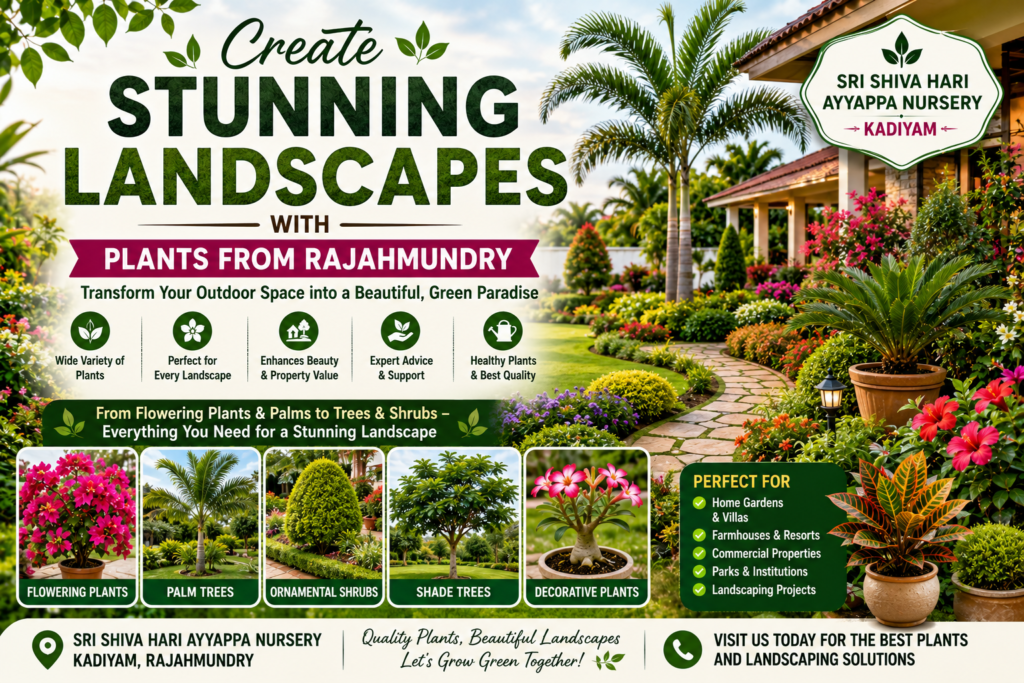
Create Stunning Landscapes with Plants from Rajahmundry
A well-designed landscape can completely change the way a property looks and feels. A plain outdoor area can become a peaceful garden, a welcoming entrance, or a beautiful green space simply by choosing the right plants and arranging them thoughtfully.
For homeowners, builders, landscapers, resorts, and commercial property owners in Rajahmundry, finding suitable plants is easier with the wide variety available from the nurseries around Kadiyam. From flowering plants and ornamental shrubs to palms, fruit plants, decorative plants, and shade trees, there are plenty of options to create a landscape that suits your property.
If you’re planning a new garden or refreshing an existing one, Sri Shiva Hari Ayyappa Nursery in Kadiyam can be a useful place to explore plants for different landscaping requirements.
What Makes a Landscape Beautiful?
A beautiful landscape is not simply a collection of plants. Good landscaping is about creating balance between plants, pathways, open spaces, structures, and other outdoor elements.
A thoughtfully planned garden usually combines:
- Different plant heights
- Attractive foliage
- Seasonal flowers
- Shade trees
- Ornamental shrubs
- Palms
- Ground-level plants
- Decorative pots
- Pathways and seating areas
When these elements are arranged properly, even a simple property can have a polished and inviting appearance.
Choose Plants According to Your Landscape
One of the biggest mistakes people make is choosing plants only because they look attractive at the nursery.
Instead, think about where the plant will be placed.
Before buying, consider:
- Available sunlight
- Soil conditions
- Water availability
- Space
- Expected plant size
- Maintenance requirements
- Purpose of the landscape
A plant that thrives in a sunny garden may not be suitable for a shaded corner. Similarly, a large tree may look impressive but could become difficult to manage if planted too close to a building.
1. Flowering Plants for a Colorful Landscape
Flowers can instantly bring life and color to a garden.
Popular choices include hibiscus, roses, jasmine, ixora, bougainvillea, and other flowering varieties suitable for local growing conditions.
You can use flowering plants around:
- Main entrances
- Garden pathways
- Compound walls
- Seating areas
- Lawn borders
- Outdoor patios
Instead of planting everything randomly, group flowers according to color, height, and flowering characteristics. This can create a much more organized appearance.
2. Ornamental Shrubs for Garden Structure
Ornamental shrubs are useful for filling spaces between larger trees and smaller plants.
They can define garden boundaries, create low borders, and add greenery around entrances and pathways.
Shrubs also help create different layers in a landscape. Taller plants can form a background, medium-sized shrubs can occupy the middle layer, and smaller plants can fill the foreground.
This simple layering technique can make a garden appear fuller and more professionally designed.
3. Palm Plants for a Tropical Look
Palm plants can give a property a relaxed, tropical appearance.
Depending on the variety and available space, palms can be used around:
- Villa entrances
- Driveways
- Lawns
- Resorts
- Farmhouses
- Commercial buildings
Before planting a palm, always consider its mature height and spread. Give larger varieties sufficient space to grow naturally.
4. Shade Trees for Large Properties
If you have a spacious garden, shade trees can become an important part of the landscape.
Trees with broad canopies can provide shade while adding height and character to the property.
They can be planted in suitable locations around:
- Large lawns
- Farmhouses
- Parks
- Open plots
- Institutional properties
- Outdoor seating areas
However, large trees should be planned carefully. Keep appropriate distances from buildings, walls, drainage systems, power lines, and other structures.
5. Decorative Plants for Small Spaces
Not every landscape requires large trees.
If you have a small garden, terrace, balcony, or entrance area, decorative plants can help create an attractive setting without taking up too much space.
Consider suitable options such as:
- Crotons
- Adenium
- Jade plants
- Aglaonema
- Dracaena
- Compact palms
- Small flowering plants
Decorative pots and plant stands can also add height and visual interest.
6. Fruit Plants for Productive Landscapes
A landscape can be beautiful and useful at the same time.
Fruit plants such as mango, guava, lemon, pomegranate, sapota, papaya, and other suitable varieties can add greenery while producing fruit when properly grown and cared for.
For larger properties, fruit trees can be incorporated into dedicated garden or orchard areas.
Before planting, check the mature size and growing requirements of each variety.
Create Different Layers in Your Garden
One of the easiest ways to make a landscape look more attractive is to use plants of different heights.
Tall Layer
Use suitable trees and palms to provide height and structure.
Middle Layer
Add ornamental shrubs and medium-sized flowering plants.
Lower Layer
Use smaller flowering plants, foliage plants, and ground-cover varieties where suitable.
Accent Layer
Add bonsai, decorative pots, specimen plants, or other garden features to create focal points.
This layered approach prevents the landscape from looking flat or repetitive.
Create an Attractive Entrance
The entrance is often the first part of a property that visitors notice.
You can create a welcoming entrance using:
- Palm plants
- Flowering shrubs
- Decorative pots
- Small trees
- Ornamental foliage plants
For a modern home, symmetrical plant arrangements can create a clean appearance. For a more natural garden, different heights and textures can create a relaxed feel.
The important thing is to avoid overcrowding the entrance.
Design a Beautiful Garden Pathway
Plants can make pathways look much more inviting.
You can place flowering shrubs or low-growing plants along the edges while keeping enough space for people to walk comfortably.
For larger landscapes, trees can also be positioned at intervals along pathways to create a natural avenue effect.
Choose plants that won’t quickly spread into the walking area or require constant trimming.
Landscaping for Villas and Independent Houses
Homeowners can combine different plant categories to create a balanced garden.
For example:
Entrance: Palms and flowering plants
Boundary: Ornamental shrubs
Lawn: Shade tree or focal tree
Corners: Decorative plants
Pathway: Low-growing flowering plants
This creates a simple but effective landscape without making the garden unnecessarily complicated.
Landscaping for Farmhouses and Large Properties
Large properties provide more freedom to experiment with landscape design.
You can create separate areas for:
- Flower gardens
- Fruit trees
- Shade trees
- Lawns
- Palm arrangements
- Outdoor seating
- Walking paths
Instead of planting everything together, divide the property into functional zones. This makes the landscape easier to maintain and gives each area a clear purpose.
Landscaping for Resorts and Commercial Properties
Hotels, resorts, restaurants, offices, and other commercial properties often use plants to create a welcoming environment.
Large palms can enhance entrances, flowering plants can add color, and ornamental foliage can provide greenery around buildings.
For commercial landscaping, consider plants that are attractive but also practical to maintain.
A well-planned landscape can create a strong first impression for customers and visitors.
Why Kadiyam Is a Popular Choice for Plant Shopping
Kadiyam, near Rajahmundry, is well known for its nursery industry. Plant lovers and landscaping professionals visit the area to explore different varieties for gardens and larger projects.
One advantage of buying directly from a nursery is that you can see the plants before purchasing them.
You can compare:
- Plant sizes
- Varieties
- Foliage
- Flower colors
- Growth patterns
- Container sizes
- Landscaping suitability
You can also discuss your requirements with nursery professionals and learn about the care needed for different plants.
Sri Shiva Hari Ayyappa Nursery in Kadiyam
If you’re searching for plants for landscaping in Rajahmundry, Sri Shiva Hari Ayyappa Nursery in Kadiyam is a destination worth exploring.
The nursery caters to different gardening and landscaping needs and offers categories such as:
- Flowering plants
- Ornamental plants
- Indoor plants
- Outdoor plants
- Fruit plants
- Palm varieties
- Bonsai plants
- Decorative shrubs
- Landscaping plants
Whether you’re planning a small home garden or sourcing plants for a larger landscaping project, you can explore different options according to your requirements.
How to Select Healthy Plants at a Nursery
A healthy plant gives your landscape a better start.
When visiting a nursery, look for:
Healthy Foliage
Leaves should generally look fresh and reasonably healthy for the particular variety.
Strong Growth
Avoid plants that show obvious signs of severe stress or damage.
Pest-Free Appearance
Check leaves and stems for visible pest activity or unusual damage.
Suitable Root and Pot Condition
For container plants, check that the plant is appropriately established and the container is suitable for its size.
Correct Plant Size
Don’t automatically choose the largest plant. Select a size that fits your budget, landscape plan, transportation arrangements, and planting location.
Plan Your Landscape Before Buying Plants
Creating a simple plant list before visiting a nursery can save time and money.
Start by dividing your property into sections.
For example:
Zone 1 – Entrance: 4–6 decorative or flowering plants
Zone 2 – Boundary: Ornamental shrubs
Zone 3 – Lawn: One or more suitable focal trees
Zone 4 – Patio: Container plants
Zone 5 – Backyard: Fruit plants or larger trees
The exact number and varieties will depend on your property size and landscape design.
Common Landscaping Mistakes to Avoid
Even good-quality plants can struggle if they’re placed incorrectly.
Avoid these common mistakes:
- Choosing plants without checking sunlight requirements
- Planting large trees too close to buildings
- Overcrowding the garden
- Ignoring mature plant size
- Mixing plants with completely different care requirements without a plan
- Poor drainage
- Overwatering
- Choosing plants only for their appearance
- Forgetting future maintenance
A little planning before planting can prevent many problems later.
Easy Ways to Make Your Landscape Look More Premium
You don’t necessarily need expensive landscaping materials to create an elegant garden.
Try these simple ideas:
Use Repetition
Repeating the same plant along a pathway can create a neat, coordinated appearance.
Mix Textures
Combine broad leaves, fine foliage, flowers, palms, and shrubs to create visual contrast.
Create a Focal Point
Use one attractive tree, bonsai, flowering plant, or decorative arrangement as the center of attention.
Keep Some Open Space
Don’t fill every part of the garden with plants. Open lawn and walking areas can make the landscape feel more spacious.
Use Decorative Containers
Well-chosen pots can enhance entrances, patios, balconies, and other small areas.
Low-Maintenance Landscaping
If you don’t have much time for gardening, plan a low-maintenance landscape from the beginning.
Choose plants that suit your local conditions and your available watering routine.
You can also reduce maintenance by:
- Grouping plants with similar care requirements
- Using appropriate ground covers
- Avoiding excessive plant density
- Choosing suitable container sizes
- Planning easy access for watering
- Pruning plants when necessary
The goal is to create a garden that you enjoy rather than one that feels like a daily chore.
Conclusion
A stunning landscape begins with the right plants and a thoughtful plan. From colorful flowering plants and ornamental shrubs to palms, shade trees, fruit plants, bonsai, and decorative foliage, there are countless ways to transform an outdoor space.
For homeowners and landscapers in Rajahmundry, Kadiyam nurseries provide an opportunity to explore a wide range of plants in one of the region’s well-known nursery areas.
If you’re looking for quality plants for landscaping in Rajahmundry, consider visiting Sri Shiva Hari Ayyappa Nursery in Kadiyam and exploring the varieties available for your project.
Before making your purchase, think about sunlight, soil, water, space, mature plant size, and maintenance. When you choose plants that suit your property and arrange them thoughtfully, even a simple garden can become a beautiful, comfortable, and memorable outdoor space.
Start with a clear idea of your landscape, choose plants carefully, and let your garden grow into something you can enjoy for years to come.