
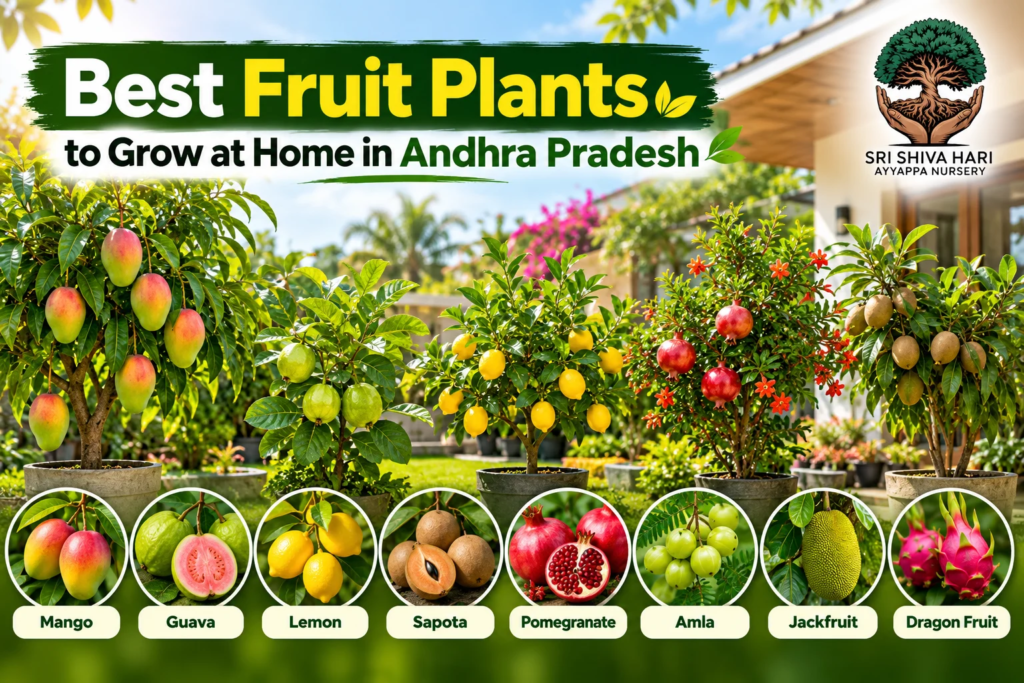
Best Fruit Plants to Grow at Home in Andhra Pradesh
Growing fruit plants at home is a wonderful way to make your garden greener and more useful. Imagine stepping into your backyard and picking a fresh lemon, enjoying a ripe guava, or watching a mango tree develop new leaves during the growing season. With the right plants and proper care, even a small home garden can become a rewarding space.
In Andhra Pradesh, warm weather allows many tropical and subtropical fruit plants to grow well when they receive suitable sunlight, water and soil conditions. However, not every fruit plant is right for every home. Your available space, local climate, water supply and maintenance routine all influence which varieties you should choose.
If you are planning a home fruit garden, this guide explores some of the best fruit plants to consider in Andhra Pradesh and explains how to choose the right ones for your space.
1. Mango
Mango is one of the most familiar fruit trees in Andhra Pradesh. It is a popular choice for homeowners who have enough outdoor space to grow a long-term fruit tree.
Mango trees generally prefer sunny locations and well-drained soil. Once established, they can become large trees, so careful planning is important.
Why grow mango at home?
- Enjoy fresh mangoes when the tree produces fruit.
- Add greenery and shade to a spacious backyard.
- Grow a familiar fruit suited to many parts of Andhra Pradesh.
Growing tip: Choose a suitable variety and leave enough room for the tree’s mature canopy. If your garden is small, ask a nursery about compact or dwarf options that may suit your conditions.
2. Guava
Guava is a useful choice for home gardeners because it can grow as a shrub-like tree and may be easier to manage than some larger fruit trees.
With appropriate care, guava can produce fragrant flowers and nutritious fruit.
Why grow guava?
- Suitable for many home gardens.
- Offers edible fruit and attractive greenery.
- Can be maintained through appropriate pruning.
Growing tip: Choose a sunny location with good drainage. Ask about the variety’s mature size and fruiting characteristics before buying.
3. Lemon
Lemon is a practical fruit plant for many households. Fresh lemons can be used in drinks, cooking, chutneys and everyday meals.
Depending on the variety, lemon plants can be grown in the ground or in suitably sized containers.
Why grow lemon?
- Useful for regular household cooking.
- Can suit smaller gardens when the right variety is selected.
- Adds green foliage to patios and backyards.
Growing tip: Provide suitable sunlight and avoid waterlogged soil. Container-grown lemon plants need regular monitoring because pots can dry out more quickly during hot weather.
4. Sapota (Chikoo)
Sapota, commonly known as chikoo, is another fruit tree worth considering for a home garden in a suitable location.
It can become a substantial tree, so it is generally better suited to a backyard or property with enough room.
Why grow sapota?
- Produces sweet, edible fruit when conditions are suitable.
- Can become a long-term feature of a home garden.
- Offers dense green foliage.
Growing tip: Check the variety’s mature size and allow adequate space. Good drainage and suitable growing conditions are important for establishment.
5. Pomegranate
Pomegranate is a useful option for gardeners who want an attractive fruit-bearing plant without necessarily planting a very large tree.
Depending on the variety and how it is maintained, it may grow as a shrub or small tree.
Why grow pomegranate?
- Produces edible fruit.
- Can add structure to a garden.
- May suit some smaller outdoor spaces when appropriately selected and pruned.
Growing tip: Choose a sunny position and well-drained soil. Ask about the variety’s water requirements and suitability for your local conditions.
6. Amla (Indian Gooseberry)
Amla is valued for its fruit and is a familiar choice in many Indian gardens.
It generally needs room to develop as a tree, so consider the available space before planting it close to a house or boundary wall.
Why grow amla?
- Produces fruit used in many Indian food preparations.
- Adds greenery to a garden.
- Can be a rewarding long-term planting choice.
Growing tip: Select a suitable variety and ask the nursery about establishment, watering and expected mature size.
7. Jackfruit
Jackfruit is a tropical fruit tree that can be considered for spacious gardens and larger properties in suitable growing conditions.
Its fruit can become very large, and the tree itself can occupy considerable space as it matures.
Why grow jackfruit?
- Produces a versatile fruit used in sweet and savoury dishes.
- Provides substantial greenery as the tree develops.
- Can suit larger home gardens and farmhouses.
Growing tip: Plant it where there is enough room for the mature canopy and root system. Consider how you will collect and handle the fruit when the tree begins producing.
8. Avocado
Avocado has become an interesting option for gardeners who want to explore less traditional fruit plants.
However, successful growth depends on choosing a suitable variety and providing appropriate local growing conditions. Fruit production can also depend on pollination and other factors.
Why consider avocado?
- Offers a different type of fruit for your home garden.
- Can be a rewarding choice for gardeners interested in trying new varieties.
- Provides an opportunity to learn about a different fruit tree.
Growing tip: Ask the nursery whether the variety is suited to your area, how large it may become and what conditions it needs. Do not assume every avocado variety will perform equally well in every part of Andhra Pradesh.
9. Dragon Fruit
Dragon fruit is an interesting choice for gardeners who want to grow something different from traditional fruit trees.
It is a climbing cactus that generally needs support, good drainage and suitable sunlight.
Why grow dragon fruit?
- Produces distinctive-looking fruit.
- Can be grown in a planned garden area with a suitable support structure.
- Offers a different growing experience from conventional fruit trees.
Growing tip: Prepare a strong support before planting and avoid waterlogged soil. Ask about suitable varieties and their requirements before purchasing.
10. Jamun
Jamun is another fruit tree that can be considered for a spacious garden or property.
It can grow into a large tree, so it is important to plan its location carefully.
Why grow jamun?
- Produces fruit enjoyed fresh and in various preparations.
- Adds substantial greenery to a property.
- Can become a long-term feature of a larger garden.
Growing tip: Check the expected mature height and canopy spread before planting. Avoid placing large trees too close to buildings or overhead utilities.
11. Water Apple
Water apple is an option for gardeners interested in growing less common fruit varieties.
Its suitability depends on the variety, local conditions and the care you can provide.
Why consider water apple?
- Offers variety in a home fruit garden.
- Can be an interesting addition to a collection of tropical fruit plants.
- Produces a distinctive fruit when grown successfully.
Growing tip: Ask the nursery about the variety’s water requirements, mature size and suitability for your property before purchasing.
12. Star Fruit
Star fruit, also called carambola, can be an appealing choice for gardeners who want to explore different fruit varieties.
The fruit has a distinctive star-shaped cross-section, making it recognisable and interesting to grow.
Why consider star fruit?
- Produces unusual-looking fruit.
- Adds variety to a home fruit collection.
- Can be considered for suitable gardens with appropriate growing conditions.
Growing tip: Check the plant’s requirements for sunlight, moisture, soil and space. Ask whether the variety is suitable for your particular area.
How to Choose the Right Fruit Plant for Your Home
Before buying fruit plants, consider how your garden is arranged and how much time you can spend caring for it.
1. Check Your Available Space
Some fruit plants, such as mango, jackfruit and jamun, can grow into large trees. Others may be easier to maintain in a smaller space with the right variety and pruning.
Measure your planting area and consider the plant’s mature size.
2. Understand Sunlight Requirements
Most fruit plants need suitable sunlight for healthy growth, although exact requirements vary by species and variety.
Observe how much direct sunlight your garden receives and choose plants accordingly.
3. Check Soil and Drainage
Fruit plants generally benefit from growing conditions suited to their particular variety. Poor drainage can cause problems for many plants.
Ask the nursery about soil preparation and drainage before planting.
4. Consider Water Availability
Andhra Pradesh can experience hot weather, so it is important to plan how you will water your plants, especially while they are establishing.
Choose plants that suit the water supply and maintenance routine you can provide.
5. Ask About the Variety
The name of a fruit alone does not tell you everything you need to know.
Ask about the variety, expected mature size, fruit characteristics, pollination requirements where relevant and general care.
6. Think About the Time Needed for Fruit Production
Fruit plants do not all produce at the same age. The time to fruit depends on the species, variety, growing method and care.
Ask the nursery whether the plant is seed-grown or propagated by another method, such as grafting, when that information is available.
Can You Grow Fruit Plants in Pots?
Yes, some fruit plants can be grown in containers, provided you select a suitable variety and pot size.
Lemon and certain compact fruit varieties may be worth considering for patios and terraces. However, container plants need careful attention to drainage, watering, nutrients and root space.
Keep these points in mind:
- Use a container with drainage holes.
- Choose a suitable potting mix.
- Provide the light the plant requires.
- Monitor moisture during hot weather.
- Repot when necessary.
- Check the mature size of the variety.
Not every fruit tree is suitable for long-term container growing, so ask for guidance before buying.
Common Mistakes to Avoid When Buying Fruit Plants
A little planning can help you avoid problems later.
Choosing a plant that is too large for the space: Always consider its mature size.
Ignoring water requirements: Make sure you can provide suitable moisture during establishment and hot weather.
Buying without checking the variety: Different varieties may have different growth and fruiting characteristics.
Planting too close to buildings: Leave adequate space for roots and canopy growth.
Expecting fruit immediately: Plants need time to establish, and fruiting depends on variety and growing conditions.
Ignoring plant health: Check leaves, stems, the growing medium and visible signs of pests before purchasing.
Where to Find Fruit Plants in Andhra Pradesh
If you are looking for fruit plants in Andhra Pradesh, local nurseries are a useful place to begin. The Kadiyam region near Rajahmundry is known for nursery cultivation and a variety of plants.
Depending on availability, you may find mango, guava, lemon, sapota, jackfruit, pomegranate, amla and other fruit plants.
One nursery you can contact is Sri Shiva Hari Ayyappa Nursery, located in Kadiyam, near Rajahmundry.
- Website: https://srishivahariayyappanursery.com/
- Phone: +91 8555090132
- Email: Srishivahariayyappanursery@gmail.com
- Location: Kadiyam, Rajahmundry, Andhra Pradesh
Contact the nursery before visiting to check current stock, plant sizes, prices and whether the varieties you want are available.
Final Thoughts
Growing fruit plants at home can be a rewarding experience. Whether you choose mango for a spacious backyard, lemon for everyday use, guava for a family garden or dragon fruit for something different, the best choice depends on your space and growing conditions.
Start by understanding your garden, then select varieties that match the available sunlight, soil, water and maintenance you can provide.
If you are planning to buy fruit plants in Andhra Pradesh, explore the available varieties at a nursery, ask about their requirements and inspect the plants before making your decision.
Choose the right fruit plant, give it time to establish and care for it consistently. Your home garden may reward you with greenery and, when conditions are suitable, delicious fruit for years to come.
Frequently Asked Questions
Which fruit plants are suitable for homes in Andhra Pradesh?
Mango, guava, lemon, sapota, pomegranate, amla and jackfruit may be suitable choices depending on the local conditions, available space and variety.
Which fruit plants are suitable for small gardens?
Lemon and selected compact fruit varieties may suit smaller gardens or containers. Check the variety’s mature size and care requirements before purchasing.
Can I grow mango at home in Andhra Pradesh?
Yes, mango can be grown in suitable home gardens, especially where there is sufficient sunlight and space for the tree to mature.
Can fruit plants grow in pots?
Some fruit plants can grow in containers when the variety, pot size, drainage, sunlight and watering are appropriate. Not every fruit tree is suitable for long-term container growing.
Where can I buy fruit plants near Rajahmundry?
You can explore nurseries in Rajahmundry and the nearby Kadiyam region. Contact a nursery before visiting to confirm which varieties are currently available.
What should I check before buying a fruit plant?
Check its overall health, variety, expected mature size, sunlight requirements, water needs and suitability for your garden. Ask about the method of propagation and expected fruiting characteristics where relevant.