
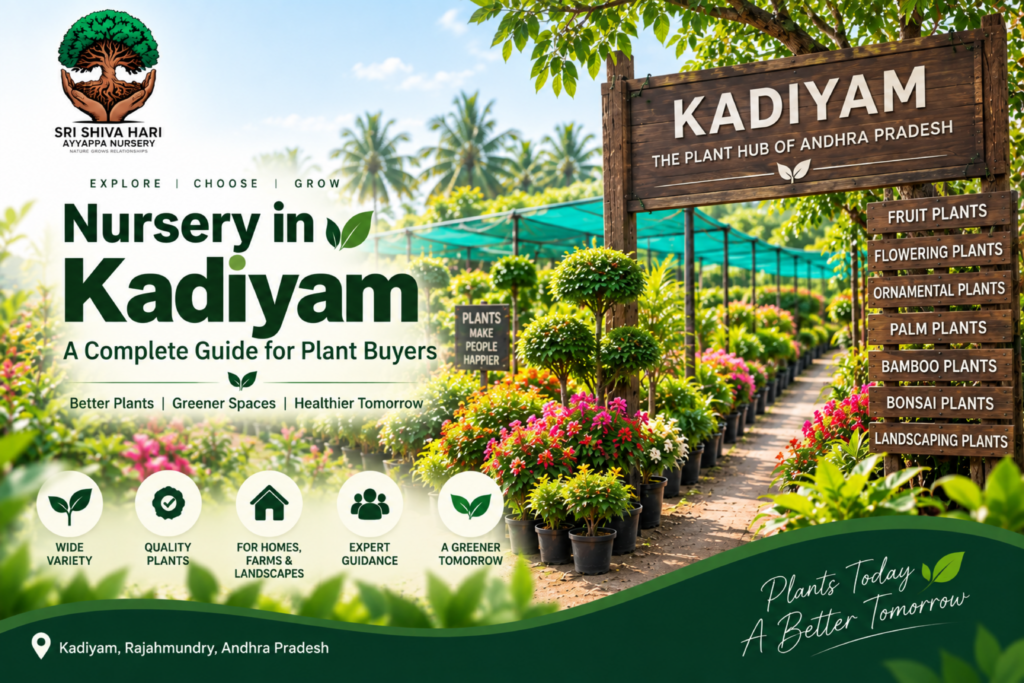
Nursery in Kadiyam: A Complete Guide for Plant Buyers
Buying plants can be exciting, especially when you are planning a new garden or adding more greenery to your property. However, with so many varieties available, choosing the right plants is not always easy.
For plant buyers in Andhra Pradesh, Kadiyam is a well-known destination for exploring different types of plants. Located near Rajahmundry, Kadiyam is known for its nursery-growing activities and wide selection of plants suitable for homes, farms, gardens and landscaping projects.
If you are planning a visit to a nursery in Kadiyam, this guide will help you understand what to look for, which plant categories you can explore and how to make better buying decisions.
Why Is Kadiyam Popular Among Plant Buyers?
Kadiyam has become closely associated with nurseries and plant cultivation. People visit the area not only to buy plants but also to explore different varieties and get ideas for their gardens.
One of the main advantages is the variety available. Depending on the nursery and current stock, buyers can find:
- Fruit plants
- Flowering plants
- Ornamental plants
- Palm plants
- Bamboo plants
- Bonsai plants
- Shrubs
- Topiary plants
- Landscape trees
- Decorative plants
This makes Kadiyam useful for different types of customers, from someone buying a few plants for a home garden to professionals sourcing plants for larger landscaping projects.
What Types of Plants Can You Buy in Kadiyam?
Before visiting a nursery, it helps to understand the major plant categories available.
1. Fruit Plants
Fruit plants are a popular choice for home gardens, farms and larger properties.
Depending on availability, you may find varieties such as:
- Mango
- Guava
- Lemon
- Sapota
- Avocado
- Jackfruit
- Pomegranate
- Amla
- Dragon fruit
- Jamun
- Star fruit
- Water apple
When buying fruit plants, don’t focus only on the variety. Consider your soil, sunlight, available space, water supply and the expected mature size of the plant.
2. Flowering Plants
Flowering plants can instantly bring colour and character to an outdoor space.
Depending on the nursery, options may include varieties such as Ixora, Lantana, Portulaca, Allamanda, Calliandra, Eranthemum and Bougainvillea.
Before buying, check how much sunlight the plant needs. A flowering plant that requires full sunlight may not perform well in a shaded location.
3. Palm Plants
Palm plants are commonly used in gardens and landscaping because of their distinctive appearance.
Some varieties you may come across include:
- Foxtail Palm
- Royal Palm
- Areca Palm
- Champion Palm
- Triangular Palm
- Traveler Palm
- Washingtonia
- Bismarckia
- Cycas
- Phoenix Palm
- Rhapis Palm
Palm plants can be used around entrances, lawns, pathways and larger landscape areas.
However, remember that many palms grow considerably larger than their nursery size. Always consider the long-term space requirement before planting.
4. Bamboo Plants
Bamboo can be used to add height and structure to a garden. Depending on the variety, it can also be useful for decorative planting, borders and screening.
Kadiyam nurseries may offer varieties such as Golden Bamboo, Black Bamboo, White Bamboo and different Bambusa varieties.
Ask about the growth pattern of the particular variety before purchasing, especially if you have limited space.
5. Bonsai Plants
Bonsai is a popular choice for people who enjoy detailed and hands-on gardening.
Bonsai plants can be used in homes, offices, balconies and personal collections. They require regular attention, including appropriate watering, pruning and positioning.
If you are new to bonsai, ask the nursery team about the specific plant’s care requirements before making your choice.
6. Ornamental Plants
Ornamental plants are selected primarily for their appearance. They can provide attractive foliage, interesting shapes and different textures.
They can be used around entrances, pathways, patios, lawns and commercial landscapes.
Combining ornamental plants with flowering plants, shrubs and trees can create a more balanced garden design.
7. Shrubs and Topiary Plants
Shrubs can help fill empty spaces and create natural boundaries within a garden. Flowering shrubs can also add colour, while foliage varieties can provide consistent greenery.
Topiary plants, on the other hand, can be used as decorative focal points, particularly around entrances, resorts, hotels and landscaped properties.
How to Choose Healthy Plants
Finding the right variety is only half the job. You also need to select a healthy plant.
Before buying, look closely at the plant.
Check the Leaves
Look for healthy foliage and avoid plants with extensive yellowing, wilting or visible damage.
Examine the Stem
The stem should generally look strong and appropriate for the size of the plant.
Look at the Root and Pot
If possible, check the condition of the pot and growing medium. Avoid plants that appear severely root-bound or poorly established.
Look for Signs of Pests
Check both sides of leaves and the stems for obvious signs of pests or disease.
If you are unsure about a plant’s condition, ask the nursery staff before purchasing.
Choose Plants According to Your Space
One of the most common mistakes plant buyers make is choosing plants based only on how they look when they are small.
A nursery plant may fit comfortably in a small corner today, but it could become a large tree or shrub in a few years.
Before buying, think about:
- How much space is available?
- How tall can the plant become?
- How wide can its canopy or branches spread?
- Could its roots affect nearby structures?
- Is there enough sunlight?
- Can you provide the required water?
Thinking about these questions can help you avoid problems later.
Consider the Purpose of Your Garden
Your purpose should influence your plant selection.
If you want a fruit garden, focus on suitable fruit varieties.
If your goal is a colourful garden, flowering plants may be more appropriate.
For a landscaping project, you may need a combination of trees, palms, shrubs and ornamental plants.
If you want a low-maintenance garden, select plants that fit the amount of time you can realistically spend caring for them.
There is no single plant that is perfect for every garden.
Ask Questions Before You Buy
Don’t hesitate to ask questions at the nursery.
Useful questions include:
- How much sunlight does this plant need?
- How often should it be watered?
- How large will it grow?
- What type of soil does it prefer?
- Does it require regular pruning?
- Is it suitable for a pot?
- How should I care for it after taking it home?
- Is this variety suitable for my location?
The more you understand about a plant before buying it, the easier it will be to care for it later.
Buying Plants for Landscaping Projects
If you are purchasing plants for a larger project, make a list before visiting the nursery.
For example, a landscaping project may require:
Trees → Palms → Shrubs → Flowering plants → Ornamental plants → Ground-level greenery
Planning the quantities and sizes in advance can make the buying process much more organized.
It is also helpful to discuss your landscape design with the nursery team so you can select plants that match the available space.
Buying Plants for a Home Garden
Home gardeners usually have different requirements from commercial landscaping projects.
If you have a small garden, focus on plants that fit your available space. You can combine flowering plants with ornamental varieties and a few carefully selected shrubs.
For larger homes, villas or farmhouses, you may have room for fruit trees, palms and larger landscape plants.
The key is to plan before buying rather than trying to fit too many plants into a limited area.
What Should You Carry When Visiting a Nursery?
A little preparation can make your nursery visit easier.
Before leaving, make a simple list of:
- Plant types you need
- Approximate quantities
- Available planting space
- Sunlight conditions
- Preferred plant sizes
- Your approximate budget
If possible, take photographs of the areas where you plan to plant. This can help when discussing your requirements.
Transporting Plants After Purchase
Once you have selected your plants, transportation is another important consideration.
Plants should be handled carefully to avoid damaging stems, leaves or branches. Larger plants may require additional support during transportation.
After reaching home or the planting location, avoid leaving plants exposed to harsh conditions unnecessarily. Follow the nursery’s guidance on watering and placement, particularly after transplantation.
Common Mistakes Plant Buyers Should Avoid
Buying Only Based on Appearance
A beautiful plant isn’t automatically the right plant for your garden.
Ignoring Mature Size
Always consider how large the plant will eventually become.
Choosing Plants Without Checking Sunlight
Light requirements can have a major effect on plant growth.
Buying Too Many Plants
It is better to have fewer healthy plants with enough space than overcrowded plants competing for resources.
Not Asking About Care
Understanding watering, soil, pruning and sunlight requirements before buying can save you trouble later.
Why Visit a Nursery in Kadiyam?
The biggest benefit of visiting a nursery in Kadiyam is the opportunity to explore different types of plants and compare your options.
Instead of choosing from a limited selection, you can look at fruit plants, flowering plants, palms, bamboo, bonsai, shrubs, topiary and ornamental plants according to your requirements.
For homeowners, this can make garden planning easier. For farmers, it provides opportunities to explore fruit plant varieties. For landscapers, the variety can be useful when planning larger projects.
Most importantly, you can see the plants in person and make a more informed decision.
Final Thoughts
Buying plants is an investment in your garden’s future.
The right plant, planted in the right location and given the right care, can grow into an important part of your property for many years.
If you are planning a garden, farm plantation or landscaping project, visiting a nursery in Kadiyam can give you plenty of options to explore.
Take your time, compare different varieties, check plant health, understand their growing requirements and choose plants that genuinely suit your space.
Whether you are looking for fruit trees, colourful flowering plants, elegant palms, bamboo, bonsai, shrubs or ornamental greenery, Kadiyam gives plant buyers plenty of choices.
Plan your garden carefully, choose your plants wisely, and let your green space grow naturally over time.
Frequently Asked Questions
What can I buy from a nursery in Kadiyam?
You can explore fruit plants, flowering plants, ornamental plants, palms, bamboo, bonsai, shrubs, topiary plants and various landscape trees, depending on nursery availability.
Is Kadiyam suitable for buying plants for home gardens?
Yes. Home gardeners can explore plants of different sizes and categories and choose varieties according to their available space and gardening requirements.
Can I buy plants for landscaping projects in Kadiyam?
Yes. The variety of trees, palms, shrubs, flowering and ornamental plants makes Kadiyam a useful destination for landscaping requirements.
How do I select a healthy plant?
Check the leaves, stem, overall growth and pot or root condition. Also look for obvious signs of pests or disease and ask the nursery for care information.
What should I consider before buying a plant?
Consider sunlight, available space, soil, water, maintenance requirements, purpose and the plant’s expected mature size.