
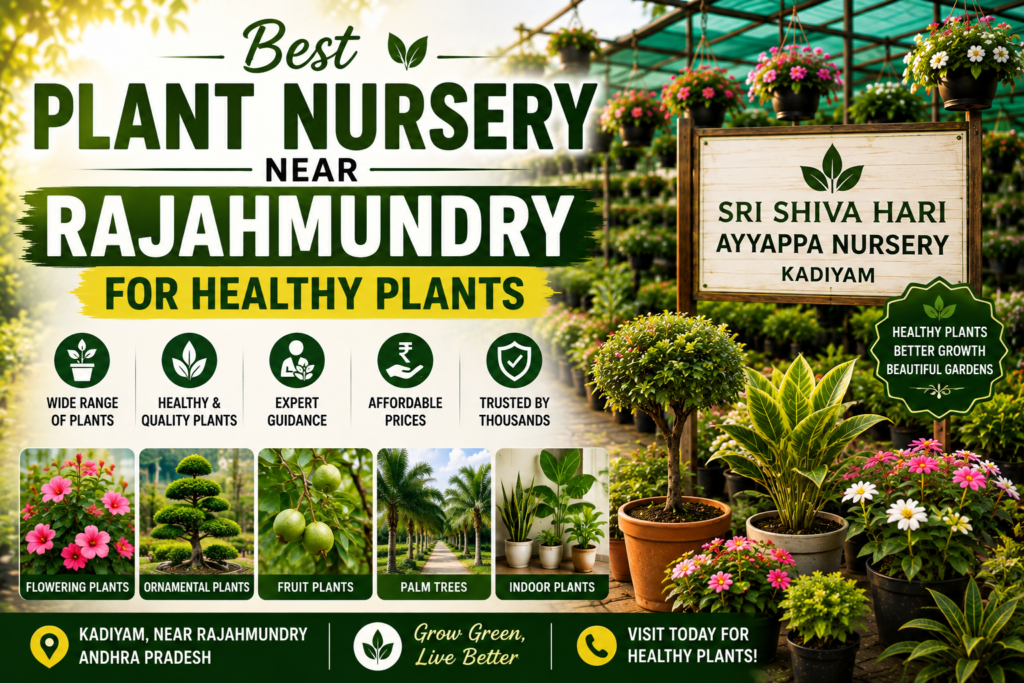
Best Plant Nursery Near Rajahmundry for Healthy Plants
Best Plant Nursery Near Rajahmundry for Healthy Plants A beautiful garden starts with healthy plants. Whether you’re creating a small garden at home, adding greenery to your balcony, or planning a large landscaping project, choosing plants from a reliable nursery can make a noticeable difference. If you’re searching for the best plant nursery near Rajahmundry for healthy plants, Kadiyam is one of the first places worth exploring. Famous for its nursery industry, Kadiyam offers a wide selection of flowering plants, ornamental plants, fruit trees, palms, indoor plants, and landscaping varieties. Among the nurseries in this region, Sri Shiva Hari Ayyappa NurseryBest Plant Nursery Near RajahmundryBest Plant Nursery Near Rajahmundry is a trusted destination for customers looking for quality plants, affordable options, and helpful gardening guidance. Why Healthy Plants Matter Buying an attractive plant is easy, but choosing a genuinely healthy plant is more important. A healthy plant is more likely to adapt well after transplantation and continue growing successfully in its new environment. When selecting plants, look for: Starting with healthy plants gives your garden a stronger foundation and can reduce future maintenance. Why Kadiyam Is Famous for Plants Kadiyam, near Rajahmundry, is widely known for its nursery and horticultural activities. The region’s favorable growing conditions and long-standing experience in plant cultivation have helped it become a popular destination for plant buyers. Customers visit Kadiyam for plants needed for: For people in and around Rajahmundry, Kadiyam provides convenient access to a wide range of plants. Sri Shiva Hari Ayyappa Nursery – A Trusted Choice When looking for a plant nursery near Rajahmundry, Sri Shiva Hari Ayyappa Nursery offers a practical destination for different gardening and landscaping requirements. The nursery focuses on providing healthy, well-maintained plants in a variety of categories. Whether you’re a first-time gardener looking for a few plants or a professional working on a larger project, you can explore options suited to your requirements. The team can also help customers understand which plants may be appropriate based on factors such as space, sunlight, and intended use. A Wide Collection of Plants One of the biggest benefits of visiting a well-established nursery is having plenty of choices in one place. At Sri Shiva Hari Ayyappa Nursery, customers can explore different types of plants, including: Flowering Plants Bright flowering plants can instantly add color and character to home gardens, entrances, balconies, and outdoor spaces. Ornamental Plants Ornamental shrubs and foliage varieties are ideal for decorative gardens and landscaping projects. Indoor Plants Indoor-friendly varieties can add a natural touch to homes, offices, and other interior spaces. Fruit Plants Fruit saplings are suitable for home gardens, farms, and larger properties where customers want both greenery and productive plants. Palm Trees Palm varieties can create a tropical and elegant appearance in gardens, resorts, villas, and commercial landscapes. Landscaping Plants Trees, shrubs, flowering plants, and foliage varieties can be combined to create attractive and functional landscapes. Plants for Home Gardens You don’t need a huge property to enjoy a garden. Even a small balcony, terrace, or entrance area can be transformed with the right plants. For home gardens, consider combining: Choosing plants according to the amount of sunlight and available space can make your garden easier to maintain. Plants for Landscaping Projects Large landscaping projects require careful plant selection. The plants should complement the design while also being suitable for the property’s conditions. Sri Shiva Hari Ayyappa Nursery can be considered for plant requirements for: For bulk requirements, planning the number and varieties of plants in advance can make procurement much easier. Affordable Plants for Different Budgets A beautiful garden doesn’t have to be expensive. Choosing the right combination of plants can help you create an attractive space while staying within your budget. Sri Shiva Hari Ayyappa Nursery caters to customers with different requirements, from small home purchases to larger landscaping orders. Buyers can explore suitable plant varieties based on their budget, space, and gardening goals. The key is to focus on quality, suitability, and long-term value, rather than simply choosing the cheapest plant available. Helpful Gardening Guidance For beginners, choosing plants can sometimes feel confusing. How much sunlight does a plant need? How often should it be watered? Will it grow too large for the available space? These are important questions to consider before buying. The nursery team can guide customers regarding: Good advice at the time of purchase can help gardeners avoid common mistakes. Why Customers Prefer a Local Nursery Buying plants from a nursery near Rajahmundry has several practical advantages. Customers can personally inspect the plants, compare different varieties, and ask questions before making a purchase. A local nursery also makes it easier to: For many gardeners, this personal experience is more useful than buying plants without seeing them first. Tips for Choosing the Right Plants Before visiting the nursery, make a simple plan. 1. Check Your Space Measure the area where you want to plant and consider how much room the plants will have as they mature. 2. Understand Sunlight Observe whether the area receives full sunlight, partial shade, or mostly indirect light. 3. Consider Maintenance If you have limited time for gardening, choose plants that suit your preferred level of maintenance. 4. Think About the Purpose Decide whether you want flowers, shade, privacy, decoration, fruit, or general greenery. 5. Ask for Expert Advice If you’re unsure, discuss your requirements with nursery professionals before making a final selection. Why Choose Sri Shiva Hari Ayyappa Nursery? For customers searching for the best plant nursery near Rajahmundry for healthy plants, Sri Shiva Hari Ayyappa Nursery offers several advantages: Located in the well-known Kadiyam nursery region, it is a convenient option for homeowners, gardeners, landscapers, builders, and other plant buyers. Conclusion Finding the best plant nursery near Rajahmundry for healthy plants is an important step toward creating a successful garden. Kadiyam’s long-standing nursery tradition makes it a popular destination for customers searching for a wide variety of quality plants. Sri Shiva Hari Ayyappa Nursery provides an extensive collection of flowering plants, ornamental
Best Plant Nursery Near Rajahmundry for Healthy Plants Read More »