
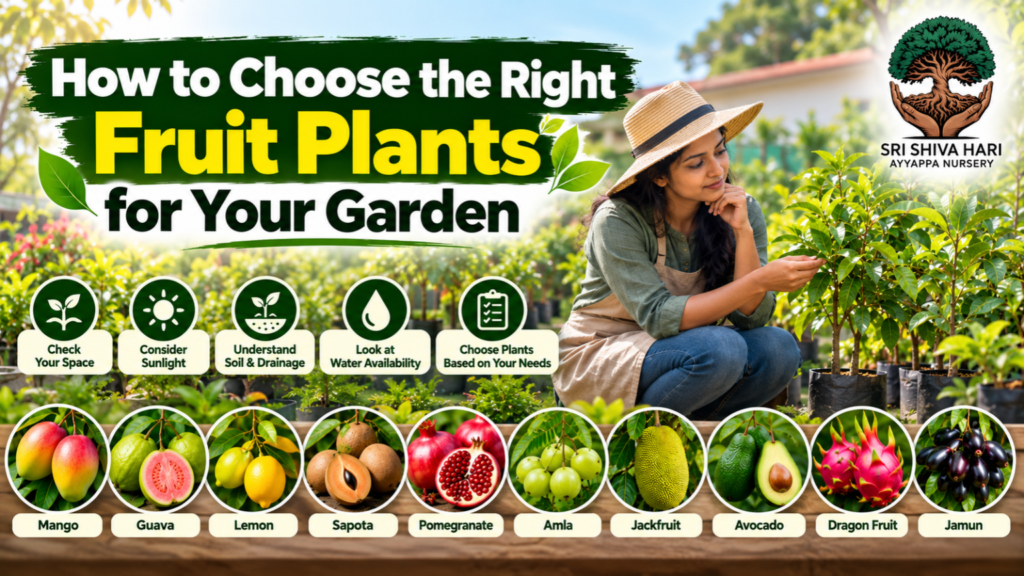
How to Choose the Right Fruit Plants for Your Garden
Growing fruit plants in your garden is a rewarding experience. From picking fresh lemons for your morning drink to enjoying homegrown guavas or mangoes during the fruiting season, a well-planned fruit garden can bring both greenery and enjoyment to your home.
However, choosing the right fruit plants is not simply about buying the varieties you like. You need to consider your garden’s size, sunlight, soil, water availability and the amount of care you can provide.
For homeowners and gardeners in Andhra Pradesh, selecting fruit plants suited to local growing conditions is especially important. If you are planning to buy fruit plants in Kadiyam or around Rajahmundry, understanding these factors can help you make better choices.
In this guide, we will explain how to choose fruit plants that suit your garden and how to prepare for healthy growth.
1. Understand How Much Space You Have
Before visiting a nursery, look at the area where you plan to grow your fruit plants.
Some fruit trees become quite large, while others can be maintained at a more manageable size with the right variety and pruning.
For example:
- Mango: Usually needs plenty of space as the tree matures.
- Jackfruit: Generally better suited to larger gardens and properties.
- Guava: Can be suitable for many home gardens with appropriate care.
- Lemon: Some varieties can be grown in large containers or smaller garden spaces.
- Pomegranate: May be maintained as a shrub or small tree, depending on the variety and growing conditions.
Measure your available space and consider the plant’s expected mature height and spread.
Avoid planting large trees too close to buildings, compound walls, pathways or overhead utilities.
2. Choose Plants According to Your Local Climate
Different fruit plants have different temperature, humidity and seasonal requirements.
Many tropical fruit plants can grow in suitable parts of Andhra Pradesh, but their performance depends on the particular variety and local conditions.
Popular options to explore include mango, guava, lemon, sapota, pomegranate, amla and jackfruit.
If you want to grow less common varieties such as avocado or dragon fruit, ask the nursery whether the variety is suitable for your area.
Helpful tip: Do not select a plant based only on its popularity. Choose one that has a reasonable chance of growing well in your location.
3. Check the Sunlight Available in Your Garden
Sunlight plays an important role in the growth and fruiting of many fruit plants.
Before purchasing, observe how much direct sunlight your garden receives during the day.
Consider these conditions:
- Full sunlight
- Morning sunlight
- Partial shade
- Mostly shaded areas
Many fruit trees need a sunny location, but exact requirements differ by plant and variety.
If your garden receives limited sunlight, explain this to the nursery staff and ask which available plants may be suitable.
4. Consider Your Soil and Drainage
Healthy roots are essential for healthy fruit plants.
Before planting, check the soil and whether water drains away properly. Soil that remains waterlogged can create problems for many fruit species.
When choosing fruit plants, ask about:
- Preferred soil conditions
- Drainage requirements
- Soil preparation
- Suitable growing medium
- Fertilizer requirements
If you plan to grow plants in containers, use pots with drainage holes and a suitable potting mix.
Preparing the planting area before bringing your plants home can make the establishment process easier.
5. Choose Fruit Plants Based on Your Needs
Think about why you want to grow fruit plants.
Your purpose can help you narrow down the available varieties.
For Everyday Household Use
Lemon and guava may be useful options, depending on your space and growing conditions.
For a Spacious Backyard
Mango, sapota and other larger fruit trees may be worth considering if you have enough room.
For a Variety of Fruits
You could combine different fruit plants, provided their sunlight, soil and spacing requirements are compatible.
For a Small Garden
Consider suitable compact varieties or fruit plants that can be grown in containers with appropriate care.
For a Farm or Large Property
Choose varieties according to the land, water availability, local conditions and your intended cultivation plan.
6. Understand the Difference Between Grafted and Seed-Grown Plants
When buying fruit plants, it is worth asking how the plant was propagated.
Some fruit plants are grafted, while others are grown from seeds or propagated using other methods.
The propagation method can affect characteristics such as how consistently a plant matches the parent variety and how long it takes to begin fruiting.
However, results vary by species, variety and growing conditions.
Before purchasing, ask the nursery:
- Is this plant grafted or seed-grown?
- What variety is it?
- What fruit characteristics can I expect?
- How large will the plant become?
- What is the expected time to fruiting under suitable conditions?
These questions can help you understand what you are buying rather than relying only on the plant’s appearance.
7. Check the Health of the Plant
Always inspect a fruit plant before purchasing it.
A healthy-looking plant is a better starting point for your garden than one showing obvious signs of severe stress or damage.
Check the following:
Leaves: Look for healthy foliage and check for unusual spots, severe yellowing or wilting.
Stems: Look for serious physical damage or broken branches.
Growing medium: Check whether the plant appears reasonably established in its container.
Pests: Look for visible insects, webbing or unusual sticky residue.
Overall growth: Compare similar plants if several are available.
A few damaged leaves do not necessarily mean a plant is unhealthy, so consider its overall condition and ask the nursery about anything that concerns you.
8. Think About Water Availability
Fruit plants need suitable watering, particularly while their roots are establishing after planting.
However, the amount of water required varies by species, plant size, soil, weather and growing conditions.
Before buying, ask how frequently the plant should be watered and whether its needs change during hot or dry periods.
If you have limited time for gardening, choose plants that fit your maintenance routine.
For container-grown fruit plants, pay particular attention to watering during hot weather because pots can dry out faster than garden soil.
9. Consider How Much Maintenance You Can Provide
Some fruit plants need regular pruning, feeding or other attention to remain healthy and productive.
Others may be easier to manage once established in suitable conditions.
Before purchasing, ask about:
- Pruning
- Fertilizer
- Pest monitoring
- Watering
- Seasonal care
- Repotting, if grown in containers
Choose plants according to the amount of time you can realistically spend maintaining them.
A smaller, well-managed fruit garden can be more rewarding than a crowded garden filled with plants that require more care than you can provide.
10. Plan for Pollination and Fruit Production
Buying a fruit plant does not automatically guarantee that it will produce fruit.
Fruit production depends on factors such as plant maturity, variety, sunlight, water, nutrition, pollination and overall health.
Some varieties are self-fertile, while others may benefit from cross-pollination or require a compatible pollination partner.
Before purchasing, ask the nursery whether the particular variety needs another plant nearby for reliable fruit production.
Also remember that fruit plants need time to establish. The time to fruit varies according to the species, variety and propagation method.
11. Consider Growing Fruit Plants in Pots
You do not always need a large backyard to grow fruit plants.
Some varieties can be grown in containers if you choose the right plant, pot size and growing medium.
Lemon and selected compact fruit varieties may be worth considering for a terrace, patio or small garden.
For successful container growing:
- Select a suitable pot with drainage holes.
- Use a well-draining growing medium.
- Provide the required sunlight.
- Monitor watering regularly.
- Supply nutrients as needed.
- Repot when the plant outgrows its container.
Remember that not every fruit tree is suitable for long-term container growing. Ask about the variety’s mature size before buying.
12. Compare Prices and Plant Sizes
Fruit plants may be available in different sizes and at different prices.
Instead of choosing the cheapest or largest plant automatically, compare the variety, health, size and suitability for your garden.
A smaller, healthy plant may be a sensible option if you have time to let it grow. A larger plant may be appropriate for some situations, provided it is healthy and can be transported safely.
If you are buying multiple plants, ask about available sizes and quantities before finalising your purchase.
Popular Fruit Plants to Consider for Your Garden
Depending on availability and local suitability, these fruit plants are worth exploring:
- Mango: For larger gardens with sufficient space.
- Guava: For a productive home fruit garden.
- Lemon: For household use and suitable container growing.
- Sapota: For a spacious garden or property.
- Pomegranate: For gardens where its growing requirements can be met.
- Amla: For gardeners interested in a traditional Indian fruit.
- Jackfruit: For larger properties with enough room.
- Avocado: For gardeners exploring suitable specialty varieties.
- Dragon fruit: For a planned growing area with appropriate support.
- Jamun: For larger gardens and properties.
The best option will depend on your garden conditions rather than the list alone.
Where to Buy Fruit Plants in Kadiyam
If you are looking for fruit plants in Andhra Pradesh, the Kadiyam region near Rajahmundry is worth exploring because of its nursery-growing activities.
Visiting a nursery in person gives you the opportunity to compare varieties, inspect plant health and ask about growing requirements.
One nursery you can contact is Sri Shiva Hari Ayyappa Nursery, located in Kadiyam, near Rajahmundry.
- Website: https://srishivahariayyappanursery.com/
- Phone: +91 8555090132
- Email: Srishivahariayyappanursery@gmail.com
- Location: Kadiyam, Rajahmundry, Andhra Pradesh
Contact the nursery before visiting to confirm current availability, plant sizes and prices, especially if you need particular varieties or larger quantities.
A Simple Checklist Before Buying Fruit Plants
Before making your purchase, check these points:
- Does the plant suit my available space?
- Is the variety appropriate for my local conditions?
- Do I have enough sunlight?
- Is my soil suitable and well drained?
- Can I provide the required water?
- Have I checked the plant’s overall health?
- Do I understand its maintenance requirements?
- Have I asked about pollination and fruiting where relevant?
- Can I transport the plant safely?
Following this checklist can help you make a more informed choice.
Final Thoughts
Choosing the right fruit plants for your garden starts with understanding your space and growing conditions.
Mango, guava, lemon, sapota, pomegranate and other fruit plants can be rewarding choices when their requirements match your garden. The important thing is to consider the plant’s mature size, sunlight needs, water requirements and maintenance before purchasing it.
If you are planning to buy fruit plants in Kadiyam or around Rajahmundry, take time to compare available varieties and ask questions at the nursery.
Choose plants that suit your garden, prepare the soil properly and provide consistent care. With patience, your fruit garden can become a beautiful and productive part of your home.
Frequently Asked Questions
How do I choose the right fruit plants for my garden?
Consider your available space, sunlight, soil, water supply, local conditions and maintenance routine. Then select varieties that match those requirements.
Which fruit plants are suitable for home gardens in Andhra Pradesh?
Depending on local conditions and variety, mango, guava, lemon, sapota, pomegranate and amla may be suitable options.
Can I grow fruit plants in pots?
Yes, some fruit plants can be grown in containers when the variety, pot size, drainage, sunlight and watering are appropriate.
Should I buy grafted fruit plants?
Grafted plants can offer more predictable characteristics for certain fruit varieties, but the best choice depends on the species and your requirements. Ask the nursery about the propagation method and expected fruiting characteristics.
How do I know if a fruit plant is healthy?
Inspect the leaves, stems, growing medium and overall condition. Look for visible pests or severe damage, and ask the nursery about any concerns.
Where can I find fruit plants near Rajahmundry?
You can explore nurseries in Kadiyam and the surrounding Rajahmundry region. Contact the nursery before visiting to confirm the availability of the varieties you need.