
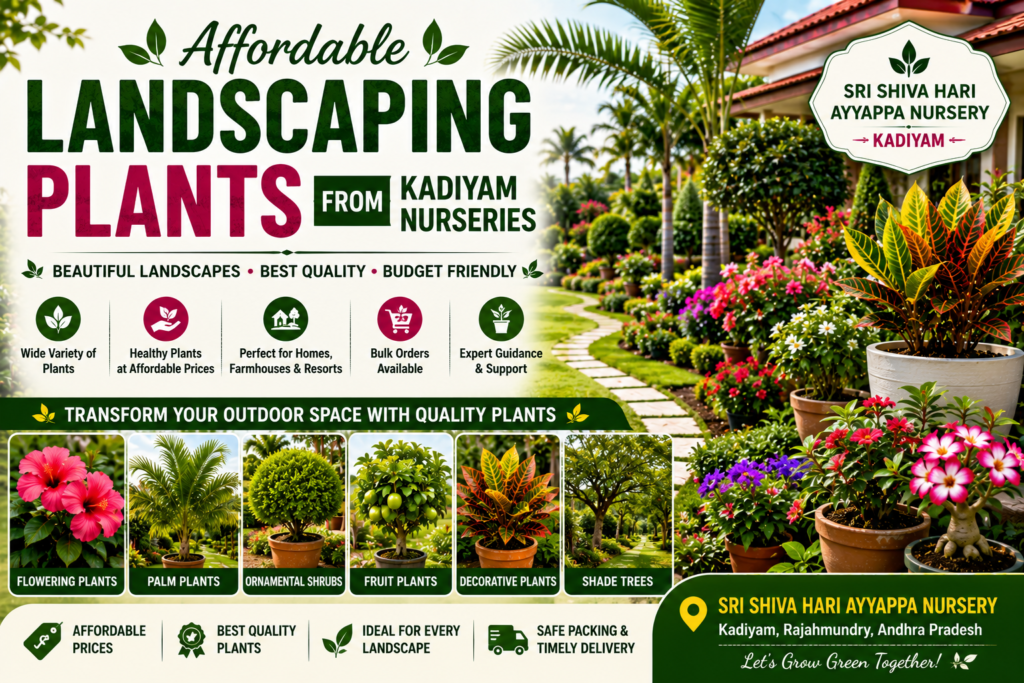
Best Landscaping Plants Available in Rajahmundry Nurseries
A beautiful landscape can make an ordinary property feel completely different. A few well-placed trees can provide shade, colourful flowering plants can brighten a garden, and ornamental shrubs can give pathways and boundaries a neat, finished appearance.
But creating a good landscape is not simply about buying attractive plants. The plants need to suit the available space, sunlight, soil, water supply, and overall design of the property.
For homeowners, landscapers, builders, farmhouse owners, and commercial property developers in Rajahmundry, local nurseries offer a convenient way to explore different plant varieties. The Kadiyam region, in particular, is well known for its extensive nursery activity and offers many categories of plants suitable for landscaping.
If you are planning a new garden or redesigning an existing outdoor space, here are some of the best landscaping plants available in Rajahmundry nurseries.
Why Plant Selection Matters in Landscaping
Every plant has its own growth habit and requirements. Some plants need full sunlight, while others prefer partial shade. Some remain compact, whereas others can eventually grow into large trees.
Choosing plants without considering these factors can result in:
- Overcrowded gardens
- Excessive maintenance
- Plants blocking windows or pathways
- Poor growth due to unsuitable sunlight
- Excessive watering requirements
- Roots interfering with structures
- An unbalanced landscape
A good landscaping plan combines plants of different heights, colours, textures, and growth patterns. This creates a garden that looks attractive while remaining practical to maintain.
1. Flowering Plants for a Colourful Landscape
Flowering plants are one of the easiest ways to bring life and colour to an outdoor space.
Popular choices for landscaping include:
- Hibiscus
- Bougainvillea
- Ixora
- Jasmine
- Plumeria
- Rose
- Adenium
- Marigold
These plants can be used around entrances, pathways, lawns, compound walls, and garden borders.
For a more natural appearance, avoid planting every flowering variety randomly. Instead, group plants with similar colours or repeat the same varieties at different points in the garden.
This creates visual consistency and makes the landscape look more professionally planned.
2. Ornamental Shrubs for Garden Borders
Shrubs are extremely useful in landscape design because they can fill spaces without taking over the entire garden.
Ornamental shrubs can be planted:
- Along pathways
- Around lawns
- Near compound walls
- Around buildings
- Beside seating areas
- Around garden entrances
Crotons, Duranta, Ixora, Acalypha, and other ornamental varieties can add colour and texture through their leaves and growth patterns.
Shrubs can also be regularly pruned to maintain a particular shape, making them suitable for both traditional gardens and modern landscapes.
3. Palm Plants for a Tropical Look
If you want your property to have a tropical or resort-style appearance, palms can be an excellent choice.
Common landscaping options include:
- Areca palms
- Foxtail palms
- Bottle palms
- Date palms
- Other ornamental palm varieties
Palms are often used around driveways, entrances, lawns, resorts, farmhouses, and commercial properties. Rajahmundry-area nurseries list palms among the plant categories commonly supplied for landscaping.
Before purchasing palms, however, consider their eventual height and spread. A palm that looks small in a nursery may need considerably more space after several years of growth.
4. Avenue and Shade Trees
Large landscapes need structure, and trees can provide that structure.
Avenue and shade trees can be used along driveways, property boundaries, roads, parks, large gardens, and institutional spaces.
Depending on the project, varieties such as Neem, Ashoka, Rain Tree, Gulmohar, and other suitable avenue trees may be considered.
These trees can eventually provide shade and become major visual features of the landscape.
However, large trees should be planted with sufficient distance from buildings, walls, electrical lines, underground utilities, and other structures.
5. Fruit Trees for Functional Landscaping
Landscaping doesn’t have to be purely decorative.
Fruit trees can add greenery while also producing useful crops. For larger gardens, farmhouses, and agricultural properties, you can consider plants such as:
- Mango
- Guava
- Sapota
- Lemon
- Pomegranate
- Coconut
- Papaya
Kadiyam nurseries commonly offer fruit plants alongside ornamental and landscaping varieties, making the region useful for customers who want both decorative and productive plants.
When choosing fruit trees, consider the mature size of the plant and whether your property receives enough sunlight.
6. Foliage Plants for Texture and Contrast
A landscape doesn’t need to depend entirely on flowers.
Foliage plants can provide colour and visual interest even when there are no flowers in bloom. Different leaf shapes, textures, and shades can create attractive combinations.
Crotons, Dracaena, Cordyline, and similar ornamental foliage plants can be used around:
- Garden entrances
- Walkways
- Patios
- Lawn borders
- Building entrances
- Decorative garden areas
Foliage plants are particularly useful for filling spaces between flowering plants and larger trees.
7. Ground Cover Plants
Large patches of exposed soil can make a garden look unfinished.
Ground cover plants can help create a smoother transition between lawns, pathways, trees, and flower beds.
They are useful around:
- Trees
- Garden borders
- Pathways
- Rock gardens
- Sloping areas
- Decorative features
Some ground covers can also reduce the amount of exposed soil and help create a more cohesive landscape design.
8. Topiary and Decorative Plants
For homeowners and commercial property owners who want something more distinctive, topiary plants can become attractive focal points.
Topiary involves training and pruning plants into decorative shapes. They can be used near entrances, pathways, office buildings, resorts, hotels, and large gardens.
Instead of filling every area with different plants, consider using one or two carefully selected decorative plants as focal points.
This can make a landscape look elegant without making it feel overcrowded.
9. Bamboo and Tall Screening Plants
Privacy is another important part of landscaping.
If your property is close to a road, neighbouring buildings, or other homes, suitable screening plants can create a natural visual barrier.
Bamboo and other tall-growing plants can be considered where appropriate, particularly for larger properties.
However, always check the growth characteristics of a variety before planting it near walls or structures. Some plants can spread aggressively if they are not properly managed.
10. Indoor-Outdoor Transition Plants
Modern homes often have balconies, patios, verandas, courtyards, and semi-open spaces that connect indoor and outdoor areas.
Plants with attractive foliage can help soften these transitions.
Large decorative pots containing palms, foliage plants, or flowering varieties can be positioned near:
- Main entrances
- Verandas
- Patio areas
- Outdoor seating
- Reception areas
This approach can make the boundary between the house and garden feel more natural.
How to Choose the Right Landscaping Plants
Having a large selection is useful, but it can also make choosing plants confusing.
Before purchasing, ask yourself a few basic questions.
How Much Sunlight Does the Area Receive?
Observe the area throughout the day.
If it receives strong sunlight for most of the day, choose plants that can tolerate full sun. For shaded areas, select varieties that are better suited to lower light conditions.
How Much Space Is Available?
Measure your garden before buying large quantities of plants.
A small garden may be better suited to compact shrubs, flowering plants, palms, and smaller ornamental trees.
Large properties can accommodate shade trees, avenue plants, fruit trees, and larger landscape specimens.
How Much Maintenance Can You Provide?
If you have limited time for gardening, prioritise plants that are relatively easy to maintain.
A landscape filled with plants requiring frequent pruning, watering, and specialised care may become difficult to manage.
Do You Need Privacy or Shade?
Your purpose should influence your plant selection.
For privacy, consider suitable screening plants. For shade, think about trees that can eventually create a canopy. For colour, focus on flowering plants and foliage varieties.
Create a Balanced Landscape
One of the simplest ways to make a garden look attractive is to create different layers.
Tall layer:
Trees and large palms
Middle layer:
Shrubs, flowering plants, and ornamental palms
Lower layer:
Border plants, foliage plants, and ground covers
This layered approach creates depth and prevents the landscape from appearing flat.
You can also repeat selected plants throughout the garden. For example, using the same flowering shrub along both sides of a pathway can create a sense of symmetry.
Landscaping Plants for Different Properties
Home Gardens
For residential gardens, combine flowering plants, shrubs, palms, and a few carefully selected trees.
The goal should be beauty without excessive maintenance.
Farmhouses
Farmhouses generally offer more space, making them suitable for a combination of fruit trees, shade trees, palms, flowering plants, and lawns.
You can create separate areas for relaxation, fruit cultivation, and decorative landscaping.
Resorts and Hotels
Commercial hospitality properties often benefit from attractive entrance landscaping, palms, flowering beds, lawns, and ornamental shrubs.
The plants should also be selected with long-term maintenance in mind.
Offices and Commercial Buildings
A clean, organised landscape can improve the first impression of a commercial property.
Low-maintenance shrubs, palms, foliage plants, and flowering varieties can be positioned around entrances, pathways, parking areas, and building boundaries.
Why Kadiyam Is a Popular Destination for Landscaping Plants
The Kadiyam area near Rajahmundry has a long-standing nursery culture, with local nurseries supplying ornamental plants, flowering plants, fruit plants, palms, avenue trees, shrubs, and other landscaping varieties.
For someone planning a landscape project, this variety is useful because several plant categories can be explored in one nursery belt.
Instead of choosing plants only from photographs, visiting a nursery allows you to see their actual size, foliage, growth pattern, and overall condition before purchasing.
Choosing Healthy Plants from a Nursery
No matter how attractive a landscape design is, poor-quality plants can make the project difficult.
When visiting a nursery, check for:
- Healthy foliage
- Strong stems
- Good root development
- Signs of fresh growth
- No obvious pest infestation
- No major leaf damage
- Properly maintained pots or growing bags
Don’t automatically choose the biggest plant available. A healthy plant that is suitable for your landscape can be a better choice than an oversized plant that is difficult to establish.
Why Consider Sri Shiva Hari Ayyappa Nursery?
For people searching for landscaping plants around Rajahmundry and Kadiyam, Sri Shiva Hari Ayyappa Nursery is one local option to consider.
The nursery is located near the Lakshmi Statue in Kadiam, Rajamahendravaram, and is listed as a wholesale plant nursery. Sri Shiva Hari Ayyappa Nursery – Best Plants Nursery In Rajahmundry
For customers planning gardens or larger landscaping requirements, visiting the nursery can provide an opportunity to explore different plant varieties and select plants according to their property’s requirements.
Plan Your Plant Purchase Before Visiting
If you’re buying plants for a landscaping project, prepare a simple list before visiting the nursery.
For example:
Trees:
Shade trees, avenue trees, fruit trees
Medium plants:
Shrubs, palms, flowering varieties
Small plants:
Ground covers, border plants, foliage plants
Decorative plants:
Topiary and statement plants
Also note the approximate measurements of your garden and identify areas that receive full sunlight, partial shade, or shade.
This makes it much easier to choose the right plants instead of buying randomly.
Common Landscaping Mistakes to Avoid
Buying Too Many Varieties
A garden can look messy when every few feet contains a completely different plant.
Choose a manageable collection of complementary varieties.
Ignoring Mature Size
Always ask how large the plant can become.
This is particularly important for trees and palms.
Planting Without a Layout
Think about pathways, entrances, seating areas, buildings, and future plant growth before digging.
Choosing Plants Only for Flowers
Flowers are attractive, but foliage, plant structure, shade, and texture are equally important in a long-term landscape.
Forgetting Maintenance
A beautiful landscape still needs watering, pruning, fertilisation, pest monitoring, and occasional replacement.
Choose plants that fit the amount of care you can realistically provide.
Final Thoughts
Finding the best landscaping plants available in Rajahmundry nurseries gives homeowners and landscape professionals plenty of opportunities to create attractive outdoor spaces.
From colourful flowering plants and ornamental shrubs to palms, avenue trees, fruit plants, foliage varieties, and ground covers, the right combination can transform a simple garden into a well-planned landscape.
The Kadiyam nursery region offers a wide range of plant categories, making it a practical destination for people planning residential, farmhouse, commercial, and larger landscaping projects.
Before buying, understand your property’s sunlight, space, soil, water availability, and maintenance requirements. Then choose plants that fit those conditions.
With thoughtful planning and healthy plants from a reliable nursery, your landscape can grow into a beautiful green space that remains enjoyable for years to come.