
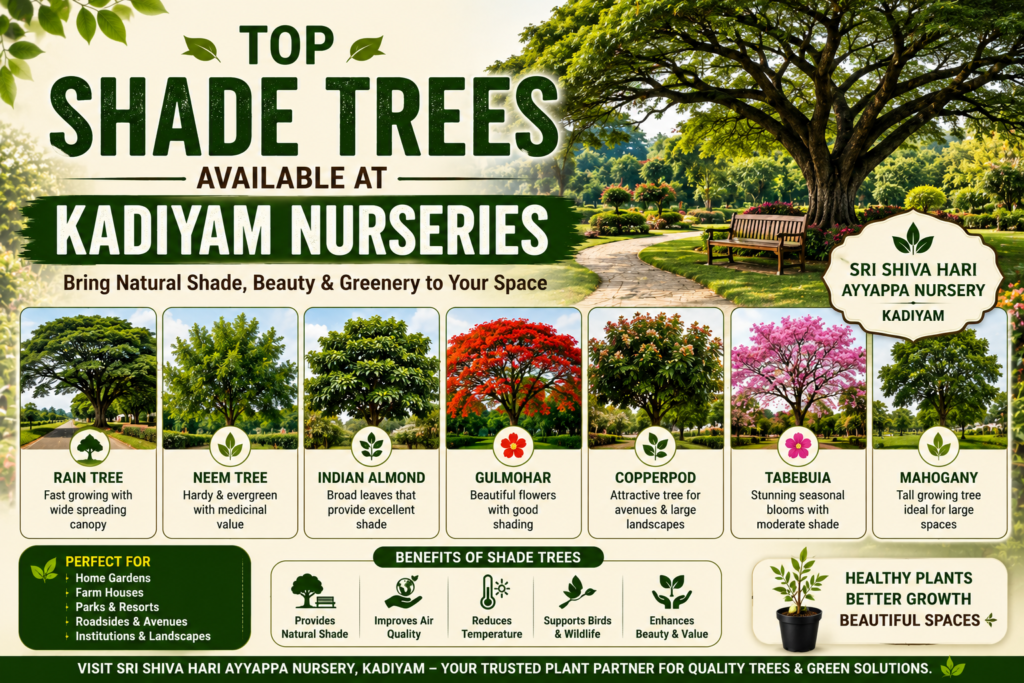
Top Shade Trees Available at Kadiyam Nurseries
A good shade tree can completely change the feel of a property. It can make a garden cooler, create a comfortable outdoor sitting area, add natural beauty, and provide valuable greenery for years. However, choosing the right tree requires some thought because every variety has different sunlight, soil, watering, growth, and space requirements.
For people looking for shade trees in Andhra Pradesh, Kadiyam near Rajahmundry is one of the best places to explore a wide range of plants and trees. The region is well known for its nursery industry, and Sri Shiva Hari Ayyappa Nursery offers various plants and trees for home gardens, farms, landscaping projects, and large properties.
Let’s explore some popular shade-tree options and how to choose the right one for your space.
Why Plant Shade Trees?
Shade trees offer much more than visual appeal. Once established, a suitable tree can become an important part of your outdoor space.
Some benefits include:
- Providing natural shade
- Making outdoor areas more comfortable
- Adding greenery to properties
- Improving the overall appearance of landscapes
- Creating a habitat for birds and other small wildlife
- Adding structure and height to large gardens
- Enhancing farmhouses, parks, and commercial landscapes
However, because trees can grow significantly over time, choosing the right variety and planting location is essential.
1. Rain Tree
The rain tree is a popular choice when large amounts of shade are required. Its broad canopy can create an impressive green cover, making it suitable for large properties, roadsides, parks, and institutional landscapes.
Because it can become a large tree, it needs plenty of open space. Avoid planting it too close to buildings, underground utilities, or narrow boundaries.
2. Neem Tree
Neem is one of the most familiar trees across India. Its dense foliage provides useful shade, while its hardy nature makes it popular for many outdoor settings.
Neem trees can work well around larger homes, farms, open plots, and other properties where sufficient space is available.
If you’re considering a neem tree, give it adequate room to develop its canopy and roots.
3. Indian Almond Tree
Indian almond, also known as tropical almond, is valued for its attractive branching structure and broad leaves.
Its spreading canopy can provide shade while adding a distinctive appearance to gardens and landscapes. It can be considered for larger home gardens, resorts, farms, and other spacious properties.
4. Gulmohar
Gulmohar is an excellent option for people who want both shade and seasonal beauty.
Its spreading branches and vibrant flowers can create a striking landscape. When in bloom, the tree can become a beautiful focal point in gardens, avenues, parks, and larger properties.
Gulmohar needs adequate space and sunlight, so choose its location carefully.
5. Rain Tree Varieties for Large Landscapes
Large landscaping projects often require trees that can create a strong canopy and provide visual structure.
Rain trees and other suitable broad-canopy varieties can be considered for:
- Farmhouses
- Resorts
- Large gardens
- Parks
- Gated communities
- Institutional campuses
- Roadside landscapes
The final selection should depend on the site’s available space, soil, water supply, and landscaping plan.
6. Copperpod Tree
Copperpod is another attractive tree used in landscaping and avenue planting. Its foliage and flowering characteristics can add visual interest while its canopy develops over time.
It can be suitable for larger properties and planned landscapes where trees can be given adequate growing space.
7. Tabebuia
Tabebuia trees are particularly popular for their beautiful seasonal flowering. While they may not provide the same broad shade as very large canopy trees, they can add tremendous visual appeal to gardens and avenues.
They work especially well when the goal is to combine greenery with colorful flowering displays.
8. Mahogany
Mahogany trees can grow tall and develop an impressive structure. They are often considered for larger properties where there is enough room for substantial tree growth.
If you are planning to plant mahogany, consider the long-term size of the tree and maintain appropriate spacing from buildings and other structures.
Choosing the Right Shade Tree
A tree that works beautifully in one location may not be suitable for another. Before purchasing a shade tree, consider the following factors.
1. Available Space
This is one of the most important considerations. A tree that looks small at the nursery can eventually develop a large canopy and root system.
Always consider the tree’s mature size.
2. Distance from Buildings
Avoid planting large trees too close to homes, compound walls, drainage systems, and other structures.
Giving the tree enough space allows it to grow naturally and reduces future maintenance problems.
3. Sunlight
Most shade trees need adequate sunlight during their growing stage. Check the specific requirements of the variety you choose.
4. Soil Conditions
Different trees respond differently to soil types. Before planting, understand your soil conditions and improve them if necessary.
5. Water Availability
Young trees generally need consistent care while establishing themselves. Make sure adequate water is available, particularly during hot and dry periods.
6. Purpose of Planting
Think about why you want the tree.
Do you need:
- Shade for a seating area?
- Trees for a farmhouse?
- Avenue plantation?
- A beautiful garden focal point?
- Shade for a parking area?
- Greenery for a commercial property?
Your purpose will help determine the most suitable variety.
Shade Trees for Home Gardens
If you have a spacious home garden, you can create a relaxing outdoor area by combining shade trees with smaller ornamental plants.
For example, you can place a suitable shade tree in an open section of the garden and surround it with:
- Flowering plants
- Ornamental shrubs
- Ground-cover plants
- Decorative pots
- Garden seating
This creates a natural focal point without overcrowding the property.
For smaller homes, however, avoid choosing extremely large varieties simply because they provide more shade. A smaller tree may be a safer and more practical option.
Shade Trees for Farmhouses and Large Properties
Farmhouses offer more room for large trees, making them ideal locations for broad-canopy varieties.
You can plant shade trees along:
- Driveways
- Property boundaries
- Outdoor seating areas
- Garden paths
- Open lawns
- Parking spaces
Proper spacing is essential so that the trees have enough room to grow without competing heavily with each other.
Shade Trees for Landscaping Projects
Professional landscaping often combines trees of different heights and forms to create a balanced appearance.
Shade trees can provide the upper layer of the landscape, while shrubs, flowering plants, and ground covers fill the lower levels.
This layered approach creates depth and makes the landscape look more natural.
Why Buy Shade Trees from Kadiyam Nurseries?
Kadiyam has a strong reputation for plant cultivation and nursery production. Customers from Rajahmundry and other parts of Andhra Pradesh visit the region to explore a wide range of plants and trees.
Buying from an experienced nursery allows you to:
- Compare different varieties
- Inspect plant health
- Choose suitable sizes
- Ask about growing requirements
- Get planting guidance
- Discuss bulk requirements
For homeowners, landscapers, builders, farmers, and developers, this can make the plant-selection process much easier.
Sri Shiva Hari Ayyappa Nursery in Kadiyam
If you’re searching for top shade trees available at Kadiyam nurseries, Sri Shiva Hari Ayyappa Nursery is a destination worth exploring.
The nursery caters to different gardening and landscaping requirements and offers a variety of plants and trees for residential and commercial spaces.
Customers can discuss their requirements with the nursery team and explore options based on:
- Property size
- Available sunlight
- Soil conditions
- Water availability
- Desired shade
- Landscaping design
- Long-term maintenance
Whether you need a few trees for a home garden or a larger quantity for a landscaping project, professional nursery guidance can help you make a better choice.
Tips for Planting Shade Trees
Once you’ve selected your tree, proper planting and early care are important.
Choose the Location Carefully
Think about the tree’s future size before planting it.
Prepare the Soil
Create a suitable planting area with good soil and drainage.
Give It Enough Water
Young trees need appropriate watering while their roots establish themselves.
Use Mulch Carefully
Mulching around the base can help retain soil moisture and regulate soil temperature. Keep mulch away from direct contact with the trunk.
Provide Regular Care
Monitor the tree for pests, diseases, damaged branches, and water stress.
Allow Natural Growth
Avoid excessive pruning simply to control a tree that has been planted in an unsuitable location. Choosing the right variety and location from the beginning is much easier.
Common Mistakes to Avoid
When planting shade trees, avoid these common mistakes:
- Choosing a tree that becomes too large for the property
- Planting too close to buildings
- Ignoring the tree’s sunlight requirements
- Overwatering
- Poor drainage
- Planting without considering underground utilities
- Ignoring mature root and canopy growth
- Buying unhealthy or poorly maintained saplings
A little planning before planting can save considerable effort later.
Conclusion
Shade trees can add beauty, comfort, and character to homes, farms, parks, resorts, and commercial landscapes. From rain trees and neem to gulmohar, Indian almond, copperpod, tabebuia, and other suitable varieties, there are many options to explore.
If you’re looking for top shade trees available at Kadiyam nurseries, visiting Sri Shiva Hari Ayyappa Nursery can help you discover varieties suitable for different landscaping and gardening requirements.
Remember, the best shade tree isn’t necessarily the biggest one. It’s the tree that matches your available space, climate, soil, water supply, and long-term landscaping goals. Choose carefully, give it proper care, and you can enjoy a beautiful canopy of greenery for many years to come.